
11th Global China Dialogue: Global AI and Data Governance
Call for Papers
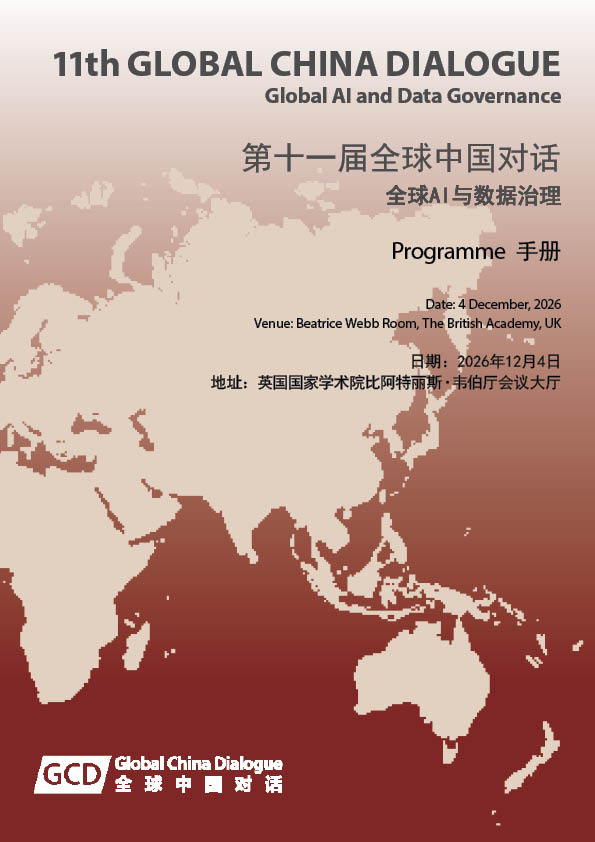
Following ten successful Global China Dialogue (GCD) Forums, the 11th GCD – Global AI and Data Governance – will be held at the British Academy on Friday, 4 December 2026. GCD11 will focus on how to advance safe, trustworthy, and sustainable governance of artificial intelligence and data through institutional design, international coordination, and ethical frameworks.
As a transformative force reshaping economic structures, social governance, and knowledge production, artificial intelligence and data are increasingly central to global development. At the same time, they raise critical challenges related to privacy protection, algorithmic bias, data sovereignty, and technological competition. In response, governance efforts are evolving rapidly, with growing emphasis on cross-border collaboration, multi-stakeholder engagement, and the development of shared principles and regulatory approaches.
This Dialogue will provide a platform for diverse conversations, bringing together policymakers, scholars, technology leaders, business representatives, and international organizations to explore emerging frameworks, governance models, and practical pathways for global AI and data governance.
Organizers:
- Global China Academy, UK
- ESRC Centre for Corpus Approaches to Social Science, Lancaster University, UK
- Newcastle university, University of Exeter, UK
Organizing committee:
Chairs
- Professor Tony McEnery FAcSS FRSA, FGCA and Chair of Global China Academy Council; Distinguished Professor of English Language and Linguistics at Lancaster University; Council Member of Academy of Social Sciences, UK
- Professor Xiangqun Chang FRSA FGCA and President of Global China Academy; Honorary Professor of University College London (2015-20), UK; Distinguished Professor of Nankai University, China
- Professor Li Li, Associate Pro-Vice-Chancellor for Global Engagement in the Faculty of Humanities, Arts, and Social Sciences (HASS), University of Exeter, UK; Deputy Secretary General (UK) of UK-China Humanities Alliance for Higher Education, UK
General Secretaries
- Professor LI Boyi, Associate Fellow and Secretary of the GCA Chinese Council, Global China Academy; School of Business Administration, Nanjing University of Finance and Economics, China
- Mr Kai Liang, Event Officer, Global China Academy;Director of Business Development of MEL Science, UK
Members (in alphabetical order)
- Professor BING Zheng FGCA, Chinese Chair of Global China Academy Council; Former Vice-President of Jilin University; Former Vice-President of Chinese Sociological Association
- Dr Yuan Cheng, Trustee of the Global China Academy Board of Trustees; Greater China Chairman, Russell Reynolds Associates, China
- Professor Martin Jacques FGCA, a British academic, journalist, political commentator, and author; Senior Fellow and Visiting Professor at several leading universities in the UK and China
- Professor Li Wei FBA FAcSS FRSA FGCA and Director and Non-Executive Chair of Global China Academy Council; Director and Dean of the UCL Institute of Education (IOE), UCL’s Faculty of Education and Society, UK
- Mr Barnaby Powell, Council Member, Society for Anglo–Chinese Understanding, UK
- Professor Laurence Roulleau-Berger FGCA, Vice President for European engagement of Global China Academy; Research Director at the National Centre for Scientific Research; Professor at Triangle, École Normale Supérieure of Lyon, France
- Professor Peter Schröder, FGCA and Vice-President and Founding Fellow of Global China Academy; Department of History and European and International Social and Political Studies, University College London, UK
- Professor Elena Semino FAcSS FRSA, Professor at Department: Linguistics and English Language, Director of ESRC Centre for Corpus Approaches to Social Science (CASS), Lancaster University, UK
- Professor XIE Lizhong FGCA and Chinese President of Global China Academy; Former Head of Institute of Sociology and Anthropology and Department of Sociology, Peking University; President of Association of Social Theory Studies of China, UK
- Professor ZHANG Xiaodong FGCA and Chinese Non-Executive Chair of Global China Academy Council; Executive Director, Academic Committee of the Chinese Management Association; ECO of Agile Think Tank, China
GCD10 consists of four thematic panels:
- Panel 1 AI Governance and Advanced Technology Regulation
This panel explores regulatory approaches to emerging AI systems, including foundation models and high-risk applications. It will examine how governance frameworks, standards, and institutional mechanisms can ensure accountability, safety, and effective oversight in the development and deployment of advanced technologies.
- Panel 2 Data Governance, Digital Sovereignty, and Power Structures
This panel focuses on how data is generated, accessed, and governed across different jurisdictions and sectors. It will address key issues of data ownership, cross-border data flows, digital sovereignty, and the evolving distribution of power in the global digital landscape.
- Global Rule-making and Technological Competition
This panel examines the formation of international norms, regulatory coordination, and standard-setting in AI and data governance. It will also consider how geopolitical competition and cooperation influence the shaping of global governance frameworks and technological ecosystems.
- Panel 4 AI Ethics, Societal Impact, and Sustainable Development
This panel addresses the ethical principles guiding AI development and their implementation in practice. It will explore the broader societal, economic, and environmental impacts of AI, with particular attention to inclusivity, fairness, and the contribution of AI to sustainable development.
Submissions and Collaboration
Through diverse perspectives and cross-sector dialogue, the 11th Global China Dialogue aims to contribute Chinese insights and international experience to global AI and data governance, fostering a more secure, trustworthy, open, and sustainable digital governance landscape.
We invite submissions from diverse disciplines, sectors, and regions, focusing on technology- and data-driven social transformation, to examine key issues, challenges, and opportunities in global AI and data governance. Click “Submit” to upload your proposed presentation title, abstract, and biographical note.
We also welcome institutional participation in this Dialogue in line with our Guidelines for Partner Institutions, including roles as co-organisers, collaborating partners, supporting organisations, or sponsors.
Important Dates for GCD XI:
- 31st July 2026: Deadline for submitting abstracts for proposed topics.
- 15th October 2025: Online registration opens.
- 8th November 2026: Deadline for speakers to submit their notes and PowerPoint presentations.
- 20th November 2026: Final deadline for registration.
- 27th November 2026: Programme available for download in English, Chinese, and dual-language formats.
- 4th December 2026: Date of the 11th Global China Dialogue.
The proceedings of GCD XI will be published in 2027, featuring transcribed records, bilingual translation, and editing.
Contact: Kai Liang
More info
- Abstract Submition
- GCD11 Call for Papers (Download PDF file)
- GCD11 Call for Papers (Chinese)
- GCD Partnership Guidelines
- GCD Partnership Guidelines (Chinese)
- GCD series Home
- GCD series Home (Chinese)
- Registration
- Registration (Chinese)
- GCD11 Call for Participants
- GCD11 Call for Participants (Chinese)
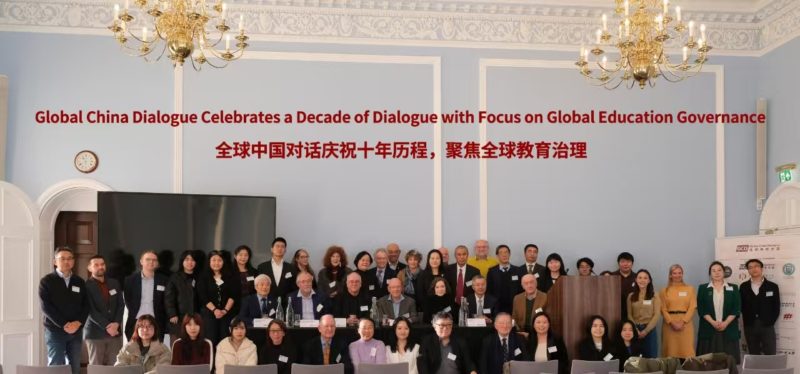
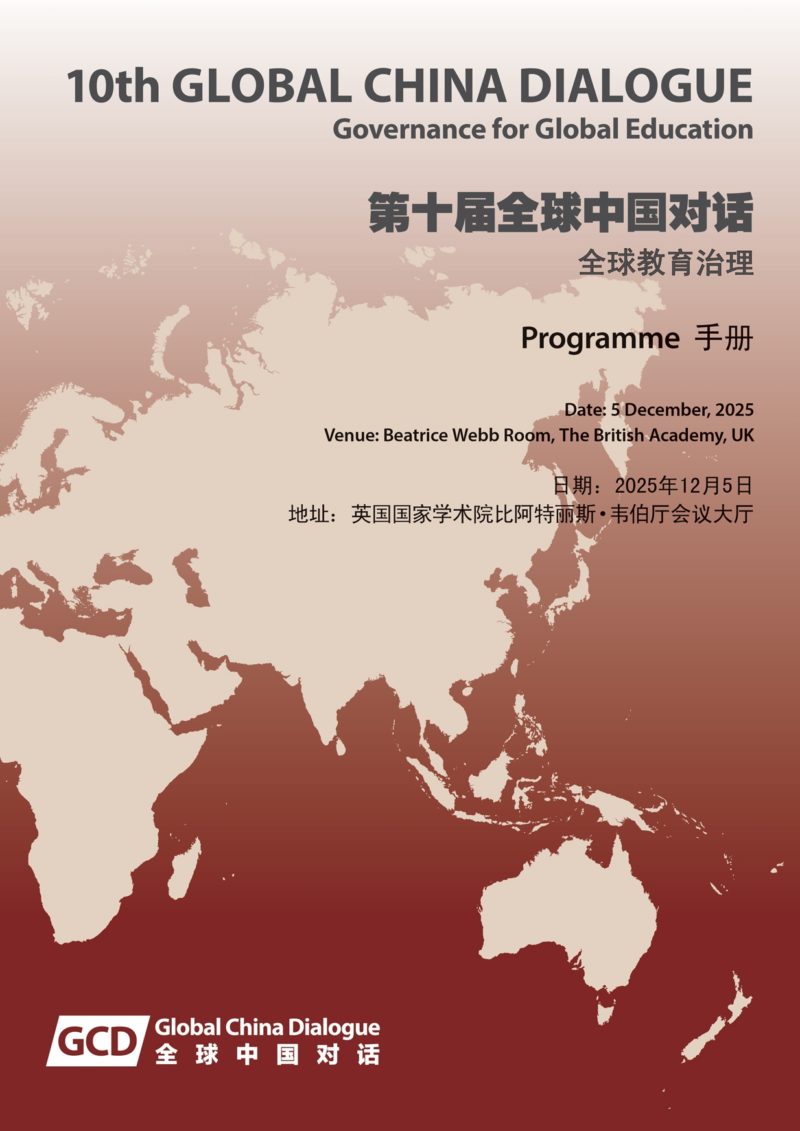
The 10th Global China Dialogue Successfully Held at the British Academy
The 10th Global China Dialogue (GCD X) is scheduled to take place on 5th December 2025 at the British Academy in London, UK. Marking the 10th anniversary of the Dialogue, the forum returns to the UK after the 9th session was successfully held in Tongji University (Shanghai, China), reaffirming its role as a platform for sustained global dialogue on China and international governance in education.
As a cornerstone for achieving social justice, fostering global prosperity, and responding to future transformations, education increasingly relies on cross-border collaboration, multi-stakeholder engagement, and technological empowerment. In the context of emerging technologies such as artificial intelligence and big data reshaping educational models and learning ecosystems, global education governance is facing unprecedented challenges and opportunities.
This Dialogue will provide an inclusive platform for policymakers, scholars, educators, business leaders, and international organizations to engage in meaningful exchange on new visions, mechanisms, and pathways for global education governance. A key dimension throughout the discussions will be the comparative analysis of national education systems and governance cultures, aimed at promoting cross-cultural understanding and mutual learning, and enriching both the theoretical foundation and practical knowledge of global education governance.
GCD X includes the following four panels:
- Panel 1: Governance Innovation and Technological Empowerment
- Panel 2: Educational Equity, Inclusion, and Quality Assurance
- Panel 3: Global Education Policy and International Cooperation
- Panel 4: Education Financing and Sustainable Development
Friday, 08:30-17:00, 5 December 2025 at Tongji University
Opening session
Greetings
Chair: Professor Tony McEnery, FAcSS FRSA FGCA and Chair of Global China Academy Fellow; Council Member of Academy of Social Sciences; Distinguished Professor of English Language and Linguistics at Lancaster University.
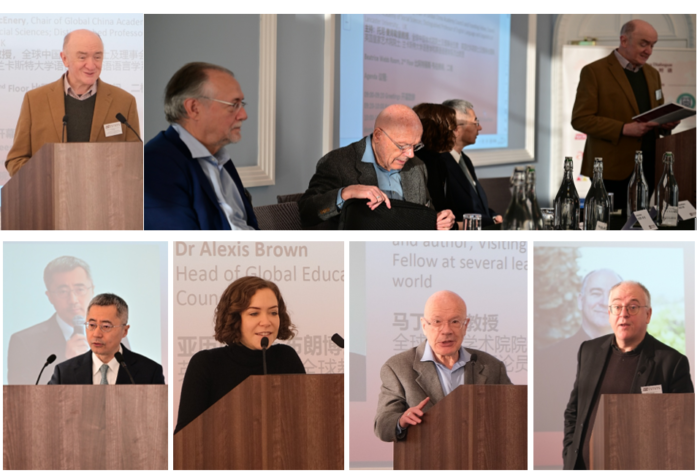
Speakers (from left to right):
- Minister Wang Qi, Embassy of the People’s Republic of China in the United Kingdom
- Dr Alexis Brown, Head of Global Education Insights at the British Council, UK
- Professor Martin Jacques, FGCA, British scholar, journalist, political commentator and author; and Visiting Professor or Senior Research Fellow at several leading universities around the world
- Professor Kerry Brown, FGCA, Director of the Lau China Institute, King’s College London, UK
Keynotes speeches
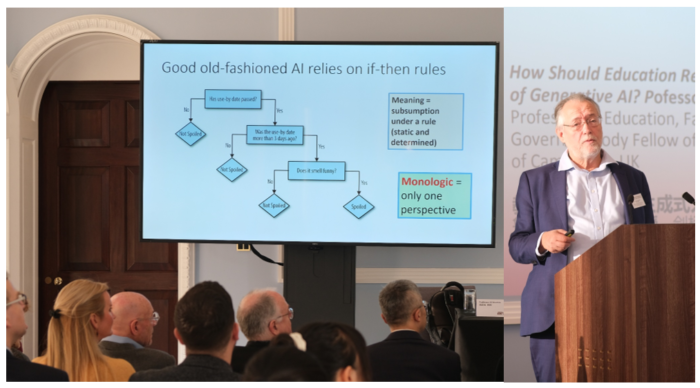
How Should Education Respond to the Challenge of Generative AI? Professor Rupert Wegerif (above), Professor of Education, Faculty of Education, Governing Body Fellow of Hughes Hall, University of Cambridge, UK
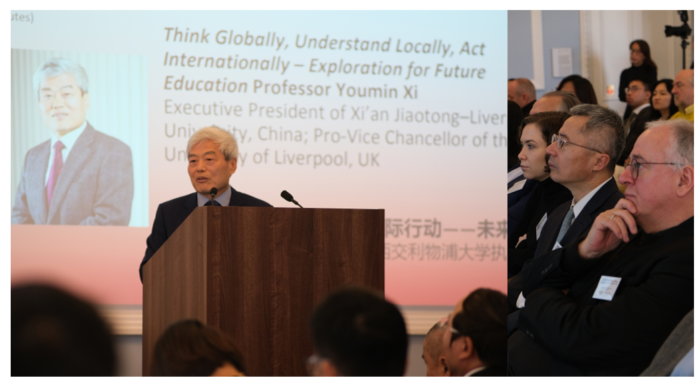
Think Globally, Understand Locally, Act Internationally – Exploration for Future Education, Professor Youmin Xi, Executive President of Xi’an Jiaotong–Liverpool University, China; Pro-Vice-Chancellor of the University of Liverpool, UK
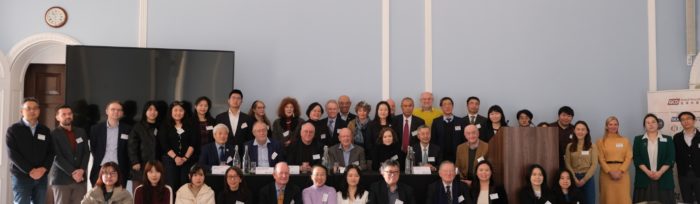
Group photo at the end of the Opening Session and then followed by GCA Fellowship Award Ceremony 2025
After the opening session of the 10th Global China Dialogue (GCD X), new GCA fellowships were awarded. Since 2021, the Global China Academy successfully completed its institutional transformation, establishing an academy system with Fellows at its core and publishing and dialogue as its two principal platforms. This transformation has provided a solid institutional foundation and affirmed the Academy’s leadership in research on China from global and comparative perspectives. Through a formal Fellow selection mechanism, together with English and Chinese dual language publications and a series of global dialogue forums, the Global China Academy has established an open, high-level platform dedicated to fulfilling its dual mission: advancing human knowledge as its academic mission and contributing to global governance as its social mission. Click here to see the full list of recipients.
Panel I: Governance Innovation and Technological Empowerment
Chair and discussant: Professor Madeline Carr FGCA, Secretary of GCA Board of Trustees; Professor of Global Politics and Cybersecurity at University College London, UK
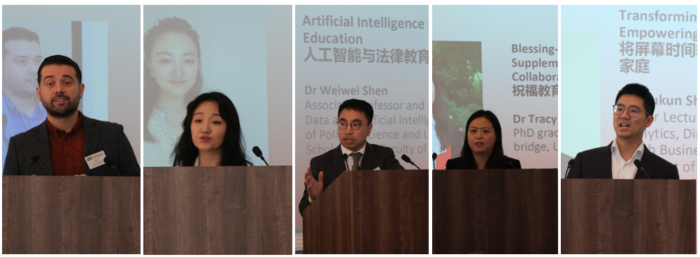
Plenary speakers (from left to right):
- Developing Critical AI Literacies in Language Education, Dr Niall Curry FRSA FGCA SFHEA, Reader in Languages and Linguistics and UKRI Metascience AI Fellow, School of English, Manchester Metropolitan University, UK.
- Artificial Intelligence for EFL Education: Pedagogical Benefits, Challenges, and Future Directions, Frances Yiying Zhang, Lecturer in Chinese Studies and Departmental Academic Convenor at Goldsmiths, University of London, UK
- Artificial Intelligence and the Future of Legal Education, Dr SHEN Weiwei, Associate Professor and Director of the Centre for Big Data and Artificial Intelligence Law at China University of Political Science and Law, China; currently a Visiting Scholar at the Faculty of Law, University of Oxford, UK
- Blessing-Centred Education: The Humanistic Supplement of Technological Empowerment in Collaborative Governance, Dr Tracy Liu, PhD graduate, King’s College, University of Cambridge, UK
- Transforming Screen Time into Philosophy Time: Empowering Families through Inquiry-Based Learning, Yukun Shi, Senior Lecturer in Accounting and Finance with Data Analytics, Director of postgraduate research at Adam Smith Business School, University of Glasgow, UK; President of the Chinese Economy Association (Europe)
Panel II: Educational Equity, Inclusion, and Quality Assurance
Chair and discussant: Professor Maria Jaschok, FGCA, Chair of GCA Board of Trustees; Senior Research Associate of the Contemporary China Studies Programme, University of Oxford
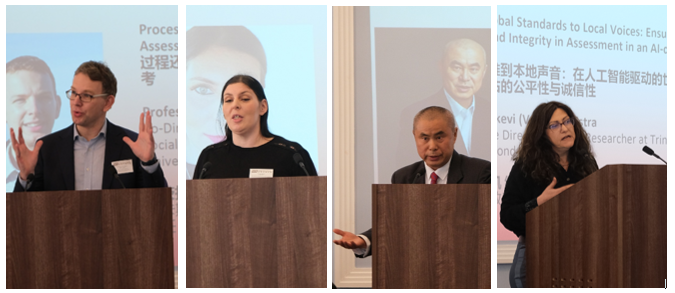
Plenary speakers (from left to right):
- Process or Product? Rethinking Language Learning and Assessment in the Age of AI, Professor Vaclav Brezina, Co-Director of ESRC Centre for Corpus Approaches to Social Science, School of Social Sciences, Lancaster University
- Beyond Inclusion: The Equity Blueprint and the Transformation of Educational Systems, Lucy Robin, ABC Parents Child Health Champions Lead, Every Parent & Child, London; creator of The Equity Blueprint, a governance framework
- Can Education Bring a Better Life? – Lessons from Minority Girls’ Schooling on the China Myanmar Border, Professor TENG Xing, Professor at the School of Education, Minzu University of China; founder and inaugural Chair of the Education Anthropology Committee of the China Ethnology and Anthropology Association
- From Global Standards to Local Voices: Ensuring Equity and Integrity in Assessment in an AI-driven World, Dr Paraskevi (Voula) Kanistra, Associate Director/Senior Researcher at Trinity College London, UK
Panel III: Global Education Policy and International Cooperation
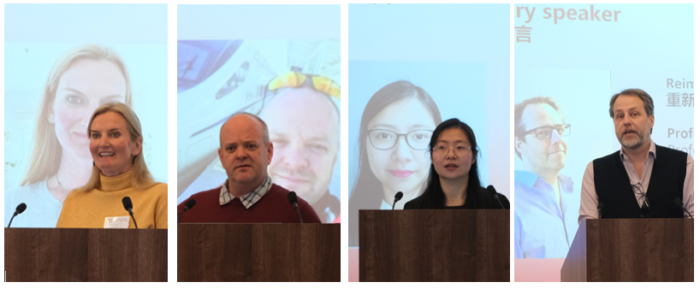
Chair and discussant: Professor Peter Schroeder, FGCA and Vice-President of Global China Academy, Professor of the History of Political Thought, Department of History, University College London
Plenary speakers (from left to right)
- Global Englishes and Education Policy: Rethinking International Cooperation in Higher Education, Professor Nicola Galloway, School of Education, Faculty of Humanities, Arts and Social Sciences, University of Exeter, UK
- Teaching Between Systems: What Transcultural Classroom Experience Can Contribute to Global Education Policy, Richard Anthony Ridealgh, PhD candidate in Education at the University of Manchester, UK; Curriculum Director and Senior Head Teacher at Barbara’s Academy, Shenyang, China
- A Comparative Study of Japanese and Chinese Language Promotion Policies in UK Higher Education, Yi Yang, Chinese lecturer at Regent’s University London and a PhD student at Durham University, UK
- Reimagining Internationalization, Professor Steven Jones, Professor of Higher Education, Manchester Institute of Education, University of Manchester, UK
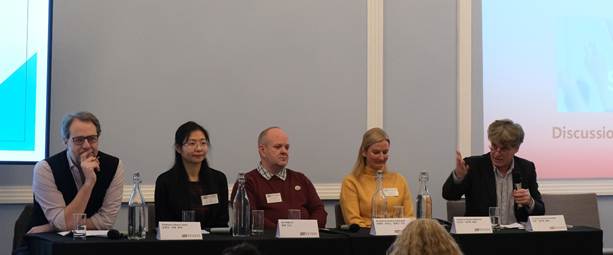
A Q&A session was hosted by the chair and plenary speakers
Panel IV: Panel IV Education Financing and Sustainable Development
Chair and discussant: Mr. Charles Grant, Trustee of the Global China Academy Broad of Trustees and Director of the Centre for European Reform
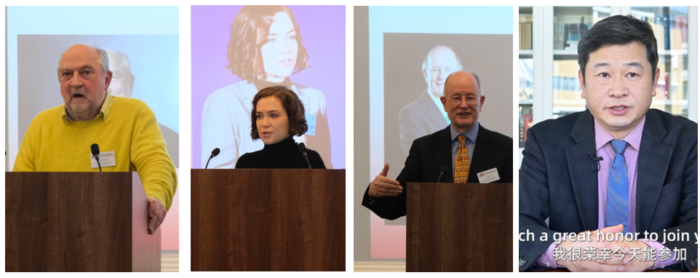
Plenary speakers (from left to right)
- An Educational Response to the Climate and Nature Emergency, Professor Justin Dillon, Professor of Science and Environmental Education, IOE, University College London, UK
- The Chinese research landscape: trends in UK–China collaboration, Dr Alexis Brown, Head of Global Education Insights at the British Council, UK
- Beyond Funding: How Digital Ecosystems Shape the Sustainability of UK–China Educational Exchange, Professor Martin Lockett, Department of International Business and Management, former Dean of Faculty of Business at University of Nottingham Ningbo China
- AI and Liberal Arts Education: The BNBU Paradigm in China and its Global Outreach, Professor CHEN Zhi, FHKAH, President of Beijing Normal–Hong Kong Baptist University (BNBU), China (video)
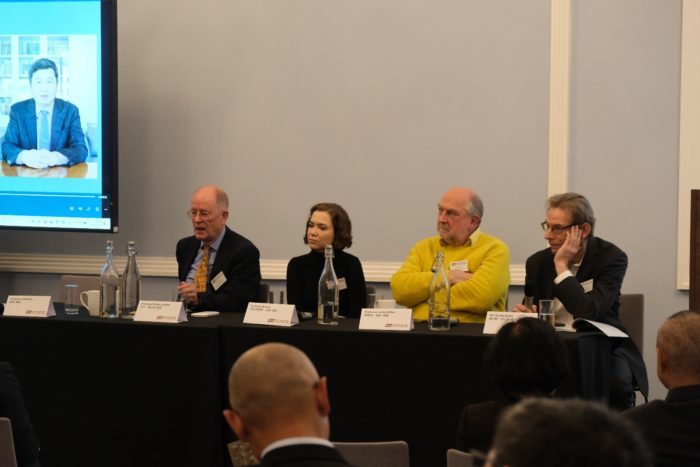
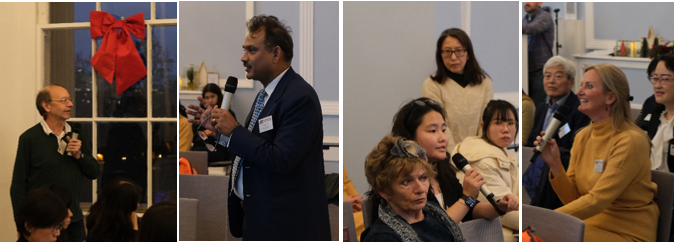
A Q&A session was hosted by the chair and plenary speakers
Closing session
Chair: Professor Xiangqun Chang ( Right) FRSA FGCA and President of Global China Academy, Honorary Professor of University College London (2015–20), Distinguished Professor of Nankai University
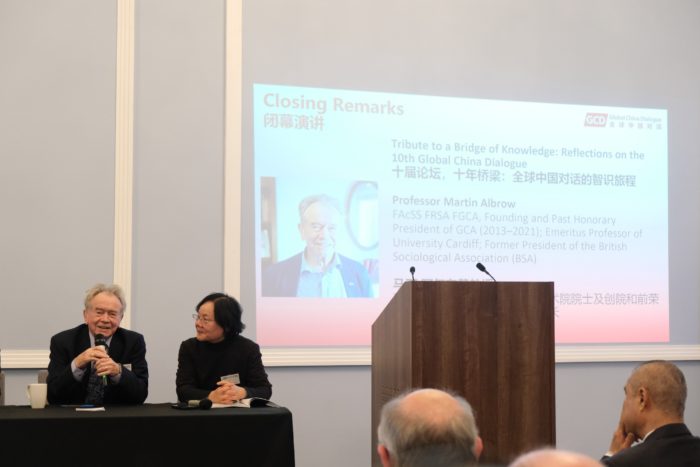
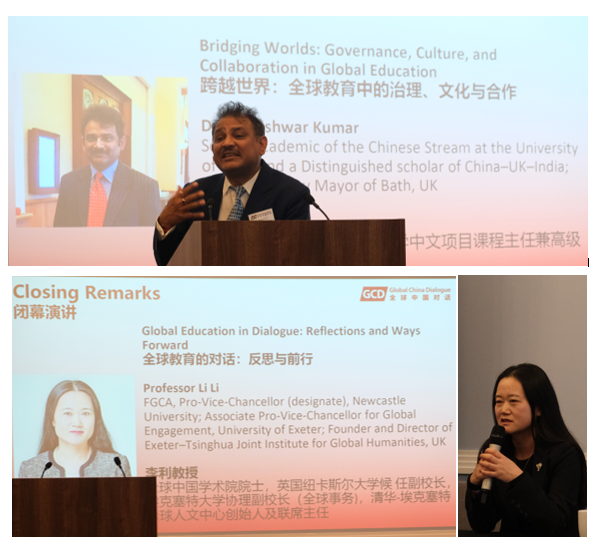
Closing remarks:
- Tribute to a Bridge of Knowledge: Reflections on the 10th Global China Dialogue, Professor Martin Albrow (Top Left) , FAcSS FRSA FGCA, Founding and Past Honorary President of GCA (2013– 2021); Emeritus Professor of University Cardiff; Former President of the British Sociological Association (BSA)
- Bridging Worlds: Governance, Culture, and Collaboration in Global Education, Dr Yukteshwar Kumar (Middle) , Senior Academic of the Chinese Stream at the University of Bath and a distinguished scholar of China-UK-India; Former Deputy Mayor of Bath, UK
- Global Education in Dialogue: Reflections and Ways Forward, Professor Li Li (Bottom) FGCA, Pro-Vice-Chancellor (designate), Newcastle University; Associate Pro-Vice-Chancellor for Global Engagement, University of Exeter; Founder and Director of Exeter–Tsinghua Joint Institute for Global Humanities, UK
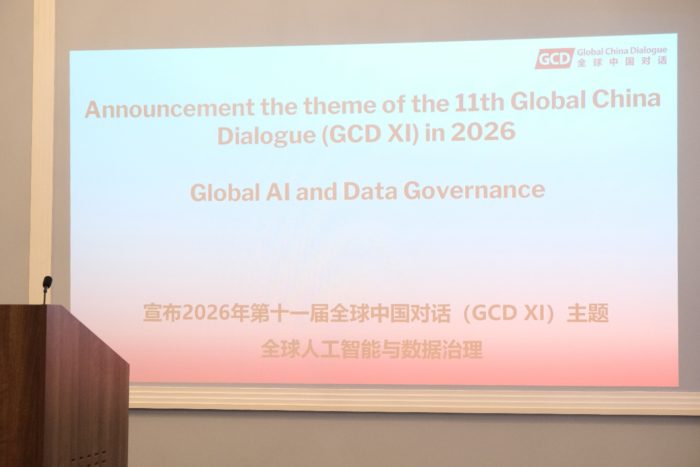
The event concluded with the announcement that the 11th Global China Dialogue (GCD11) will focus on Global AI and Data Governance, continuing the Academy’s commitment to advancing dialogue on the most urgent governance challenges facing an interconnected world.
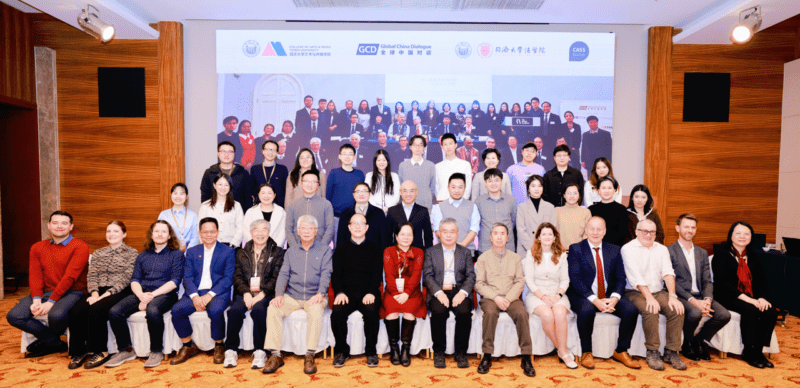
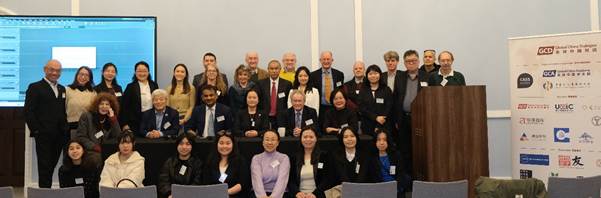 The Global China Academy (GCA) extends its sincere gratitude to the volunteer team and all participants for their invaluable contributions to the success of the 10th Global China Dialogue. A group photograph was taken to mark the 10th anniversary of the Global China Dialogue, celebrating a decade of sustained dialogue and collaboration.
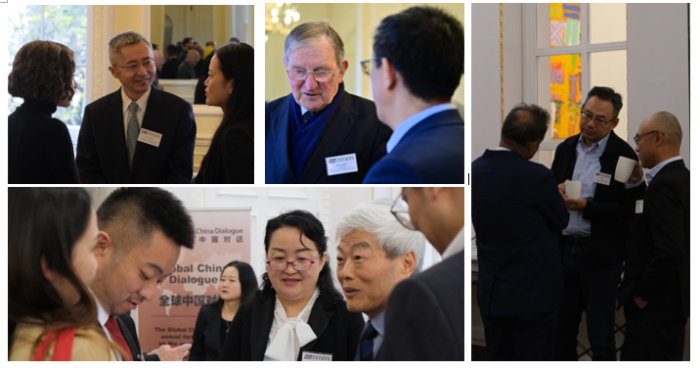
Throughout the day, participants engaged in lively conversations during registration, tea breaks, and lunch, creating valuable opportunities for informal exchange and networking across disciplines and regions. (Below)
Dinner: Celebrating the Newly Awarded GCA Fellowships and the Conclusion of the 10th Global China Dialogue at Peacock London, County Hall, Westminster, London(see a separate webpage).
- Click here to visit the GCD10 Website.
- Click here to view A celebratory dinner marked the conclusion of GCD10
- Click here to visit New Fellowships awarded in 2025
- Click here to visit GCA Fellowship section.
- Click here to learn more about the 9th Global China Dialogue was successfully held in Shanghai.
- Click here to visit the 9th GCD webpage.
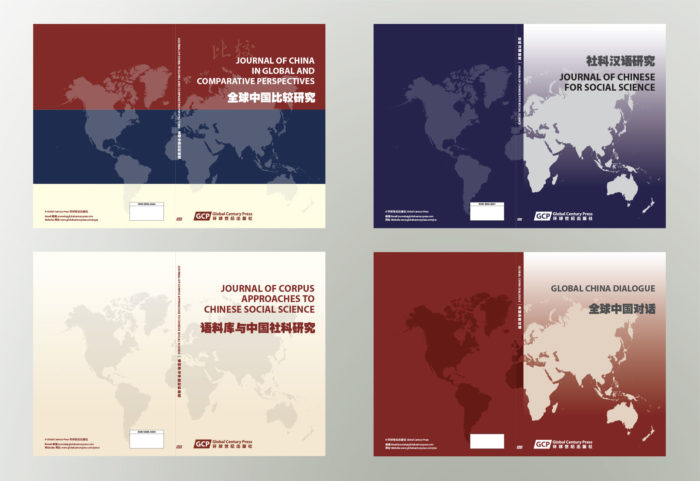
Call for Journal Themes and Paper Submissionsfrom Global Century Press
These photos selected from new GCA fellowships award seremoney at At the dinner celebrating the conclusion of the 8th Global China Dialogue and the 10th Anniversary of the Global China Academy.
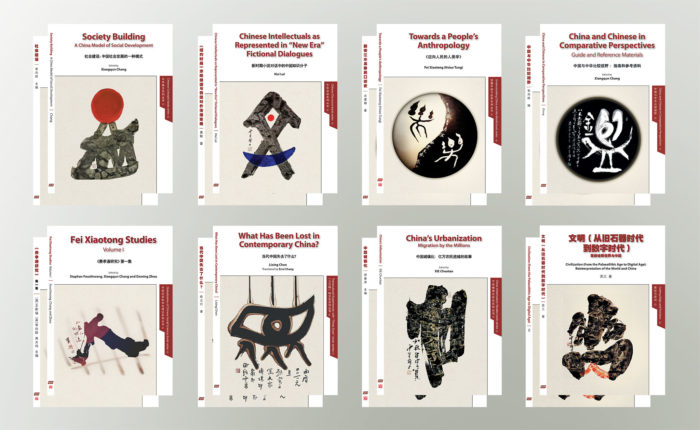
Call for Proposals or Manuscripts:Global Century Press Book series
These photos selected from new GCA fellowships award seremoney at At the dinner celebrating the conclusion of the 8th Global China Dialogue and the 10th Anniversary of the Global China Academy.

Call for Volunteers / Voluntary Trainees in Residence at the Global China Academy
These photos selected from new GCA fellowships award seremoney at At the dinner celebrating the conclusion of the 8th Global China Dialogue and the 10th Anniversary of the Global China Academy.
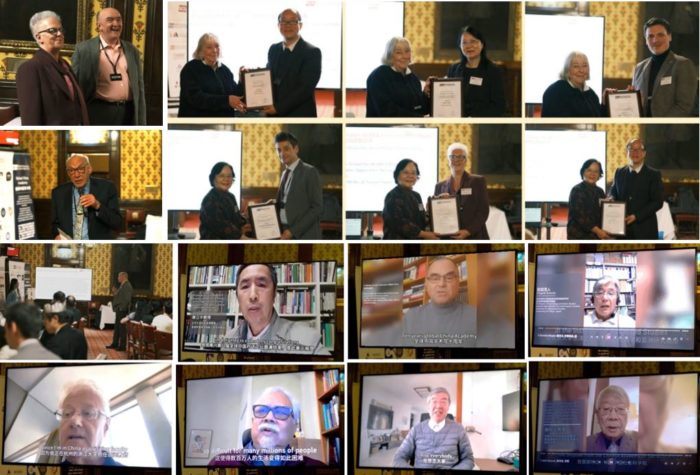
An Invitation for Recommendations / Applications: Global China Academy Fellowships
These photos selected from new GCA fellowships award seremoney at At the dinner celebrating the conclusion of the 8th Global China Dialogue and the 10th Anniversary of the Global China Academy.
Celebrating GCA Fellowships and Concluding the 9th Global China Dialogue: Dinner Reception at Tongji
At the dinner celebrating the newly awarded GCA Fellowships and the conclusion of the 9th Global China Dialogue at Kingswell Hotel Tongji, the newly awarded GCA Fellow Ian Stafford chaired the entire dinner session. We greatly appreciated the professional chairship of this multiple award-winning British sportswriter, journalist, broadcaster, and event host. Kai Liang, Event Officer at the Global China Academy and Director of Business Development at MEL Science, UK, served as the interpreter, demonstrating exceptional clarity and fluency in facilitating communication. Their contributions ensured a smooth and enjoyable evening for all attendees. The event fostered a lively and engaging atmosphere, strengthening connections among participants.
The newly awarded GCA Fellow, Professor LI Yang (top), expressed that it is a lifelong honour to become a GCA Fellow. From a social scientific perspective, he reviewed global development historically in three stages and discussed its evolving trends. His insights enriched the evening, adding a thought-provoking dimension to the celebration.
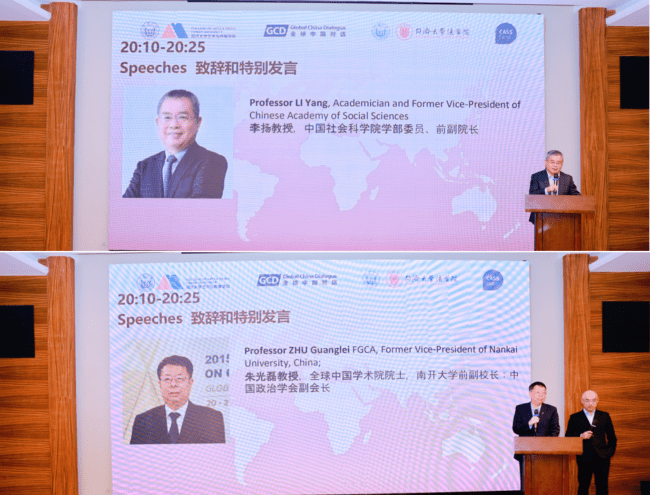
The GCA Life Fellow, Professor ZHU Guanglei (bottom), expressed his happiness at seeing the growing number of GCA Fellowships and the steady development of GCA. He encouraged academics from universities to contribute by utilizing GCA’s platform to advocate for their research, promote scholarly exchange, and facilitate the implementation of research findings for the betterment of society.
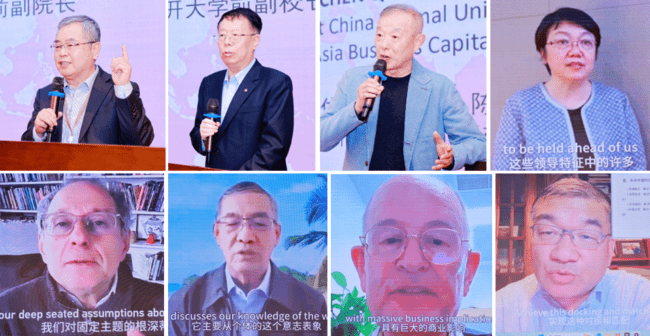
Other speakers, either present in person or absent, had their short video recordings with English and Chinese subtitles played. They are:
- Professor CHEN Qiwei (top second right), Director of the Yangtze River Delta Fintech Research Institute at East China Normal University, leads a high-level think tank and a specialized platform integrating industry, academia, and research in the field of fintech
- Dr Yuan Cheng (top right), Trustee of the Board of Trustees, Global China Academy, is the Chair of Russell Reynolds Associates Greater China.
- Professor Patrick Baert, Professor of Social Theory at the University of Cambridge and a Fellow of Selwyn College, Cambridge, UK
- Professor LIU Shaojie, former Director of the Centre for Sociological Theory and Methodology at Renmin University of China; Chair Professor at the School of Social and Political Sciences at Anhui University, China
- Professor Martin Lockett, former Dean of the Faculty of Business, professor in the Department of International Business and Management at the University of Nottingham Ningbo China.
- Professor Yu Guoming, Director of the Academic Committee of the School of Journalism and Communication and leads the Communication Innovation and Future Media Laboratory at Beijing Normal University, China
Click here to read their videos transcriptions.
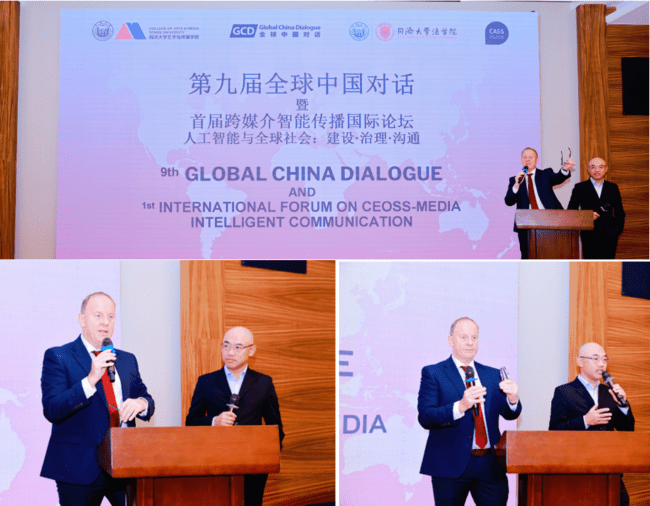
The 9th Global China Dialogue was held at Tongji University in Shanghai on November 29, 2024, marking the first time the event was hosted in China. The theme of this year’s event was ‘AI and Global Society: Building, Governance, and Communication,’ and it featured the First International Forum on Cross-Media Intelligent Communication. The conference included four panel discussions covering AI ethics, society building, global shifts in perceptions, and applications in fields such as health and media.
Keynote speakers included Professor Tony McEnery and Professor Jiang Huiling. The event also recognized outstanding contributions through GCA Fellowships and the Young Scholars’ Paper Award, and for the first time in China, a dinner reception was held to foster cross-cultural exchanges. This dialogue provided a new platform for international collaboration, focusing on the role of AI in shaping global society and communication.

The 9th Global China Dialogue was successfully held in Shanghai
The 9th Global China Dialogue is scheduled to take place on November 29, 2024, at Tongji University in Shanghai. This marks the first time the forum will be held in China, following the first eight sessions hosted at the British Academy in the UK.
According to the 2024 QS World University Rankings by Subject, Tongji University ranks first in China in the field of Data Science. The Shanghai Collaborative Innovation Center of Al Social Governance, based at Tongji University’s School of Law, will assist the College of Arts and Media in organizing this year’s Global China Dialogue. The theme of this dialogue is ‘AI and Global Society: Building, Governance, Communication’, which builds upon Tongji University’s existing strengths in AI research and incorporates global, societal, and media perspectives.
Adding ‘and the First International Forum on Cross-Media Intelligent Communication’ after ‘the 9th Global China Dialogue’ aims to enrich and deepen the theme of this event. Leveraging the high-level platform of ‘the 9th Global China Dialogue’, this addition incorporates perspectives on cross-media and intelligent communication to foster multidimensional discussions on global social governance and communication. It is expected to attract greater participation from both academia and industry, promote the integration of academic insights and practical applications and enhance the impact of the dialogue’s outcomes in the fields of international business and communication.
GCD IX and the First International Forum on Cross-Media Intelligent Communication will feature a series of diverse panels and discussions, bringing together experts from academia, technology, policy and business sectors. These panels will explore AI’s transformative role in various domains, including healthcare, the economy, ethics and international collaboration. The event will emphasize the ethical implications of AI, the importance of data privacy and the crucial balance between innovation and regulation. GCD IX will include the following four panels:
- Panel 1: Ethical Frameworks and Accountability in Artificial Intelligence
- Panel 2: Artificial Intelligence in Society Building and Governance
- Panel 3: Global Shifts in Perceptions and Attitudes in the AI Era
- Panel 4: Applications of Artificial Intelligence in Health, Media and Communication
The ‘Photo Report’ below will include links for viewing or downloading almost all the speech notes or PowerPoint presentations from the GCD9.
Friday, 08:30-17:00, 29 November 2023 at Tongji University
Opening session
Greetings
Chair: Professor LI Linxue FGCA, Dean of College of Arts and Media, Tongji University, China (left)

Speakers (from left to right):
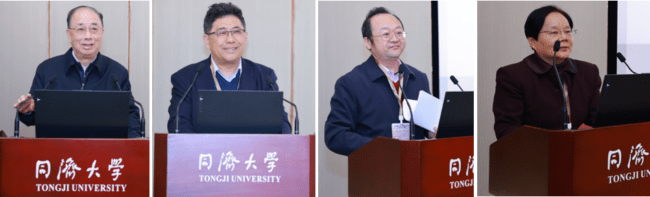
- Professor ZHAO Qizheng, Dean of the School of Journalism at Renmin University of China, former Director of the State Council Information Office, and former Vice Mayor of Shanghai, China
- Professor Lü Peiming, Executive Vice President of Tongji University in China
- Professor WANG Lei, Professor at the School of Electronics and Information Engineering, Tongji University; Council Member of the Chinese Association for Artificial Intelligence; Secretary-General of the Shanghai Artificial Intelligence Society
- Professor Xiangqun Chang FRSA FGCA, President of Global China Academy; Honorary Professor of University College London (2015–20), UK
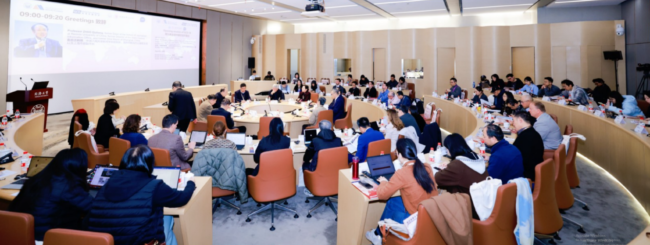
The photos below illustrate keynote speeches, panel discussions, and closing remarks at the 9th Global China Dialogue (GCD9). As in previous GCDs, the Closing Session includes a variety of functions, such as book launches. In this case, it features the Presentation of Certificates to GCA Fellows and the Presentation of the Young Scholars’ Paper Award, recognizing outstanding contributions and academic excellence.
Additionally, the reception and/or dinner sessions not only serve as social gatherings but also include important functions, further contributing to the integrity of the GCDs. While these sessions have been regular components of past GCDs in the UK, this marks the first time they are being hosted in China—a significant milestone that fosters deeper engagement among participants, facilitates cross-cultural academic exchange, and strengthens professional networks in a new context.
All presentation materials and related information will be added to each presentation for download, ensuring comprehensive documentation and accessibility for participants and stakeholders.
Keynotes speeches
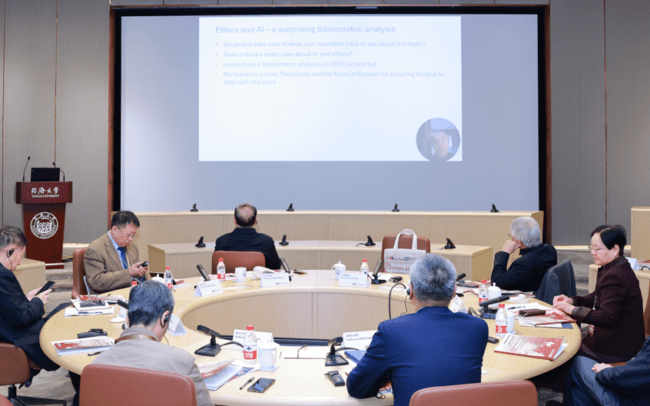
AI, Ethics and the Humanities in the UK, Professor Tony McEnery, Chair of Global China Academy Council; Distinguished Professor at Lancaster University, UK [pre-recorded]
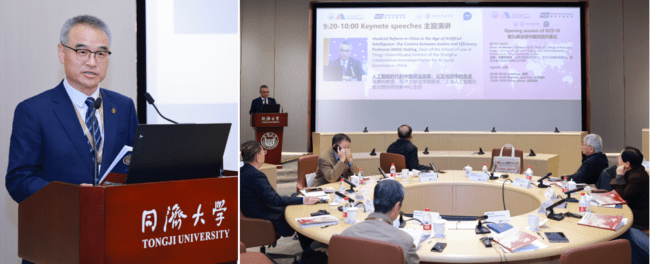
Judicial Reform in China in the Age of Artificial Intelligence: The Contest between Justice and Efficiency, Professor JIANG Huiling, Dean of the School of Law at Tongji University and Director of the Shanghai Collaborative Innovation Centre for AI Social Governance, China
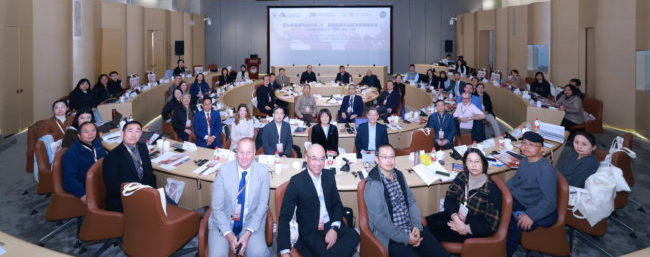
Group photo at the end of the Opening session.
Panel I: Ethical Frameworks and Accountability in Artificial Intelligence
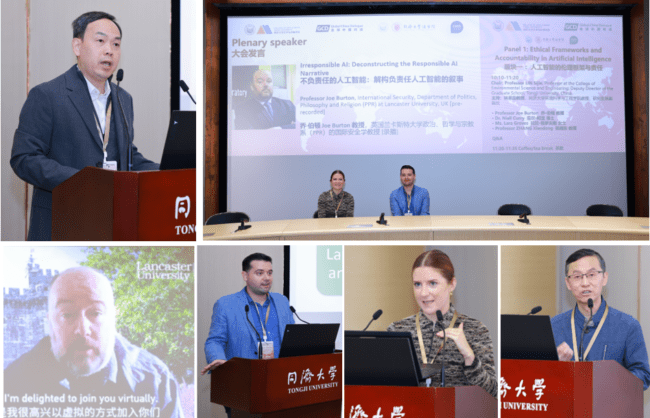
Chair: Professor LIN Sijie, Professor at the College of Environmental Science and Engineering; Deputy Director of the Graduate School, Tongji University, China
Plenary speakers (from left to right):
- Irresponsible AI: Deconstructing the Responsible AI Narrative, Professor Joe Burton, International Security, Department of Politics, Philosophy and Religion (PPR) at Lancaster University, UK [pre-recorded]
- Generative AI: Ethics, Reliability, and Representation, Dr Niall Curry FRSA SFHEA, Senior Lecturer in TESOL and Applied Linguistics within the Department of Languages, Information, and Communications at Manchester Metropolitan University, UK
- Auditing Work: Exploring the New York City Algorithmic Bias Audit Regime, Ms Lara Groves, Senior Researcher at the Ada Lovelace Institute, UK
- Smart Governance: Starting from the Logic of the ‘D-Industry’, Professor ZHANG Xiaodong FGCA and Non-Executive Chinese Chair of the Global China Academy in the UK; CEO of the Agile Think Tank; and Professor and former Director of the Innovation and Entrepreneurship Research Institute at Nanjing University of Finance and Economics, China
Panel II: Artificial Intelligence in Society Building and Governance
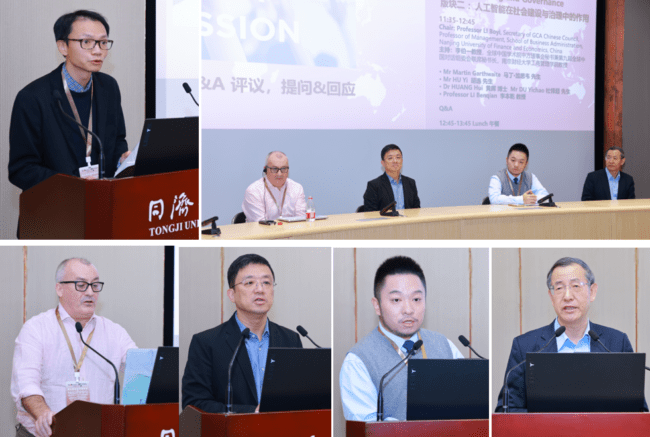
Chair: Professor LI Boyi, Secretary of GCA Chinese Council, Professor of Management, School of Business Administration, Nanjing University of Finance and Economics, China
Plenary speakers (from left to right):
- Governance in the Age of AI: Exploring New Paradigms, Mr Martin Garthwaite, Account Excellence Manager, Co-Chair of the Social Mobility Network PwC, UK
- The Wuxi Case of AI Empowering Modern Urban Governance, Mr HU Yi, Director of the Wuxi Municipal Data Bureau, China
- The Rise of Data-ism and the Digital Transformation of Urban Governance, Dr HUANG Hui, CEO of Shanghai Tianlv Software incorporated and the Honorary President of the Shanghai Information Society, and Mr DU Yichao, PhD Researcher at the Institute of Advanced Studies and Department of Anthropology at University College London, UK; Director of the Wuxi Institute of New Culture, China
- Ethical Evaluation and Governance of Generative AI (AIGC) Algorithms, Professor LI Benqian, Director and Distinguished Professor of the Institute of Intelligent Communication, Shanghai Jiao Tong University, China
Panel III: Global Shifts in Perceptions and Attitudes in the AI Era
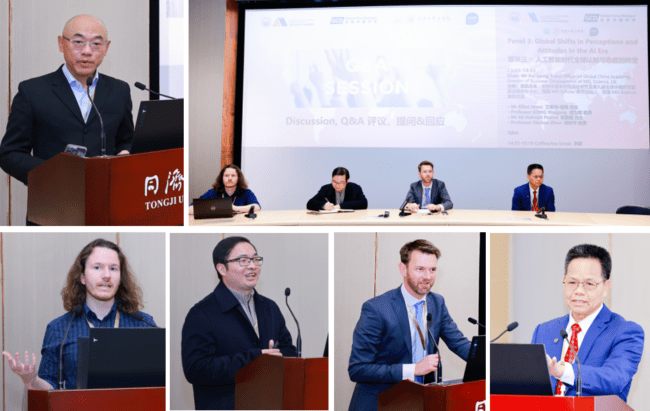
Chair: Mr Kai Laing, Event Officer of Global China Academy; Director of Business Development of MEL Science, UK
Plenary speakers (from left to right)
- Under the radar? Examining the evaluation of foundation models, Mr Elliot Jones, Senior Researcher at the Ada Lovelace Institute, UK
- The Evolution and Logic of Western Attitudes and Perceptions of China over the Past 200 Years – Analysis Based on AI Large Models and Internet Archive Data, Professor GONG Weigang, Director of the Media Big Data Research Centre at the School of Sociology, Wuhan University, UK
- AI-Driven Workplace Transformation and the Skill Development of Graduates, Mr Ed Holroyd-Pearce, Co-Founder and President of Virtual Internships, UK
- Artificial Intelligence or Human Anchors? Audience Perception of News Broadcasting, Professor Shuhua Zhou, Distinguished Chair Professor of Media and Communication at City University of Hong Kong, China
Panel IV: AI Applications of Artificial Intelligence in Health, Media and Communication
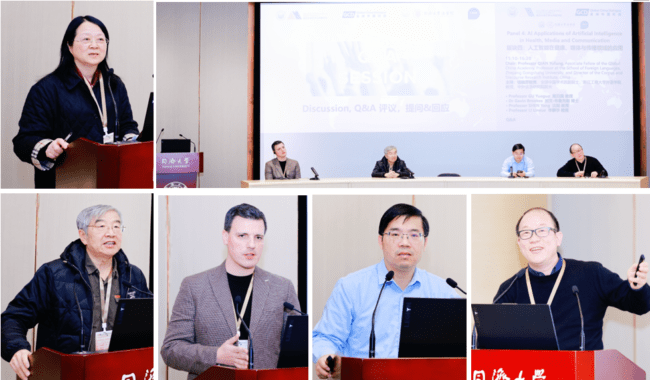
Chair: Professor QIAN Yufang, Associate Fellow of the Global China Academy, Professor at the School of Foreign Languages, Zhejiang Gongshang University, and Director of the Corpus and Discourse Research Institute, China
Plenary speakers (from left to right)
- The Multimodal Corpora of Gerontic Discourse in China: Theory and Practice, Professor GU Yueguo FGCA, Chief Expert of the Key Laboratory of Artificial Intelligence and Human Language, Beijing Foreign Studies University, China
- AI and Ideological Bias: A Case Study on Dementia Representation, Dr Gavin Brookes, Reader in Linguistics and a UKRI Future Leader Fellow with expertise in corpus linguistics, discourse analysis, and health communication at Lancaster University, UK
- AIGC and Human-Machine Symbiosis, Professor SHEN Yang, dual-appointed professor of School of Journalism and School of Artificial Intelligence, Director of the Metaverse Culture Lab and New Media Research Centre at Tsinghua University, China
- Cross-Media Art and Communication in the Age of Artificial Intelligence, Professor LI Linxue FGCA, Dean of College of Arts and Media, Director of Centre of Energy and Thermodynamic Architecture, Tongji University, China
Closing session
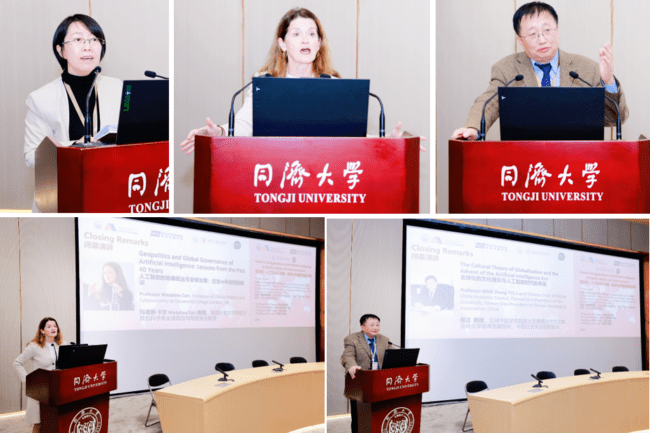
Chair: Professor WANG Xin (top left), Associate Fellow of Global China Academy, Head of Department of Communication, College of Arts and Media, Director of Research Centre for Chinese Discourse and Global Communication at Tongji University, China
Closing remarks:
- Geopolitics and Global Governance of Artificial Intelligence: Lessons from the Past 40 Years, Professor Madeline Carr, Professor of Global Politics and Cybersecurity at University College London, UK
- The Cultural Theory of Globalization and the Advent of the Artificial Intelligence Era, Professor BING Zheng FGCA and Chinese Chair of Global China Academy Council, Former Vice-President of Jilin University, former Vice-President of Chinese Sociological Association, China
Presentation of certificates to GCA Fellows
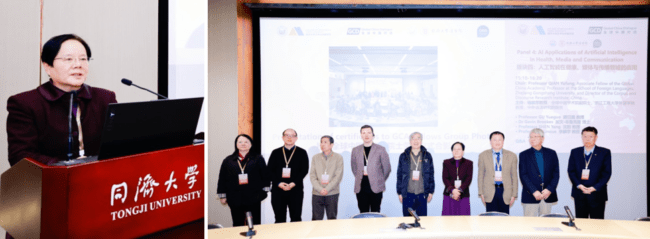
Introduction of GCA and the Fellowships: Professor Xiangqun Chang FRSA FGCA, President of the Global China Academy, Honorary Professor of University College London (2015-20), UK. All existing GCA Fellows and Associate Fellows in China were on stage as witnesses
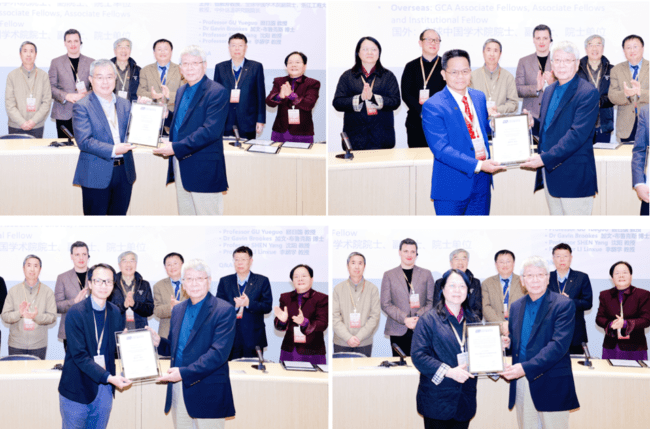
Presenter: Professor HAO Shiyuan FGCA, Academician and former Assistant President of the Chinese Academy of Social Sciences (CASS), presented Fellowship awards to the newly elected GCA Fellows, Associate Fellows and Institutional Fellow based in China, including Hong Kong.
Recipients:
- Professor LI Yang (top left), recipient of GCA Fellowship. He is Academician of the Chinese Academy of Social Sciences and Academician of the International Eurasian Academy of Sciences, as well as a former Vice President of the Chinese Academy of Social Sciences.
- Professor Shuhua Zhou (top right), recipient of GCA Fellowship. He is Chair Professor at City University of Hong Kong and a Fellow of the International Communication Association (ICA); former President of the Chinese Communication Association (CCA, 2017-2019) and Vice Chair of the Asia-Pacific Communication Alliance (ACPC, 2018-2025).
- Professor LI Boyi (bottom left), recipient of GCA Associate Fellowship. He is Secretary of the GCA Chinese Council, is a Professor of Management at the School of Business Administration, Nanjing University of Finance and Economics. He was formerly a Fellow in the Information Systems and Innovation Group at the London School of Economics and Political Science (LSE).
- Professor QIAN Yufang (bottom right) attended as a representative to receive the certificate for the GCA Institutional Fellowship, which she led. She is an Associate Fellow of the Global China Academy and a Professor at the School of Foreign Languages, Zhejiang Gongshang University. She is also the Director of the Institute of Corpus Linguistics and Discourse Studies (ICLDS), which has been recognized as an Institutional Fellow.
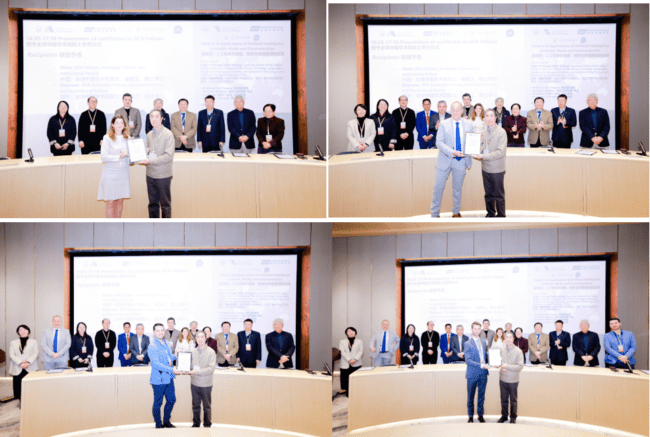
Presenter: Professor XIE Lizhong FGCA, Chinese President of the Global China Academy, former Head of the Department of Sociology at Peking University, and former Vice-President of the China Sociological Association (CSA), presented Fellowship awards to the newly elected GCA Fellows, Associate Fellows, and Institutional Fellows based overseas.
Recipients:
- Professor Madeline Carr (top left), recipient of GCA Fellowship, is Professor of Global Politics and Cybersecurity at University College London, as well as Co-Director of the interdisciplinary Centre for Doctoral Training in Cybersecurity and Deputy Director of the REPHRAIN Protecting Citizens Online research hub.
- Mr Ian Stafford (Top right), recipient of GCA Fellowship, is founder of the UK’s first internet sports magazine, Sportsvibe, and The Sporting Club. He is a multiple award-winning British sportswriter, journalist, and broadcaster, has published 23 books, with his works widely circulated not only in the UK but also in countries like the USA, Canada, Australia, and South Africa. He also attended as a representative to receive the certificate for the GCA Institutional Fellowship on behalf of The Sporting Club, which he founded.
- Dr Niall Curry FRSA SFHEA (bottom left), recipient of the GCA Associate Fellowship, Senior Lecturer in TESOL and Applied Linguistics within the Department of Languages, Information, and Communications at Manchester Metropolitan University, UK
- Mr. Ed Holroyd-Pearce (bottom right), recipient of the GCA Associate Fellowship, is the co-founder and president of Virtual Internships in the UK. He has a rich background in the intersections of education, technology, entrepreneurship, and Asia.
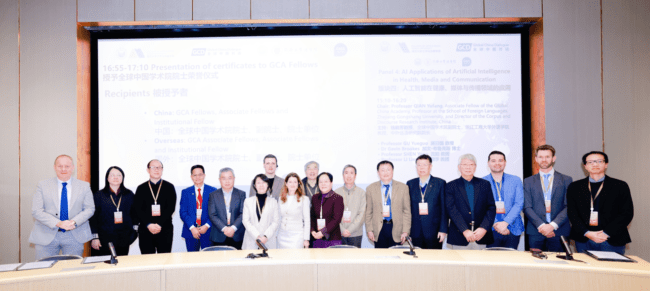
All the existing and newly awarded GCA Fellows, Associate Fellows, and representatives of Institutional Fellows gathered on the stage to celebrate their achievements and witness the formal conferral of honours, reinforcing the spirit of academic excellence and collaboration.
Presentation of the Young Scholars’ Paper Award
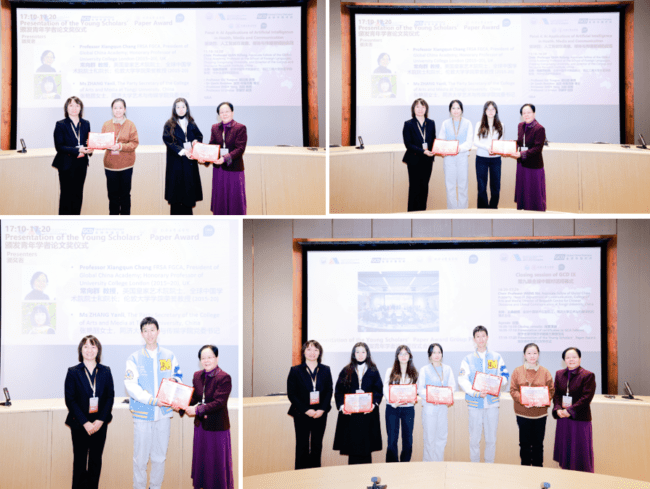
Presenters:
- Professor Xiangqun Chang (right) FRSA FGCA, President of Global China Academy; Honorary Professor of University College London (2015–20), UK
- Ms ZHANG Yanli (left), The Party Secretary of the College of Arts and Media at Tongji University, China
Recipients:
- The two Third Prize winners are on the left in the top left photo.
- The two Second Prize winners are on the right in the top right photo.
- The One First Prize winner is on the middle in the bottom left photo.
- The presenters with all the Prize winners in the bottom right photo.
For the first time, the Global China Dialogue (GCD) forums issued a call for papers to young scholars and awarded winners. All participants were invited to attend GCD9, and the winners were also invited to the dinner session. The selected papers are potentially to be published in relevant academic journals. This marks a significant step in fostering academic engagement, encouraging emerging researchers, and recognizing outstanding contributions in the field.
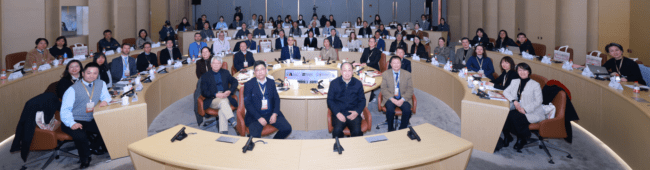
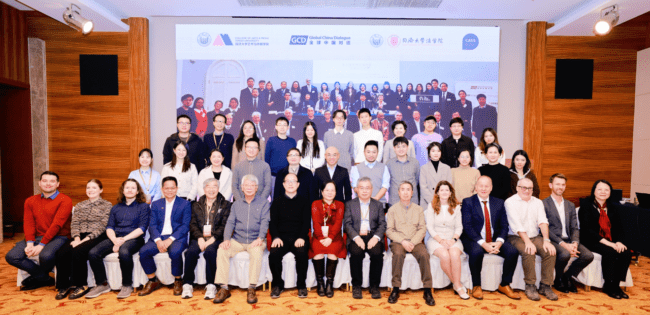
The photo above shows participants at the GCD9 venue.
Dinner: Celebrating the Newly Awarded GCA Fellowships and the Conclusion of the 9th Global China Dialogue at Kingswell Hotel Tongji(see a seperate webpage).