From Direct Entry to Institutionalization: Observations and Reflections on the Globalization of Chinese Culture and Scholarship in London
Abstract:This blog takes two academic and cultural events attended by the author in London as its empirical point of departure and, based on on-site observation, examines the pathways through which Chinese culture and scholarship are entering the contemporary global space. It argues that the global circulation of Chinese experience is increasingly characterised by a pattern of “direct entry,” in which individuals and teams engage in cross-cultural communication and knowledge dissemination through forms of co-presence in specific institutional settings.
Building on this observation, the blog raises a further question: how can such forms of situated entry be transformed from one-off practices into sustainable mechanisms of knowledge production and institutional operation? To address this, the article adopts the perspective of “relational civilisation,” in conjunction with the theory of relational generativity and a methodological approach combining corpus analysis, artificial intelligence, and theoretical judgment. It seeks to integrate dispersed experiences and theoretical reflections into a structurally coherent system of knowledge.
At a broader level, the blog engages with Fei Xiaotong’s vision of a Chinese school of sociology and anthropology. It proposes a five-dimensional framework of knowledge production—comprising experience, concept (language), theory, method, and institution—and, through the coordinated development of academic institutions, publishing platforms, and dialogical forums, explores the structural pathways through which Chinese social scientific knowledge can enter the global knowledge system. The blog argues that “direct entry” should be understood as a starting point, whose significance lies in enabling the structural transformation and institutional extension of knowledge through the ongoing generative processes of relations.
Keywords relational civilisation; relational generativity; li shang wang lai (reciprocity); renxin; direct entry; institutionalisation; five-dimensional knowledge production framework; corpus–AI–theoretical judgment; transculturality; a Chinese school of sociology and anthropology
In the past week, I attended two events held in London, each organized and led by a Chinese writer and their team, as well as a Chinese scholar and their team. The two events differed in format and approach, yet both achieved unexpectedly positive outcomes. Through participating in these on-site experiences, I gained clearer insights into how Chinese culture and scholarship are currently entering the global space.
At the same time, I am in the process of compiling the book “40 Years of Witnessing the Globalization of Chinese Social Sciences.” Thus, after each event, I promptly recorded and organized the related materials and reflections overnight, ensuring they would not be lost over time. Using this as an opportunity, I extracted several relevant sections from the book’s overall framework, presenting them as extended discussions later on. These outline my work over the past decade or so in theoretical research, methodological and method innovations, platform development, and exploring pathways for fostering a Chinese school of sociology and anthropology.
On April 6th, I will visit China and plan to stay for three months. During this period, I will deliver academic talks at certain universities and research institutes and revisit several villages where I conducted fieldwork 30 years ago. Amid multiple ongoing projects, I had not intended to add new activities, yet these two events this week naturally became a starting point for this phase of observation and reflection. Let us begin with a recap of the most recent event.
I. Entering University Spaces via Academic Communities: The Practice of FANG Lili
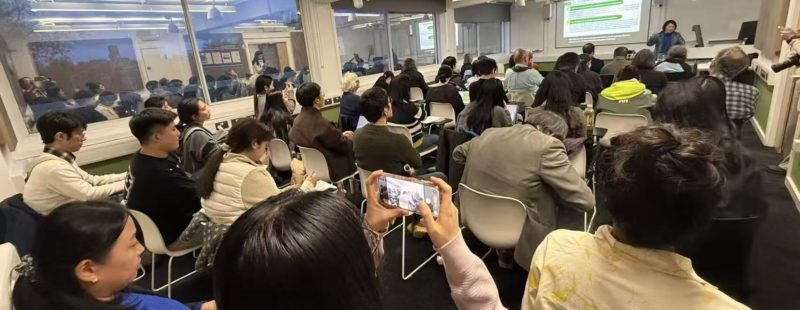
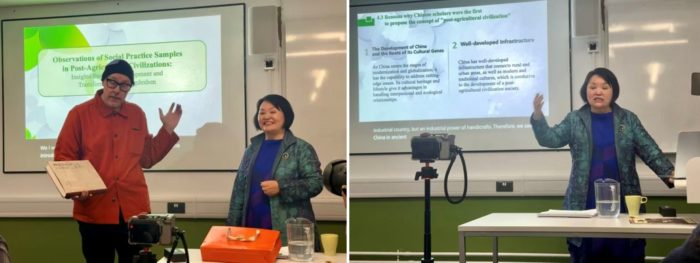
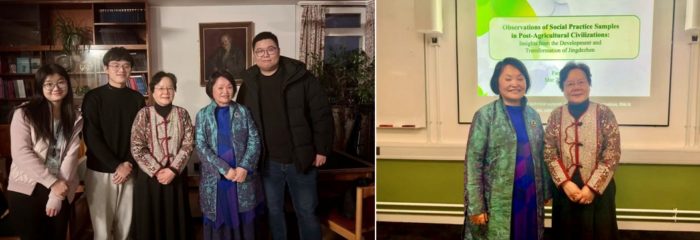
On March 27th, an event was held at the UCL Institute of Archaeology. It was, in fact, my first time in 35 years crossing disciplines to attend something in the field of archaeology in London. Originally, I went out of courtesy to support Professor FANG Lili, a friend in academic circles. However, to my amazement, the lecture hall was packed. The title of Professor Fang’s lecture was “Post-Agricultural Civilisation: Insights from the Development and Transformation of Jingdezhen, China’s ‘Porcelain Capital.’” Based on her long-term fieldwork in Jingdezhen, the concept of post-agricultural civilisation she proposed was quite inspiring. The short films played before and after the lecture added a certain “performative” layer, enriching the academic presentation.
Notably, the week-long exchange at UCL was coordinated by Professor Rodney Harrison from the Institute of Archaeology’s Heritage Studies. The short films shown before the lecture indicated that Professor Harrison had previously conducted fieldwork in China, hosted and accompanied by Fang Lili. This trip can be seen as a continuation of reciprocal visits—from China to the UK—returning to a specific academic space and forming a cross-national exchange mechanism built upon personal academic ties.
FANG Lili is the last postdoctoral researcher of Fei Xiaotong, one of the key founders of Chinese sociology and anthropology. She has inherited and expanded the platform of the Chinese Society of Art Anthropology established with support from Fei, which now has about 4,000 members. After the lecture, we reminisced about the 2019 “Fei’s Disciples Walk Fei Xiaotong’s Path” events in the U.S., including sessions at the University of Chicago. Plans back then included continuing this academic route in the UK, though these have been cancelled due to the pandemic.
Interestingly, at the UCL lecture, a scholar raised a comparison between Jingdezhen’s experience and Chile in South America. This question brought back an earlier idea: in the original UK visit plan, there was a proposal to visit Stoke-on-Trent, the UK’s “ceramics capital,” since back in 1981, when Fei Xiaotong came to the UK to receive the Huxley Award, the Royal Anthropological Institute arranged for him to visit that location. This unfinished comparative path was implicitly evoked in a new academic context.
After the lecture, during the reception, I introduced UCL anthropology PhD students to FANG Lili, and we took a group photo. To some extent, this facilitated mutual introductions between her and these younger researchers, extending academic ties between archaeology and anthropology in the UK context through direct interaction.
In the subsequent conversation, I spoke with one of Professor Fang’s doctoral students. Using theater theory as a lens, she was conducting research in Kaixiangong Village, the field site of Fei Xiaotong’s Peasant Life in China. I told her that as early as 1996, I had conducted fieldwork in that village, completing my doctoral dissertation and the book Guanxi or Li Shang Wanglai ?: Reciprocity, Social Support Networks, Social Creativity in a Chinese Village . It has now been exactly 30 years. Over the past two decades, I have revisited Kaixiangong multiple times and maintained close ties with the local community. This May, I will return once again for a brief revisit.
The chair of the event, Professor Harrison, posed the first question after FANG Lili’s talk—a classic anthropological methodological question: How representative is the case of Jingdezhen for China? This question turned a specific case into a methodological issue and became the starting point for my upcoming fieldwork. Around this question, I will not only revisit Kaixiangong but also plan to conduct a new round of fieldwork across 10 villages in five provinces, just as I did 10 years ago. Through this cross-temporal comparison, I will gather continuous data on the thirty-year changes in these villages and attempt to bring Fang Lili’s concept of post-agricultural civilisation into my field research perspective for verification and development.
II. Entering University Spaces through Literature and Publishing: The Practice of Xue Mo
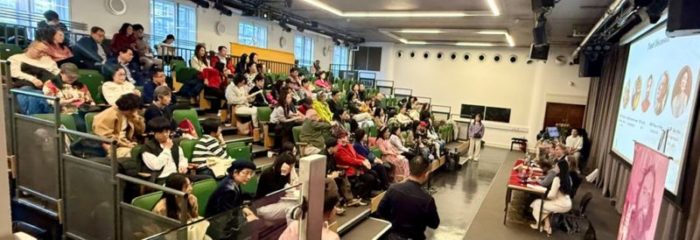
On 21 March, an event was held at SOAS, University of London. I arrived after attending another event, and the scale of the event was, comparatively speaking, quite substantial. The title was “New Literary Creation and Cross-Cultural Communication in UK Universities: A Symposium on the Works of Xue Mo and International Academic Exchange.” It reminded me of the international conference “Weber and China: Culture, Law and Capitalism” that we held at the same venue in 2013, which brought together scholars from around the world and was similar in overall scale.
Xue Mo is an internationally recognised novelist and cultural scholar. I edited the overseas Simplified Chinese edition of his book Renxin (Human Hearts and Minds), which was launched at the London Book Fair in 2024 as part of the “Chinese Concepts” series of Global Century Press. The book carries a clear intellectual orientation. In recent years, Xue Mo has continued to participate in international publishing platforms such as the Frankfurt Book Fair. Through multilingual publications, live events, and sustained visibility, he has gradually built a stable international readership and a growing network of cultural dissemination. His success is reflected not only in the cross-linguistic circulation of his works, but also in the sustained presence and visibility of both the author and his team within the global cultural space.
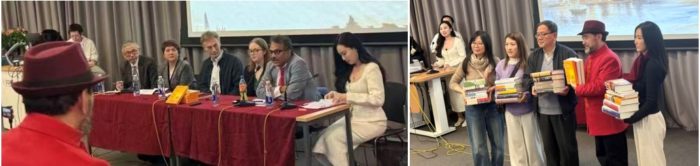
As I arrived toward the end of the event, I happened to see several speakers engaged in discussion. Two of them were familiar to me: Professor Hugo de Burgh, former Director of the China Media Centre at the University of Westminster, where I once served as a visiting professor; and Dr Yukteshwar Kumar, currently Director of the China Studies programme at the University of Bath. During the Beijing International Book Fair last year, I had chaired a dialogue between him and Xue Mo.
In the final part of the discussion, the moderator invited each speaker to leave the audience with a single sentence. Taken together, these remarks revealed a shared orientation: while participants approached Xue Mo’s work from different pathways, they all pointed toward its underlying intellectual depth. This was precisely the intention behind our publication of Renxin—to present Xue Mo not only as a novelist, but as a thinker. At the same time, this process of entering the same text through multiple perspectives generated a transcultural space of understanding across different disciplines and cultural experiences.
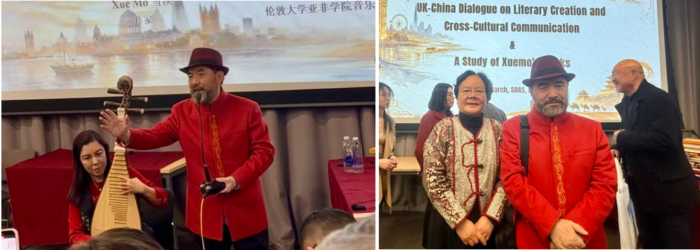
Before the event concluded, a book presentation ceremony was held. The representative receiving the donated copies on behalf of SOAS was Dr Lianyi Song, Principal Teaching Fellow at the Department of Languages, Cultures and Linguistics at SOAS, and also one of the founding editors of the Journal of Chinese for Social Sciences, published by Global Century Press.
Finally, Xue Mo collaborated with a music teacher from SOAS for a live performance, accompanied by the pipa. This moment extended what had been an academic event centred on literature and ideas into a more integrated form of cultural expression. The atmosphere shifted from discussion to participation, creating another sense of “being present.” In this process, text, sound, and embodied practice were reconnected, and academic exchange moved beyond language alone into a lived experience of relational generation.
Before leaving, I arranged to visit Xue Mo’s academy in early May, during my fieldwork trip to Gansu, in order to further experience the cultural and historical environment that informs his writing.
III. From Direct Entry to Relational Civilisation: My Methodological and Theoretical Reflections and Platform Development
In the first two sections, whether through academic communities entering university settings or through literature and publishing entering academic spaces, both cases reflect a pattern of “direct entry.” However, when these practices are considered at the level of theory and method, a further question emerges: how should we understand the position of these dispersed experiences within a broader structure of knowledge?
While listening to these presentations, I gradually became aware of a related issue: how can we move from rich but scattered experiences toward an analytical framework that allows us to grasp their overall structure? In this sense, FANG Lili’s work provides an important empirical foundation and practical inspiration for addressing this question.
This, in turn, points to a more general problem. In the Chinese academic context, research has often developed in relatively fragmented clusters, lacking an overarching structure capable of integrating these experiences into a coherent whole. This is precisely the issue that Fei Xiaotong had in mind in his vision of constructing a Chinese school of sociology and anthropology.
1. From Linear Development to Relational Civilisation: Methodological Shift and Theoretical Construction
I noticed that in this lecture, FANG Lili approached the question of civilisation primarily from her fieldwork experience, without explicitly situating it within the theoretical lineage of Fei Xiaotong’s work. From the perspective of the development of Chinese sociology and anthropology, this issue of theoretical continuity is itself of considerable significance. It also points to a more fundamental question: as empirical knowledge continues to accumulate, how can such research be brought back into existing theoretical traditions and, on that basis, developed into a knowledge system with an internal structure.
In my view, the development of human knowledge should, on the basis of accumulated experience, take the form of a “knowledge architecture” with its own internal logic and layered structure. In this sense, Fei Xiaotong’s work provides a crucial foundation. He not only proposed the relational vision of civilisation expressed in the idea of “each appreciating its own beauty and the beauty of others,” but also established a level of theoretical articulation upon which Chinese sociology and anthropology can continue to develop.
It is worth noting that Fei Xiaotong did not produce systematic monographs explicitly titled “modernisation” or “civilisation.” Instead, his reflections on these themes are dispersed across texts written in different periods and contexts. Yet it is precisely through this cross-temporal and cross-contextual body of writing that a rich and internally connected set of ideas emerges.
Against this background, a key question arises: how can dispersed fieldwork experience, theoretical reflection, and practical engagement be integrated into a coherent system of knowledge with an internal structure? This question has emerged from my long-term corpus-based research on The Complete Works of Fei Xiaotong (20 volumes). This corpus constitutes a continuous body of thought spanning approximately 80 years, systematically documenting the transformation of Chinese society from rural structures to modern forms, together with its accompanying theoretical reflections. It is one of the most extensive and structurally complete individual intellectual corpora in the history of Chinese social sciences, and is also rare in global scholarship.
On this basis, I further introduce a methodological approach combining corpus analysis, artificial intelligence, and theoretical judgment. By systematically analysing the concept of “civilisation” across the corpus, dispersed texts can be reorganised at a structural level. This allows the question of civilisation to move beyond a linear developmental framework toward an understanding based on relational structures and generative processes, thereby providing a methodological foundation for the development of a theory of relational civilisation. Along this line of inquiry, this blog seeks to advance the ideas of “relational civilisation” and “relational generativity,” responding to Fei Xiaotong’s vision of constructing a Chinese school of sociology and anthropology.
Based on corpus statistics across the 20 volumes, the term “civilisation” appears 725 times, including approximately 188 occurrences in the translated works (Volumes 18 and 19). The corpus also contains fragmentary references to or engagements with other theorists of civilisation, including Oswald Spengler, Arnold J. Toynbee, and Samuel P. Huntington. This tradition generally treats civilisation as a macro-historical unit, focusing on rise, development, and conflict, and is largely characterised by a linear model of development.
By contrast, Fei Xiaotong’s understanding of civilisation is more directly rooted in conceptual resources from his early translated works, particularly in Volumes 18 and 19. These include authors such as William F. Ogburn, Bronislaw Malinowski, Raymond Firth, C. G. Seligman, and Elton Mayo. In these texts, “civilisation” appears mainly in analyses of social development, institutional structures, social types, and industrial society, forming an important methodological foundation for his early anthropological training.
In Fei’s own writings, the term “civilisation” appears 537 times and shows a clear shift over time. In the early period (1930s–1950s), it is used largely in descriptive sociological and anthropological contexts. In the middle period (1980s–1990s), it becomes more closely associated with discussions of Chinese civilisation and social transformation. In the later period (around 2000, particularly in Volume 17), it appears 237 times—about 44% of all occurrences—marking its transition from a descriptive term to a central analytical concept. At this stage, “civilisation” is no longer treated as a given object of analysis, but is re-problematised as a question of relations between different civilisations, articulated normatively through the idea of “each appreciating its own beauty and the beauty of others.”
This shift indicates that Fei Xiaotong’s theory of civilisation moves from imported analytical tools in translation to a relational theory developed in his own writings. It not only departs from linear developmental or civilisational conflict models, but also offers an alternative approach centred on coexistence.
In this context, the concepts of complicity and commensuration proposed by Professor Hans Steinmüller in his inaugural lecture at the London School of Economics provide an important mid-level analytical perspective. Complicity refers to tacit, situational forms of alignment grounded in relationships, which increase social complexity. Commensuration refers to processes of standardisation and comparability that reduce complexity and enable large-scale social coordination. Together, they reveal the dynamic balance between complexity and simplification.
Further, in her lecture at UCL, FANG Lili, drawing on long-term fieldwork in Jingdezhen, pointed out that civilisation does not develop along a single linear trajectory, but unfolds through ongoing cycles of return and recombination between historical resources and present conditions. This observation of “indirect development” provides an empirical correction to linear models of civilisation and demonstrates how relations are realised in concrete contexts through processes of reconfiguration.
Within this framework, Fang Lili’s work and my own theory of relational generativity form a relationship of resonance with distinct emphases. Both are grounded in long-term fieldwork and focus on how relations are formed and enacted in practice. However, FANG Lili places greater emphasis on how relations are realised under contemporary conditions, while my work focuses more on the continuity of relational elements and examines how relations are generated and transformed across different historical conditions. In this sense, if Steinmüller highlights the tension between complexity and simplification, my approach further examines how this tension is sustained and transformed through ongoing generative processes.
From a more general perspective, civilisation is often understood in terms of material and spiritual dimensions: the former relating to systems of production and technology, and the latter to systems of value and meaning. On this basis, I propose a perspective of “relational civilisation”, which understands civilisation as a form of social organisation centred on relations.
Within this framework, Fei Xiaotong’s idea of “each appreciating its own beauty and the beauty of others” constitutes the normative level, pointing toward a normative goal of coexistence among different civilisations. Steinmüller’s concepts of complicity and commensuration constitute the mechanism level, explaining how relations operate between complexity and simplification. Fang’s fieldwork constitutes the practical level, demonstrating how relations are realised through processes of reconfiguration. The “theory of relational generativity” constitutes the generative level, explaining how relations are continuously produced and transformed across different historical conditions.
Building on my research on lishang wanglai or ‘recipropriety’, I have been developing the theory of relational generativity, understood as the generative logic of social relations. Here, li shang provides the structural foundation of relations as norm and expression, while wang lai constitutes the practical process of relational generation as interaction and circulation. Through their continuous interplay, relations are generated, sustained, and extended. My research further shows that the key elements of society and civilisation have not disappeared, but have instead continuously changed their forms across different historical stages, undergoing transformation and recombination while maintaining continuity. This helps explain how relations are continuously generated and transformed across contexts.
In this sense, relational civilisation is not only a normative ideal, but also a dynamic system unfolding through mechanisms, practices, and generative processes. It manifests both as structures of human coexistence and as an ongoing historical process of relational generation.
As mentioned earlier, I edited and published Xue Mo’s book Renxin. Xue Mo enters the public sphere through literature, thought, and narrative, reaching human hearts through reading and dissemination. My own work, by contrast, unfolds more through relations and practice, enabling renxin to emerge and operate through processes of relational generation in concrete interactions, fieldwork, and platform development. These two paths differ, yet converge on a shared question: how renxin can be connected, understood, and transformed into relational structures that can continue to unfold in contemporary society.
In this context, Xue Mo’s notion of renxin refers primarily to inner moral cultivation and spiritual development, representing an inward-oriented humanistic practice. By contrast, in my research on lishang wanglai, renxin refers to the ontological foundation of relational generation: the capacity of human beings, as relational beings, to make judgments, negotiate situations, and generate relations in concrete contexts. This shift moves renxin from an ethical category to an ontological basis of relational generation, transforming the question of inner cultivation into the question of how relations are generated and unfold.
In recent years, my research has moved from Marshall Sahlins’ typology of reciprocity and Max Weber’s understanding of meaningful action, toward Pierre Bourdieu’s analysis of social reproduction and Anthony Giddens’ theory of the interaction between structure and agency. Through this ongoing dialogue, I have gradually developed the basic structure of relational generativity: renxin as the ontological foundation; lishang as the dynamic structure, encompassing morality, emotion, reason, and belief; wanglai as the relational form, including generous, expressive, instrumental, and negative forms; and the generative mechanism understood as transformations between different types of relations.
On this basis, this theoretical framework advances existing social theory at three levels: it shifts the analysis of relations from structure and exchange toward generative processes, provides an ontological foundation for relations in renxin, and offers a pathway through which Chinese experience can enter theoretical structures with broader explanatory relevance.
2. Two Pathways of Entry: Situated Practice and Mechanism Transformation
1)Two pathways of entry and their contributions to cultural and academic exchange
From a broader perspective, the two events described above reveal two distinct yet equally instructive pathways through which Chinese culture and scholarship are entering the global space.
During the 2022 Frankfurt Book Fair, Xue Mo ranked first among international media trending topics outside Germany. As a writer working with his team, he has continuously entered the global cultural sphere through international book fairs and publishing systems. FANG Lili, by contrast, relied on the platform of the Chinese Society of Art Anthropology to organise a group of twelve scholars for lectures and study visits, engaging directly within university settings.
Although these two pathways differ in form, they share a common tendency: entering target spaces as active subjects, and completing communication and exchange through forms of co-presence and interaction, rather than relying primarily on external intermediary structures.
This shift is also closely related to technological conditions. Although FANG Lili’s lecture was delivered in Chinese, the use of English slides and real-time screen translation—including live interpretation during the Q&A—enabled participants from different linguistic backgrounds to engage simultaneously. Technological development has thus shifted cross-language communication from transmission mediated by others toward shared understanding in co-present settings, providing practical conditions for this mode of direct entry.
One may recall Fang Lili’s observation, based on her research on Jingdezhen, that in periods of transformation there always emerges a group of “pioneering actors.” In this sense, both Xue Mo—who continues to enter the global cultural sphere through literature and thought—and FANG Lili—who engages through academic communities in concrete institutional settings—are not merely participants, but actors shaping emerging pathways of global transformation. What their practices reveal is not simply individual success, but a new possibility for Chinese culture and scholarship in the contemporary world.
2)From pathways of entry to institutional mechanisms: a five-dimensional framework and platform development
If the pathways of “direct entry” emphasise presence and practice in specific settings, a further question arises: how can such entry be transformed from one-off actions into mechanisms capable of sustained operation?
Across forty years of academic practice, this question has gradually taken the form of a structural task: how to transform dispersed empirical research and theoretical exploration into a knowledge production system with an internal structure and the capacity for continuous development.
From this perspective, my work has not followed a single linear trajectory, but has unfolded across five interrelated dimensions: experience, concept, theory, method, and institution. Experience is grounded in fieldwork and historical materials; concepts emerge through linguistic abstraction and articulation; theory provides explanatory structure; method offers pathways for comparison and verification; and institution enables the sustained production and dissemination of knowledge.
This five-dimensional framework transforms “direct entry” from individual practice into an institutionalised mechanism that can be organised, extended, and reproduced over time.
Over the past decade, I have developed the theory of relational generativity on the basis of long-term fieldwork and comparative research, taking renxin as its ontological foundation and systematically examining how relations are generated and transformed across different contexts. At the same time, I have advanced a methodological approach combining corpus analysis, artificial intelligence, and theoretical judgment, exploring how Chinese social research can move from empirical description toward conceptual refinement, theoretical construction, and methodological innovation.
Within this framework, I propose a five-dimensional model of knowledge production—experience, concept (language), theory, method, and institution—and explore how research on Chinese society, both within and beyond China, can enter the global knowledge system through processes of structural transformation. At the same time, I have worked to promote the global dissemination and integration of Chinese social scientific knowledge through the institutional platforms I have established.
In terms of institutional and platform development, three interrelated platforms have gradually taken shape.
First, the Global China Academy is an independent, global, fellowship-based academic institution headquartered in the United Kingdom. Grounded in a global and comparative perspective, it is dedicated to advancing comprehensive research on China in the humanities and social sciences, while sustaining dialogue and collaboration within transnational academic networks.
Second, Global Century Press serves as a publishing platform. As Editor-in-Chief, I oversee the Journal of Global and China in Comparative Perspectives, the Global China Dialogue Proceedings, and several book series including Chinese Concepts, The Globalisation of Chinese Social Sciences, China and Chinese Civilisation in Comparative Perspective, Three-Eyed Transcultural Studies, and Emerging Frontiers. Through four academic journals and eight bilingual series, this platform establishes a sustained mechanism for knowledge production and dissemination.
Third, the Global China Dialogue forum operates as a platform for ongoing exchange. Based on interdisciplinary and comparative approaches, it brings together scholars, professionals, and members of the public from different countries. Through continuous dialogue, it promotes understanding of global issues and shared concerns. The forum connects universities, research institutes, governments, international organisations, media, and publishers, and develops its agenda around the United Nations Sustainable Development Goals, covering areas such as AI, energy, education, migration, health, and global security. It is gradually forming a global space of dialogue centred on transculturality and social creativity.
These three platforms have distinct functions yet operate in a mutually reinforcing manner: The academy, with fellows as its core driving force, provides an institutional framework while continuously advancing academic community building; the press sustains knowledge production and dissemination; and the dialogue platform enables ongoing exchange and problem generation. Together, they form a structural system linking research, communication, and institutional development.
Conclusion
The two events observed in London over the past week illustrate that Chinese culture and scholarship are entering the global space through multiple pathways. On the one hand, “direct entry” enables face-to-face engagement and communication in specific settings through individuals and teams. On the other hand, these practices themselves raise new questions: how can such situated forms of entry be transformed into sustainable mechanisms of knowledge and institutional operation?
In this sense, these events are not only significant in their own academic and cultural terms, but also provide an empirical basis for further structural development.
At the same time, the content of the lectures—whether grounded in fieldwork on civilisational transformation or expressed through literary and intellectual explorations of renxin—points to a deeper question: how to establish internal connections between experience, concept, and theory, so that dispersed knowledge can enter structured frameworks of understanding.
It is in response to this question that this blog has sought to develop a perspective of relational civilisation, drawing on relational generativity and the methodological approach of corpus–AI–theoretical judgment, in order to further theorise how relations are generated, operate, and transform across different levels.
From this perspective, “direct entry” is not an endpoint, but a starting point. It allows Chinese experience to become visible in the global space. Through platform development and methodological innovation, such entry can be transformed into a sustained process of knowledge production. It is precisely in this process that the relationships between experience, theory, and institution are gradually reorganised, opening pathways for Chinese social sciences to enter broader global knowledge systems.
References (omitted)
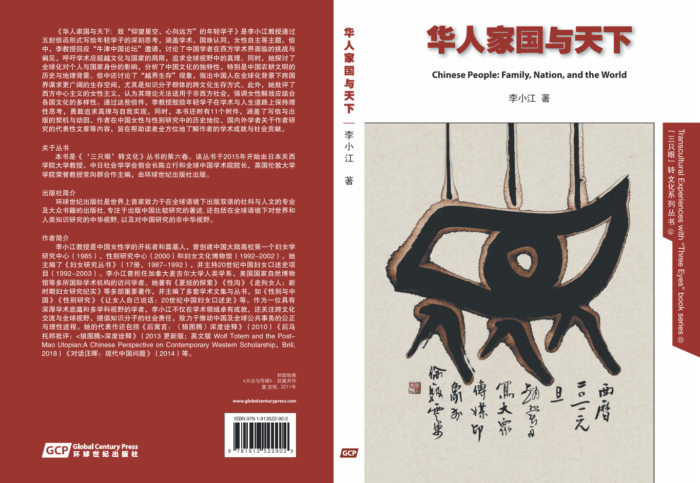
A Decade of Achievement: Associate Member of the Academy of Social Sciences Since 2014
After celebrating the 10th anniversary of the founding of the Global China Academy (formerly CCPN Global and Global China Institute, 2013–2023), we have entered phase 2.0 starting in 2024. This also marks the 10th anniversary of becoming an Associate Member of the Academy of Social Sciences in 2014. We have updated brochures available in either A4 portrait or A5 landscape sizes in both English and Chinese. They include the following information:
Global China Academy: An Introduction
About Global China academy
Global China Academy (GCA) is a UK-based independent worldwide fellowship that encourages comprehensive studies on China in the social sciences and humanities. Taking language-based global or comparative perspectives, it aims to add to the sum of human knowledge. It also encourages participation in global society building and governance. All of this is achieved through the dissemination of academic research, knowledge transfer, social consultancy and public engagement.
- Our publishing subsidiary, Global Century Press (GCP, UK Company No.: 08892970) is the first independent publisher dedicated to publishing academic and popular books and journals bilingually in the social sciences and humanities, with a focus on China from global and comparative perspectives.
- The Global China Dialogue (GCD) series is a high-end discourse platform facilitating communication between the Chinese and the rest of the world.
Board of Trustees
GCA was formerly known as CCPN Global, founded in 2013 (Charity No. 1154640), and later as the Global China Academy (GCA). As a UK Charitable Incorporated Organisation (CIO, Charity No. 1198983), GCA is governed by a Board of Trustees consisting of the Chair (Maria Jaschok), Secretary, Treasurer, and members, who are responsible for running the organisation in accordance with charity law and our constitution. They also provide strategic oversight of the organisation, including taking the lead in implementing appropriate actions if any risks should occur.
GCA Council
The GCA Council is composed of prominent individuals who have a keen interest in the study of China and the Chinese in a global context. The Council plays a vital role in advising and guiding the Academy’s development and beyond. It is active in a range of other ways, including the recruitment of new Fellows, contribution of articles to our journals, recommendation and submission of books for publication by Global Century Press, recommendation of themes and speakers for our Global China Dialogues, and in raising the Academy’s profile around the world.
- Council Chair Prof Tony McEnery FAcSS FRSA FGCA, Lancaster University, UK
- Chinese Council Chair: Prof BING Zheng FGCA, Jilin University,
China - Non-Executive Chair, Prof Wei Li FBA FAcSS FRSA FGCA, IOE of University College London, UK
- Chinese Non-Executive Chair, Prof ZHANG Xiaodong FGCA, CEO of Agile Think Tank and Nanjing University of Finance & Economics, China
- President: Prof Xiangqun Chang FRSA FGCA, Global China Academy, UK
- Chinese President: Prof XIE Lizhong FGCA, Peking Uinversity, China
- Vice-President (Fellowship), Prof Peter Schröder, University College London, UK
- Vice-President (Publications), Prof Qing Cao, Durham University, UK
- Vice-President (Asian engagement), Prof Shigeto Sonoda, University of Tokyo, Japan
- Vice-President (European engagement), Prof Carsten Herrmann-Pillath, Erfurt University, Germany
- Secretary (UK): Dr Yan Wu, Swansea University, UK
- Secretary (China): Prof. LI Boyi, Nanjing University of Finance and Economics, China
- The administrative team consists of the Legal Advisor, Events Officer, Administrative Manager, Project Manager, and Operations Manager.
- Founding and Past Honorary President (2013–2021): Prof. Martin Albrow FAcSS.
- Founding and Past Chinese President (2013–2017): Prof. ZHANG Letian.
Global China Academy Fellowship
Types of fellowship
- Founding Fellows and Life Fellows were granted by Global China Academy’s founding Honorary Presidents (UK and China), Presidents (UK and China), and the Board of Trustees at the founding of the Global China Academy in 2021.
- Full Fellows are distinguished scholars, academics and professionals whose expertise and knowledge provide GCA with access to the best possible advice and guidance. They also contribute to the publications of Global Century Press and the Global China Dialogue series of forums.
- Associate Fellows are typically early to mid-career scholars, academics and professionals who have demonstrated potential in their field but may not yet have the extensive accomplishments or tenure of a Full Fellow. They often collaborate on research projects, contribute to publications and may participate in dialogues or forums.
- Institutional Fellows are organizations that share our academic and social missions and support the work of Global China Academy, Global Century Press and the Global China Dialogue series forums.
Eligibility criteria
Full Fellowship
- Has made a significant contribution to advancing the understanding or promotion of studies on China and the Chinese with global or comparative perspectives in the social sciences and humanities.
- Has an established track record of participating in transcultural initiatives, fostering dialogue and engaging with the governance of global society.
- Has shown leadership, innovation and influence in the above-named fields.
- Has clearly demonstrated ethical and moral integrity that aligns with the values of the GCA.
Associate Fellowship
- Aged 21 or over, and based in the UK or overseas.
- Has demonstrated an interest in the understanding or promotion of studies on China and the Chinese with global or comparative perspectives in the social sciences and humanities through research, teaching, training, professional work, publications or other similar work.
- Has demonstrated potential in their field, although they may not yet have attained extensive accomplishments and hence are not ready for Full Fellowship.
Institutional Fellowship
- The institution shares Global China Academy’s academic and social missions.
- The institution supports the work of Global China Academy, Global Century Press and the Global China Dialogues.
How to Apply
Before submitting a proposal please download the following information from the webpage https://globalchinaacademy.org/fellow-ship-nominations:
More Information
Please visit www.globalchinaacademy.org/gca-fellowship for more information:
- Fellowship Lists
- Fellowship Benefits and Obligations (English and Chinese)
- Fellowship Subscriptions
- Support us
Global China Dialogue and Other events
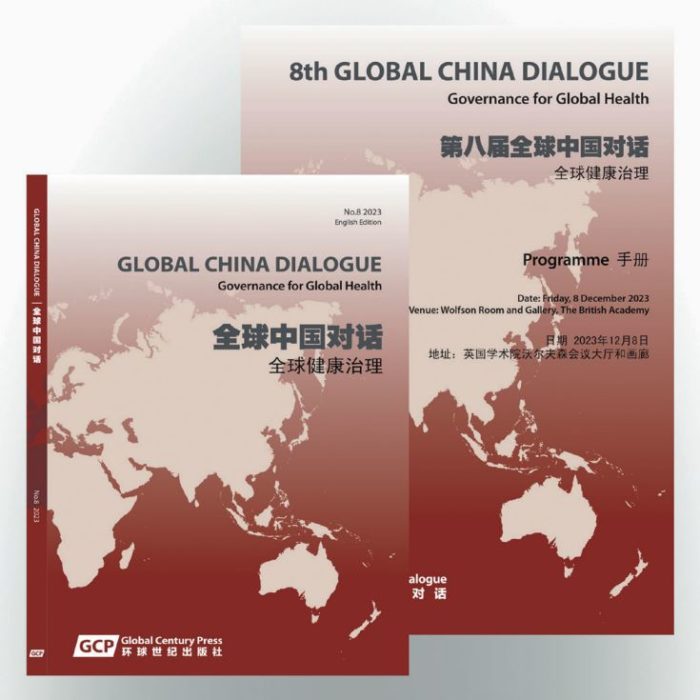
About the Global China dialogues
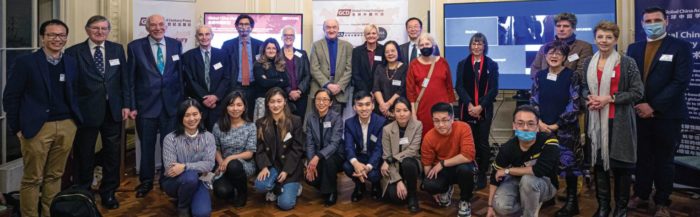
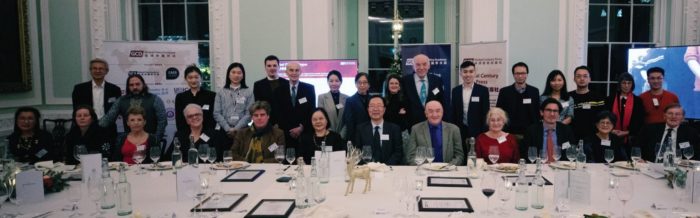
The annual Global China Dialogue (GCD) forum is a core event held by Global China Academy in collaboration with various organisations. The GCD is a high-end forum that focuses on ‘transculturality’ and social creativity. Our aim is to enhance public understanding of current global affairs and common interests. We do this via public dialogue and discussion between Chinese and non-Chinese academics, political and business leaders, experts, professionals, practitioners and interested laypeople. Our approach is interdisciplinary and comparative.
Based on GCDs rules of ‘civilized dialogue’, we encourage both sides to listen to the other, understand cultural differences, respect local customs, accept different perspectives and acknowledge the common humanity. In particular, it explores new global governance, encompassing national governments, international organizations, multinational companies, NGOs and citizens, with a mission to build a harmonious, symbiosis-based human community of a shared future.
Past and future dialogues as are follows:
- 2025 GCD X: Governance for Global Education
- 2024 GCD IX: Global Governance for AI
- 2023 GCD VIII: Governance for Global Health
- 2021 GCD VII: Reforming Global Governance
- 2019 GCD VI: Governance for World Peace
- 2018 GCD V: Governance for Global Justice
- 2017 GCD IV: The Belt and Road (B&R) – Transcultural Cooperation for Shared Goals
- 2016 GCD III: Sustainability and Global Governance for Climate Change
- 2015 GCD II: Transculturality and New Global Governance
- 2014 GCD I: The Experience of China’s Modernization from a Comparative Perspective
Other events
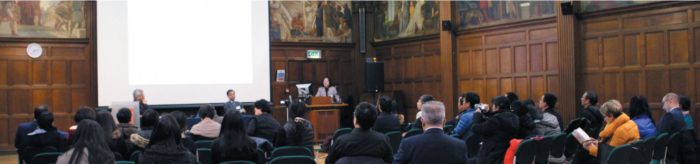
Global China Academy organizes and participates in activities relating to China in comparative perspective and social sciences and humanities studies on China, and in activities of a different nature that chime with its academic and social missions.
- 2020 A Symposium on China’s Development Path in the New Era from Multiple Perspectives
- 2019 Global China Media Seminar series (2016–19, UK)
- 2018 Academic Publishing and Knowledge Service Conference
- 2018 Digital Interconnection and Intelligent Manufacturing: Social Change and Cultural Transformation in Global Society
- 2017 Chinese for Social Science (CSS) Workshop
- 2017 Globalization of Chinese Social Sciences Symposium
- 2017 Global China Media in Comparative Perspective Symposium
- 2017 Forum Series on Transcultural Cooperation and New Methodologies for Social Sciences
- 2016 Corpus Approaches to Chinese Social Science (CACSS) Workshop
- 2014 A symposium on China-British Cultural Exchange: Strategic Cooperation and Practical Implementation
- 2013 Max Weber and China conference
- 2013 How do Migrants from the BRICS Countries Participate in Shaping the Global Society?
Global Century Press
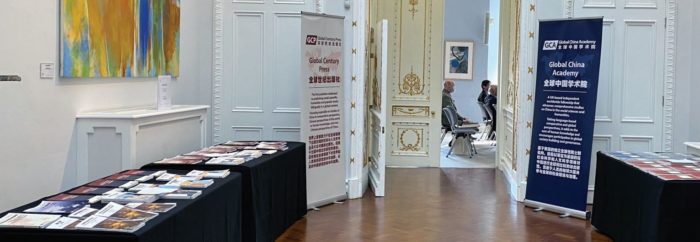
About Global Century Press
Founded in 2014, Global Century Press (GCP, UK Company No.: 08892970) is the first independent publisher dedicated to publishing academic and popular books and journals bilingually in the social sciences and humanities, with a focus on China from global and comparative perspectives.
GCP publishes a range of publications, from academic journals, edit ed volumes, selected conference papers and theme-based articles, to research monographs, book series, teaching and learning materials on Chinese for social sciences and reference books, printed mostly in colour. Works are published in various forms, such as print, electronic versions, video, audio, on the internet and the mobile internet. A subsidiary company of the Global China Academy, GCP’s bilingual publications serve the purposes of disseminating related academic research, knowledge transfer and public education globally.
Open access journals and books
Under its open access model, GCP makes 80 percent of its journal and book content freely available to the public, promoting academic exchange and knowledge sharing. This means that readers can freely access and download certain articles or portions of the journal’s content, without any payment or subscription required. At the same time, GCP also offers a subscription model, providing readers who need it with wider access and services. Through subscription, readers can gain access to the full content of the journal, special features or additional resources, as well as other benefits exclusive to subscribers.
House Style Guide
GCP House Style Guide can be downloaded in our website. It is designed to take our contributors’ work from initial manuscript to final publication with a minimum of fuss. Our style broadly follows APA 7th edition but has evolved over time through our growing experience of dual language editing and typesetting.
Dual languages
GCP is pioneering a unique approach to integrating English and Chinese in its publications. Its dual language styles and rules have been developed with both English and Chinese academics, graphic designers, editors and proofreaders. GCP applies this house style to all journals and books. GCP has DOI authorization. Any single article with a DOI number. Additional dual language information is displayed at the end of each book, a feature unique to GCP. Additional dual language information is displayed at the end of each book, a feature unique to GCP.
Publisher’s Professional Team
- President: Ingrid Cranfield
- Editor-in-Chief: Xiangqun Chang
- Professional Team consists of Academic Advisor, Senior Associate Editor, Editors, Proofreaders, Translators, Graphic Designers, Typesetters, Librarian, Website Engineers, etc.
Publication events
Please visit GCP website for publication-related events: https://globalcenturypress.com/events.
Journals
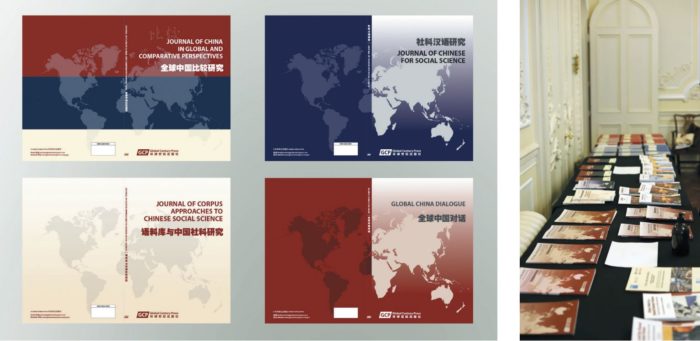
Global Century Press (GCP) publishes three cutting edge academic journals. They are Journal of China in Global and Comparative Perspectives (English and Chinese editions), Journal of Chinese for Social Science (Chinese edition), and Journal of Corpus Approaches to Chinese Social Science (Chinese and English editions). GCP also publishes the ‘Global China Dialogue Proceeding’ series in English and Chinese editions.
- Journal of China in Global and Comparative Perspectives (JCGCP). CGCP launched in 2015 (annually), publishes original multidisciplinary and interdisciplinary comparative research on China on a range of topics in the social and human sciences. Beyond purely academic content it appeals to policymakers and general readers interested in China. Its aim is to bring out the best in scholarship, transcending traditional academic boundaries in an innovative manner.
- Journal of Chinese for social science (JCSS). JCSS formally launched in 2021 (biennially), Formally launched in 2021, JCSS scrutinizes the utilization of the Chinese language in academic contexts, emphasizing the crucial role of precise translation and the issues arising from cross-lingual research in Chinese social sciences. It minimizes risks related to translation in cross-cultural research, and enhances dialogue among various languages, cultures, and communities. JCSS’s commitment to accurate translation forms the backbone of effective intercultural communication, ensuring contextual clarity and contributing to the global exchange of social science knowledge and ideas.
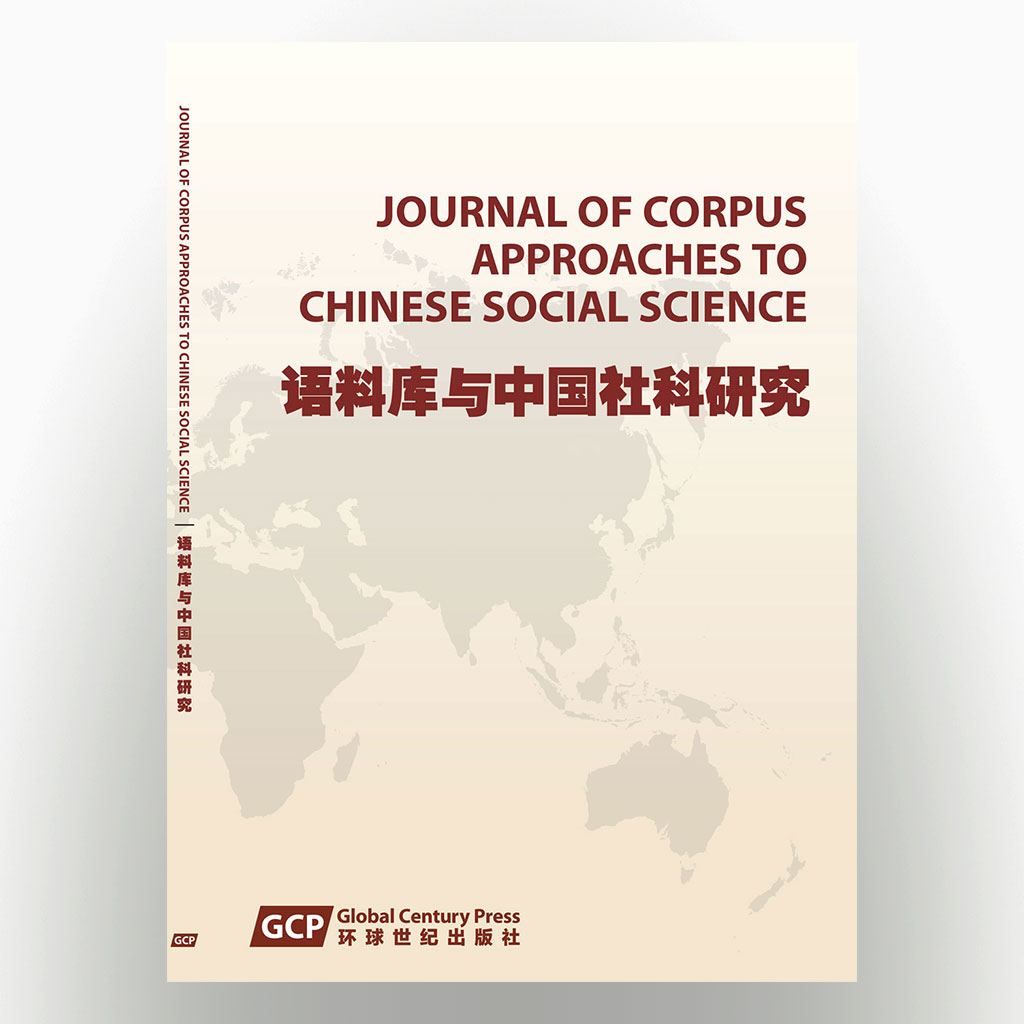
- Journal of Corpus Approaches to Chinese Social Sciences (JCAC SS) launched in 2019 (annually in Chinese and English alternatively), is guided by the founding Director of the ESRC Centre for Corpus Approaches to Social Sciences at Lancaster University, Professor Tony McEnery, and supported by colleagues both domestically and abroad. It introduces innovative corpus methods to the Chinese social sciences field. It addresses challenges in this domain, offers a platform for academic exchange, and publishes pertinent research in the context of big data and the complexities of the global digital age.
- Global China dialogue Proceedings. The Global China Dialogue forums aim to enhance the understanding of current global affairs and common interests through public dialogue and discussion, using interdisciplinary and comparative perspectives. Each issue of the Global China Dialogue Proceedings includes information on the chairs and speakers, topics and abstracts, and content of speeches and Q&A sessions. It also includes photos of the panels, participants, discussions, and networking. It is hoped that this combination of images and text can preserve the dynamic dialogue for interested readers whether or not they participated in the forums.
Book sciences
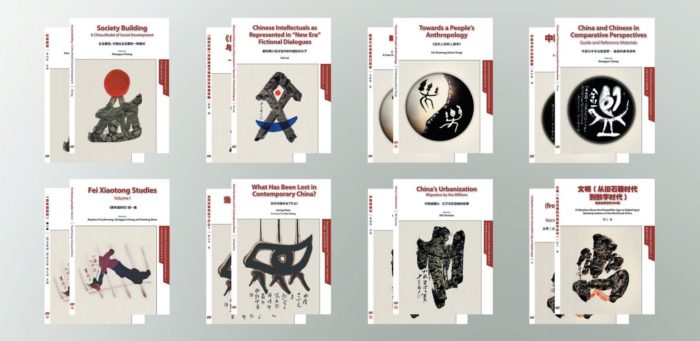
GCP publishes eight book series on specific themes. They are:
- Chinese Concepts aims to infuse Western social science concepts with uniquely Chinese elements. By revisiting terms such as ‘bao’ (reciprocation), ‘mianzi’ (face), and ‘guanxi’ (reciprocity or deferential relationship), the series enhances the world’s knowledge system by incorporating diverse cultural insights into traditional social science disciplines.
- Chinese Discourse covers discourse studies around Chinese history, culture, current affairs, language and people. It advocates an interdisciplinary, multi-perspective, multi-method knowledge merged with Chinese culture and possessing a global outlook, which bridges the gap between China and the rest of the world and opens a window for the outside world to understand China.
- Understanding China and the World was inspired by a significant 2010 event, ‘Understanding China, Engaging with Chinese People’, commemorating the centenary of renowned sociologist Fei Xiaotong’s birth. The series delves into comprehensive understanding and rational interpretations of China and the world, echoing the multi-dimensional insights from the event.
- China and Chinese in Comparative Perspectives expands the aims of Journal of China in Global and Comparative Perspectives to include Chinese ways of thinking, Chinese people, civilization, and culture, and contrasts between China and elsewhere, Chinese people and non-Chinese people, Chinese perspectives of the world, and non-Chinese perspectives of China globally.
- Globalization of Chinese Social Sciences aims to globally promote prominent Chinese social scientific works and a century’s efforts by social scientists both inside and outside China.
- Transcultural Experiences with ‘Three Eyes’ acts as a bridge in the areas of cross-border cultural communication and mutual understanding. Authors examine their understanding of Chinese culture, non-Chinese cultures, and their specialties and sectors as professionals and practitioners. This ‘triple perspective’ describes and explains the collision and confluence between different cultures and notions they experience in their everyday lives and work in China and abroad.
- China Urbanization studies explores the delay in people’s urbanization in China, highlighting the disparity between migrant workers and urban residents. It underscores China’s commitment to addressing these issues with sustainable, people-oriented policies.
- Cutting Edge and Frontiers provides a platform for readers to explore and understand the forefront of research and development across various fields, offering insights into the most advanced social scientific topics globally.
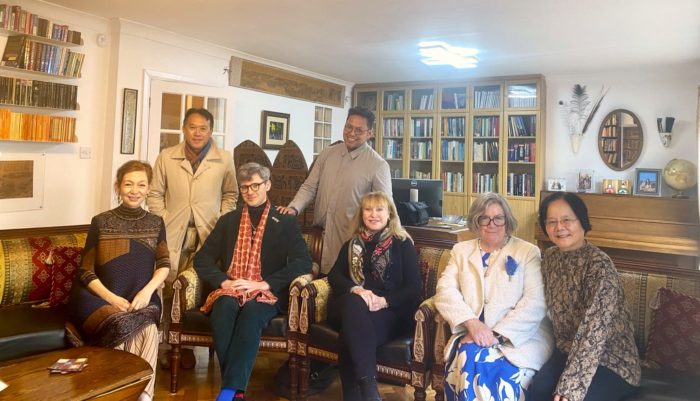
2023: The First Year of Implementing the ‘Reform and Opening-Up Policy’ at the GCA Centre
The year 2023 marked the 10th anniversary of the Global China Academy (GCA), which was founded in 2013 as CCPN Global. GCA’s operations are supported through outsourcing to experts in various fields, such as website design and maintenance, graphic design, translation, copy editing and more. Additionally, individuals who align with our academic and social missions significantly contribute on a voluntary basis. As an independent non-profit academic institution, our independence is evident in the transparency of our funding sources, which are available for scrutiny by anyone at any time, and in Global Century Press’s commitment to publishing uncensored work on China.
One of the panels of the 7th Global China Dialogue (GCD) was ‘Reforming the Institutions’. Professor Martin Albrow, Funding and Past Honorary President of GCA, encouraged the GCA to reform itself into a sustainable institution. In addition to leveraging existing publication revenues, GCD-based income and small fellowship subscriptions, in 2023 we initiated our own version of a ‘reform and opening-up policy’ which encompasses ‘outreach and invitation’, following consultation and approval from the GCA Board of Trustees. This innovative policy involves utilizing the property occupied by the GCA Centre to create funding opportunities through extensive networking. This page showcases some reform-related activities, outcomes, or potential long-term benefits.
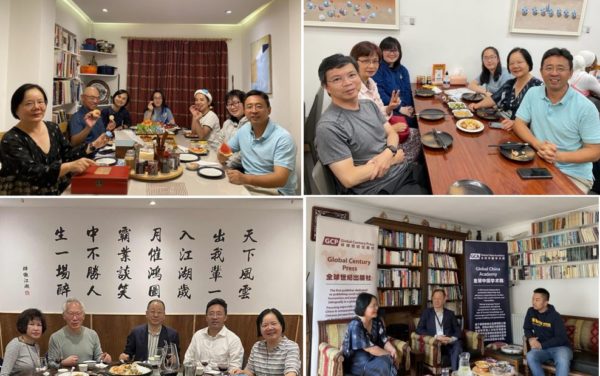
From July 4-10, the GCA Fellows’ Home welcomed guests from Hong Kong and Macau. While the GCA Centre has previously hosted speakers and participants for GCA events, offering free accommodation in exchange for volunteer work, this occasion marked the first time it was opened to GCA friends for networking purposes, aiming to fulfil both academic and social missions. Introduced by Professor Xiangqun Chang’s golf friend, Kai Liang (an Ambassador of the Hampton Court Golf Club and Director of Business Development of MEL Science, second from the left in the left photo), Dr Pu Zhai (President for Ascendent Capital Partners (Asia) Limited, Hong Kong, first on the right in the left photo) and his daughters were accommodated at the Fellows’ Home. Dr Zhai introduced some of his friends to Professor Chang, including guests from Macau (third from the right in the left photo), Singapore (first and second from the left in the second photo), and London, including Dr Chen and her husband (first and second from the left in the right photo), and Dr Frank Guo (Chairman of New Beacon Group, in the middle of the second photo from the left).
Later in July, Dr Guo (middle in the right photo) attended a meeting with DU Yichao, who visited the UK in preparation for the Wuxi City delegation in August. He is Director of Wuxi Institute of New Culture, PhD student of UCL and GCA Associate.
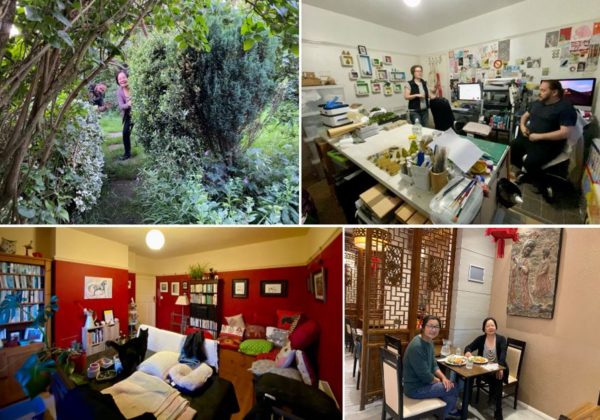
On July 19, Professor Xiangqun Chang visited the home of Mr Mark Lee, GCA’s Graphic Designer, and Mrs Sarah Lee, GCA’s Librarian (both in the second photo above), in Sheffield. In addition to discussing GCA’s work, they enjoyed playing hide and seek in their ‘secret garden’ and explored unique rooms with different colours and their work studio. During their visit after the 7th Global China Dialogue in 2021, they contributed to the development of the GCA Centre’s five ‘walk and talk’ routes and enjoyed Routes 1 and 2. A few days later, Professor Chang hosted a farewell meal for the retired GCA Administrative Manager, Zhufeng Sheng (left in the fourth photo).
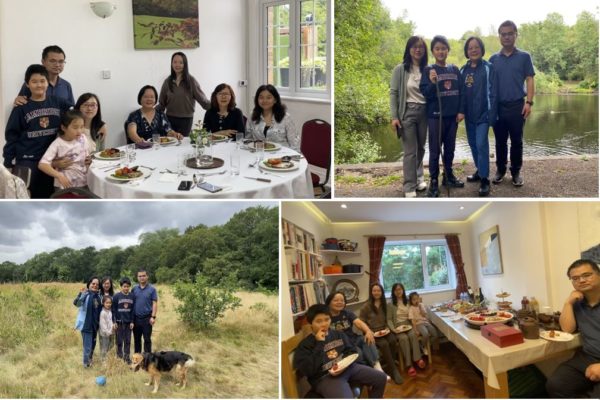
On July 22, the two Chinese sociologists whom Professor Chang met at SOAS in May visited the GCA Centre. They are Dr QIN Chen (who stands under the picture in the left photo), Associate Professor at Hohai University, and Dr YUE Shaohua (who is pictured with a family of four in the left photo), Associate Research Fellow at the Jiangsu Academy of Social Sciences. Dr Yue’s wife, Dr ZHANG Haihua, is a Visiting Fellow at LSE from Nanjing Agricultural University. All of them graduated from Nanjing University under the supervision of either Professor SONG Linfei, former President of the Jiangsu Academy of Social Sciences and the Chinese Sociological Association, or Professor ZHOU Xiaohong, the founding Dean of the School of Social and Behavioural Sciences at Nanjing University. They enjoyed the GCA Centre’s ‘walk and talk’ route 2, which includes lunch and tea, offering a blend of leisure, learning, and physical activity to enhance the experience for visitors.
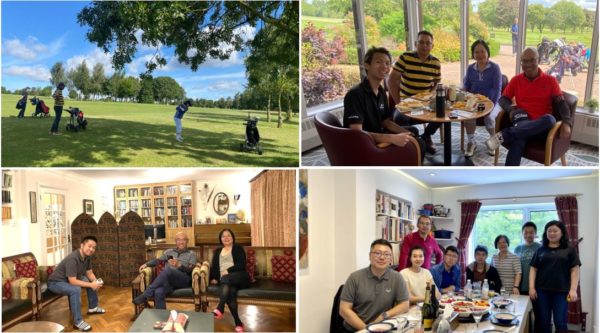
From August 6-7, Mr Kai Liang attended a meeting with DU Yichao at the GCA Centre in preparation for the Wuxi (London) Promotion Conference scheduled for August 9. The following day, Professor Chang met with Mr David Liu, Manager of the Brocket Hall Golf Club, and played golf with Mr Kai Liang and his son at the Winter Hill Golf Club. The preparations for the 7th Global China Dialogue: Governance for Global Health (GCD II) were discussed. A few days later, David’s family and relatives visited the GCA Centre. They all shared GCA’s social mission and expressed their support for GCD II.
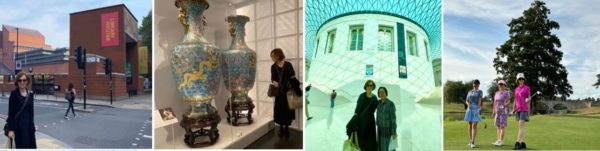
From September 10-11, LI Li, the Founder and Honorary Curator of the Guangzhou Thirteen Hongs Museum, spent two days at the GCA Fellows’ Home. She is a Visiting Fellow at the Fitzwilliam Museum and a Fellow of Lucy Cavendish College, University of Cambridge. The museum is located on the historical site of the Qing Dynasty trading posts in Guangzhou. It houses more than 6,600 artifacts, highlighting Guangzhou’s significant role in the ancient Maritime Silk Road and its exclusive maritime trade with Europe and America. A large number of Western-style products that incorporate Chinese elements showcase the shared beauty between China and the West during the 18th and 19th centuries, representing the outcomes of transcultural exchange. Their importance today highlights the early stages of globalization, emphasizing the critical importance of mutual understanding and cooperation in shaping a global society, international relations, and trade. During LI Li’s stay, she and Professor Chang visited the British Library, attended the ‘China’s Hidden Century’ exhibition at the British Museum, and played golf at Brocket Hall.
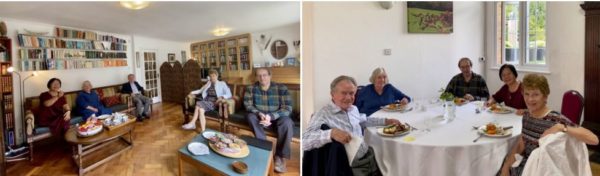
On September 13, some GCA colleagues gathered socially at the GCA Centre and Mill Hill Golf Club. Professor Martin Albrow (left in the right photo) discussed his upcoming trip to China in one month. Professor Xiangqun Chang shared her experiences of adopting a new lifestyle of living alone in an ’empty nest’ and ‘living with separation’ (Charles Stafford, 2003), after her husband, Dr Thomas Clarke (GCA Trustee, right in the left photo), moved to his father’s house after the COVID-19 and decided to stay there even after his father’s passing. Dr Frances Wood (2nd from the left in both photos) shared her knowledge about the history of the Guangzhou Thirteen Hongs and expressed appreciation that GCP was considering publishing an oral history of Isabel Crook (1915-2023), whom she knew very well.
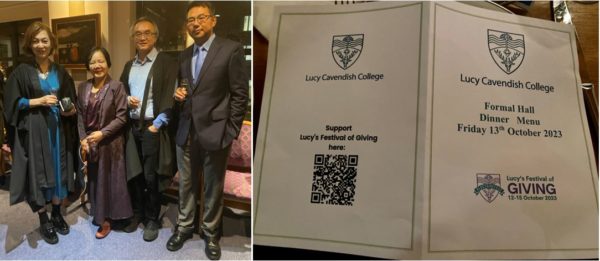
On October 13, Professor Xiangqun Chang and David Liu were invited by LI Li to attend Lucy’s Festival of Giving, where they met Dr Xin Fan (second from the right in the left photo), ‘a global citizen’ who has studied and taught at universities in China, Germany, the USA, and the UK. He serves as Director of Studies in Asian and Middle Eastern Studies and as a Teaching Associate in Modern Chinese History at the Faculty of Asian and Middle Eastern Studies. Professor Chang and Dr Jane Greatorex exchanged their details at the high table. She is a Senior Tutor, Graduate and Undergraduate Tutor, Director of Studies in Pre-Clinical Part II Veterinary Medicine, and Honorary Scientist at Public Health England. The event provided a valuable opportunity for networking and sharing insights among professionals from diverse academic and cultural backgrounds, enriching the dialogue on global citizenship and interdisciplinary collaboration.
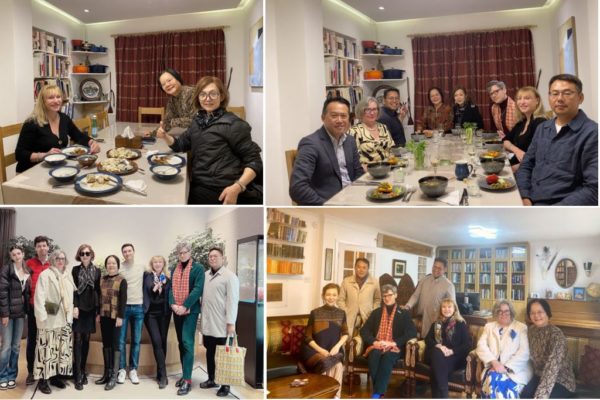
From October 27-29, during the Asian Art in London event, the GCA Centre welcomed Fellows and guests from Cambridge. The distinguished visitors included LI Li, Fellow of Lucy Cavendish College (LCC); Alison Vinnicombe, Praelector, Registrar, Archivist, and Dean of Discipline LCC; Dr James Lin, Curator of the Asia Department at the Fitzwilliam Museum, Cambridge; Jeni Kong, Trustee of the Confucius Better World Foundation and daughter-in-law to the 78th generation descendant of Confucius, notably the only person of non-Chinese ethnic; Rory Hutton, Designer at Rory Hutton Ltd; and Dr Kim Yahya, Principal Scientist at WaveBreak. David Liu played a key role in hosting the event. It is the first time the GCA Centre has received guests for non-GCA events. A total of eight individuals from eight different disciplines and five ethnic backgrounds came together, united by their shared interests. The discussions were engaging and filled with enthusiasm. Everyone felt that the GCA Centre truly deserved to be called a ‘Fellows’ Home’ and enjoyed being treated as such.
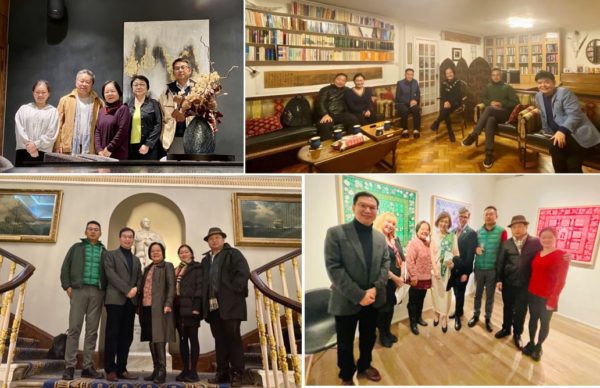
From November 7-10, Dr Yuan Cheng (second from the right in the left photo), a GCA Trustee, visited the UK. Coincidentally, she is a friend with Dr Pu Zhai from the Oxbridge Alumni Network. Following Dr Zhai’s recommendation in early July during his stay at the GCA Centre, Dr Cheng and Professor Chang met with some professionals suggested by Dr Zhai. These included Alan Fang (a lawyer, second from the left in the left photo), his wife Katie Zheng (a solicitor, first on the left in the left photo), Dr Ian Zhu (an accountant, first on the right in the second photo from the left), and Terry Ho (an accountant, second from the left in the second photo from the right). Many of them attended Rory Hutton’s ‘Gardening in Linocut’ exhibition, where they met LI Li, Rory, and Joni. They enjoyed the distinct styles of art on display and discovered elements of Chinese culture within them.
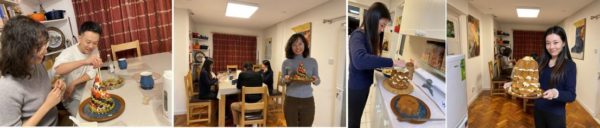
On December 7, participants and volunteers of GCD VIII took pleasure in preparing snacks and cakes for the Tea Party scheduled to be held at Lucy Cavendish College’s ‘Fellows’ Home’—Marshall House. WANG Conghan, a PhD candidate from Zhejiang Gongshang University (second from the left in the left photo), and SHA Yuze, a PhD candidate from Lancaster University (in the second photo from the left), created the Christmas Tree Cheese Ball Appetizer. MENG Jialin, an interpreter (featured in the right two photos), prepared an Italian Pandoro Christmas Tree Cake. Their contributions were greatly appreciated by the party attendees. Dr Jane Greatorex of LCC specifically mentioned their efforts in her email.
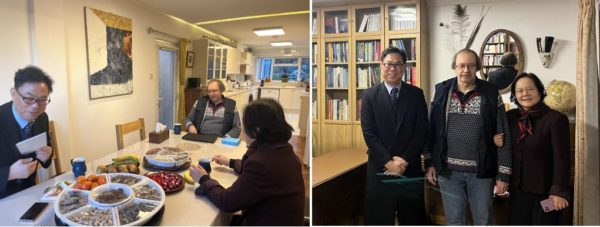
On December 11th, Dr QIAN Zhenhua met with GCA Treasurer Dr Thomas Clarke at the GCA Centre to discuss China’s complex global relationships, including Taiwan, South China Sea disputes, and its influence on ASEAN countries. They explored the challenges facing democracy, such as nationalism and misinformation. Dr Clarke inquired about China’s role in global progress. Dr Qian admired Clarke’s vision but cited challenges for Chinese influence due to internal and external factors.
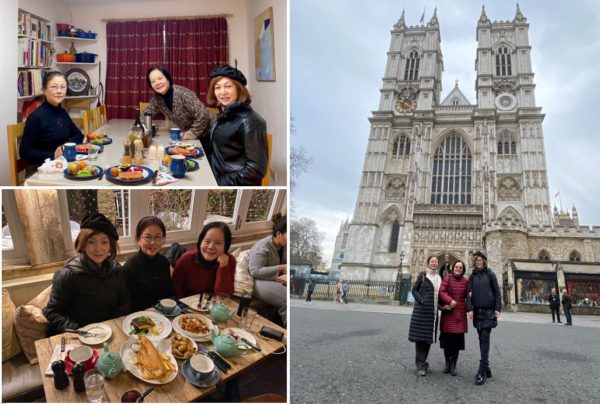
On December 21st, before her departure back to China, together with LI Li, a farewell gathering was held at the GCA Fellows’ Home for LIAO Nong (left in the left photo), Chief Physician of the Plastic Surgery Department at the Third Affiliated Hospital of Guangzhou Medical University. She presented a paper on ‘Challenges faced by the medical beauty industry’ at the 8th Global China Dialogue on December 8th, 2023.
We visited central London and Oxford together. During the gathering, LI Li expressed a strong desire to meet Dr Frances Wood to seek advice and resources for digitalizing the Guangzhou Thirteen Hongs Museum. The meeting was arranged with outdoor activities on February 4th, 2024 (Click here to find more).
In conclusion, the year 2023 has been a landmark period for the Global China Academy (GCA), marking a decade of significant growth, outreach, and innovation since its inception. Celebrating its 10th anniversary, GCA has not only upheld its commitment to promoting academic exchange, research dissemination, and cultural communication but has also ventured into new territories with the implementation of the ‘Reform and Opening-Up Policy.’ Endorsed by the GCA board, this policy represents a strategic pivot towards utilizing GCA’s assets more effectively, thereby ensuring the institution’s sustainability and expanding its impact.
The diverse range of activities and engagements throughout the year underscores GCA’s role as a dynamic platform for fostering understanding and cooperation between China and the global community. The introduction of the GCA Centre and the establishment of the Fellows’ Home as a space for academic hospitality have further cemented GCA’s reputation as a forward-thinking and inclusive institution.
Through strategic collaborations, extensive networking, and a steadfast dedication to its mission, GCA continues to shape the dialogue on global governance, cultural exchange, and academic collaboration. As we reflect on the achievements of the past year and look forward to the future, it is clear that GCA is poised for even greater contributions to global academic and social missions, driven by a commitment to reform, openness, and mutual understanding. By embracing change, fostering innovation, and promoting inclusivity, GCA is redefining what it means to be a global academic institution in the 21st century.
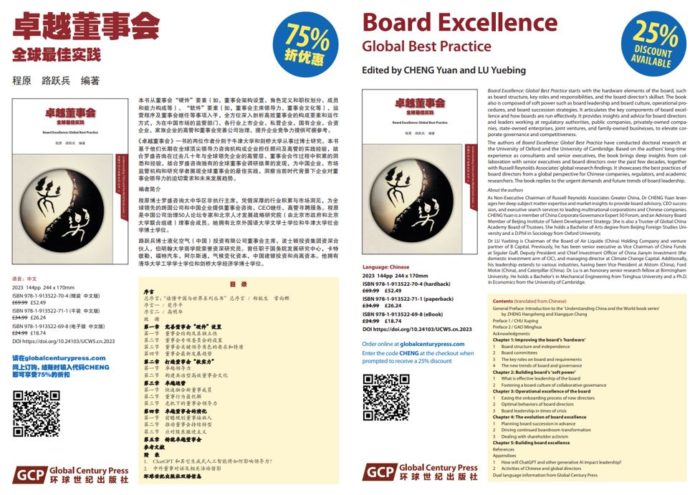
Beyond the Board: Cultivating a Culture of Excellence in Global Governance
Welcome to the official launch page for Board Excellence: Global Best Practice, a groundbreaking work that sets a new standard in corporate governance and board management. Edited by CHENG Yuan and LU Yuebing, and published by Global Century Press, this book is a must-read for board directors, policymakers, and business leaders seeking to navigate the complexities of today’s corporate world. It provides a comprehensive overview of effective board practices, combining research and real-world insights to foster leadership, culture, and strategic planning. Embrace the opportunity to elevate your organization’s governance with this essential guide.
This book is available in Chinese, with the Overseas Chinese edition incorporating select English elements to cater to a wider readership. This practice, a hallmark of Global Century Press, enhances the accessibility of the publication to non-native Chinese speakers or learners of the language. By blending English translations or summaries with the original Chinese text, the publisher not only broadens its market but also facilitates cross-cultural understanding and appreciation. This feature is especially useful for readers interested in Chinese studies, as it allows them to engage with the material more deeply and effectively, regardless of their proficiency in Chinese.
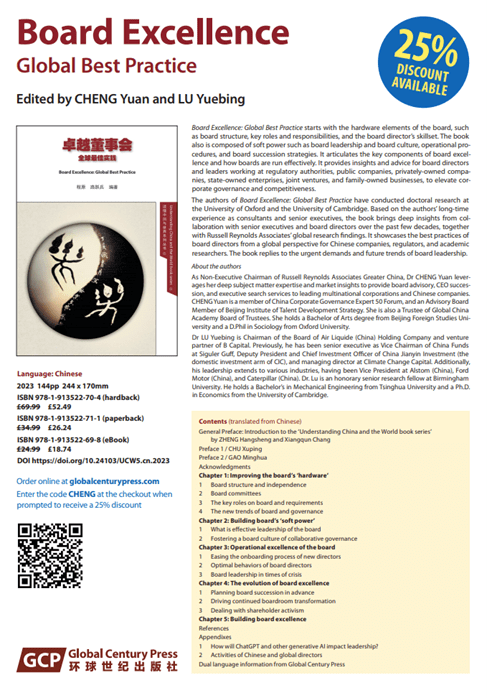
About the book
Board Excellence: Global Best Practice starts with the hardware elements of the board, such as board structure, key roles and responsibilities, and the board director’s skillset. The book also is composed of soft power such as board leadership and board culture, operational procedures, and board succession strategies. It articulates the key components of board excellence and how boards are run effectively. It provides insights and advice for board directors and leaders working at regulatory authorities, public companies, privately-owned companies, stateowned enterprises, joint ventures, and family-owned businesses, to elevate corporate governance and competitiveness.
The authors of Board Excellence: Global Best Practice have conducted doctoral research at the University of Oxford and the University of Cambridge, respectively. Based on the authors’ long-time experience as consultants and senior executives, the book brings deep insights from collaboration with senior executives and board directors over the past few decades, together with Russell Reynolds Associates’ global research findings. It showcases the best practices of board directors from a global perspective for Chinese companies, regulators, and academic researchers. The book replies to the urgent demand and future trends of board leadership.
About the authors
As Non-Executive Chairman of Russell Reynolds Associates Greater China, Dr CHENG Yuan leverages her deep subject matter expertise and market insights to provide board advisory, CEO succession, and executive search services to leading multinational corporations and Chinese companies. CHENG Yuan is a member
of China Corporate Governance Expert 50 Forum, and an Advisory Board Member of Beijing Institute of Talent Development Strategy. She is also a Trustee of Global China Academy Board of Trustees. She holds a Bachelor of Arts degree from Beijing Foreign Studies University and a D.Phil in Sociology from Oxford University.
Dr LU Yuebing is Chairman of the Board of Air Liquide (China) Holding Company and venture partner of B Capital. Previously, he has been senior executive as Vice Chairman of China Funds at Siguler Guff, Deputy President and Chief Investment Officer of China Jianyin Investment (the domestic investment arm of CIC), and managing director at Climate Change Capital. Additionally, his lead rship extends to various industries, having been Vice President at Alstom (China), Ford Motor (China), and Caterpillar (China). Dr. Lu is an honorary senior research fellow at Birmingham University. He holds a Bachelor’s in Mechanical Engineering from Tsinghua University and a Ph.D. in Economics from the University of Cambridge.
Contents
Prefaces
General Preface: Introduction to the ‘Understanding China and the World book series’ by ZHENG Hangsheng and Xiangqun Chang
Preface 1 / CHU Xuping
Preface 2 / GAO Minghua
Acknowledgments
Chapter 1: Improving the board’s ‘hardware’
1.1 Board structure and independence
1.2 Board committees
1.3 The key roles on board and requirements
1.4 The new trends of board and governance
Chapter 2: Building board’s ‘soft power’
2.1 What is effective leadership of the board
2.2 Fostering a board culture of collaborative governance
Chapter 3: Operational excellence of the board
3.1 Easing the onboarding process of new directors
3.2 Optimal behaviors of board directors
3.3 Board leadership in times of crisis
Chapter 4: The evolution of board excellence
4.1 Planning board succession in advance
4.2 Driving continued boardroom transformation
4.3 Dealing with shareholder activism
Chapter 5: Building board excellence
References
Appendixes
1 How will ChatGPT and other generative AI impact leadership?
2 Activities of Chinese and global directors
Dual language information from Global Century Press
1 Abstract and about the author
2 Table of contents
3 About the book series
4 Global Century Press and its unique features
4.1 GCP creates a unique feature for a dual-language service with global and transcultural perspectives
4.2 GCP style rules for rendering Chinese-English dual languages
4.3 GCP style rules for punctuation marks in Chinese and English bilingual typesetting
4.4 GCP style rules for Chinese and related names
5 Other book series and journals published by Global Century Press
As we conclude our introduction to the Board Excellence: Global Best Practice, we highlight its foundational role in shaping the leadership of boards today and in the future. The overseas Chinese edition, published by Global Century Press, features a unique bilingual introduction by the publisher and is slightly updated by the editors from the 2021 Mainland Chinese edition. It offers abundant knowledge and practical strategies for achieving corporate governance excellence. We encourage you to explore its pages to discover the secrets to successful board management. Click on this page now to get your copy and embark on the journey toward effective governance and improving organizational performance.
超越:在全球治理中培育卓越的董事会文化
欢迎访问《卓越董事会:全球最佳实践》的官方发布页面,这是一部在公司治理和董事会管理方面树立新标准的开创性作品。该书由程原和路跃兵主编,并由环球世纪出版社于2023年12月31日出版。此书对于寻求在当今企业世界中导航复杂性的董事会董事、政策制定者和商业领袖来说,是必读之作。它提供了有效董事会实践的全面概述,结合研究和现实世界的洞见,以培养领导力、文化和战略规划。把握机会,用这本必备指南提升组织的治理。
本书是中文著作,海外中文版融入了一些英文元素,以满足更广泛的读者群。这是全球世纪出版社的一项特色服务,旨在提高出版物的可及性,使非母语中文读者或正在学习中文的读者也能够接触和理解。通过将英文翻译或摘要与原始中文文本相结合,出版社不仅扩大了其市场,还促进了跨文化理解和欣赏。这一特点对于对中国研究感兴趣的读者尤其有用,因为它允许他们更深入、更有效地与材料互动,无论他们的中文水平如何。
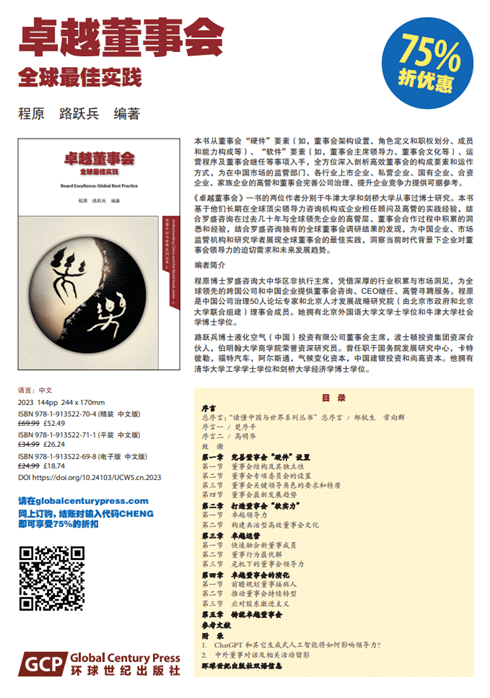
本书提要
本书从董事会“硬件”要素(如,董事会架构设置、角色定义和职权划分、成员和能力构成等)、“软件”要素(如,董事会主席领导力、董事会文化等)、运营程序及董事会继任等事项入手,全方位深入剖析高效董事会的构成要素和运作方式,为在中国市场的监管部门、各行业上市企业、私营企业、国有企业、合资企业、家族企业的高管和董事会完善公司治理、提升企业竞争力提供可据参考。
《卓越董事会》一书的两位作者分别于牛津大学和剑桥大学从事过博士研究。本书基于他们长期在全球顶尖领导力咨询机构或企业担任顾问及高管的实践经验,结合罗盛咨询在过去几十年与全球领先企业的高管层、董事会合作过程中积累的洞悉和经验,结合罗盛咨询独有的全球董事会调研结果的发现,为中国企业、市场监管机构和研究学者展现全球董事会的最佳实践,洞察当前时代背景下企业对董事会领导力的迫切需求和未来发展趋势。
编者简介
程原 博士,罗盛咨询大中华区非执行主席,凭借深厚的行业积累与市场洞见,为全球领先的跨国公司和中国企业提供董事会咨询、CEO继任、高管寻聘服务。程原是中国公司治理50人论坛专家和北京人才发展战略研究院(由北京市政府和北京大学联合组建)理事会成员。她也是全球中国学术院信托会成员。她拥有北京外国语大学文学士学位和牛津大学社会学博士学位。
路跃兵 博士,液化空气(中国)投资有限公司董事会主席,波士顿投资集团资深合伙人,伯明翰大学商学院荣誉资深研究员。曾任职于国务院发展研究中心,卡特彼勒,福特汽车,阿尔斯通,气候变化资本,中国建银投资和尚高资本。他拥有清华大学工学学士学位和剑桥大学经济学博士学位。
目 录
序言
总序言:“读懂中国与世界系列丛书” 总序言 / 郑杭生 常向群
序言一 / 楚序平
序言二 / 高明华
致 谢
第一章 完善董事会“硬件”设置
第一节 董事会结构及其独立性
第二节 董事会专项委员会的设置
第三节 董事会关键领导角色的要求和特质
第四节 董事会最新发展趋势
第二章 打造董事会“软实力”
第一节 卓越领导力
第二节 构建共治型高效董事会文化
第三章 卓越运营
第一节 快速融合新董事成员
第二节 董事行为最优解
第三节 危机下的董事会领导力
第四章 卓越董事会的演化
第一节 前瞻规划董事接班人
第二节 推动董事会持续转型
第三节 应对股东激进主义
第五章 铸就卓越董事会
参考文献
附 录
1. ChatGPT 和其它生成式人工智能将如何影响领导力?
2. 中外董事对话及相关活动留影
环球世纪出版社双语信息
1. 提要和作者
2. 目录
3. 关于本系列丛书
4. 环球世纪出版及其独有特色
4.1 本社以全球和转文化视野创造了双语服务的独有特色
4.2 本社汉英双语显示体例
4.3 本社汉英双语排版标点符号用法
4.4 本社中文及相关名字英文显示体例
5. 环球世纪出版社出版的其它系列丛书
在我们结束对《卓越董事会:全球最佳实践》一书的简介时,我们强调此书作为当代及未来董事会领导力的基石角色。环球世纪出版社出版的海外中文版带有独特的出版社双语特色介绍,并由编者在2021年大陆中文版基础上略有更新,为实现公司治理卓越提供了丰富的知识和实用策略。我们鼓励您翻阅其页面,以发掘成功董事会管理的秘诀。立即点击此页获取您的一本,开始向有效治理和提升组织绩效的旅程迈进。
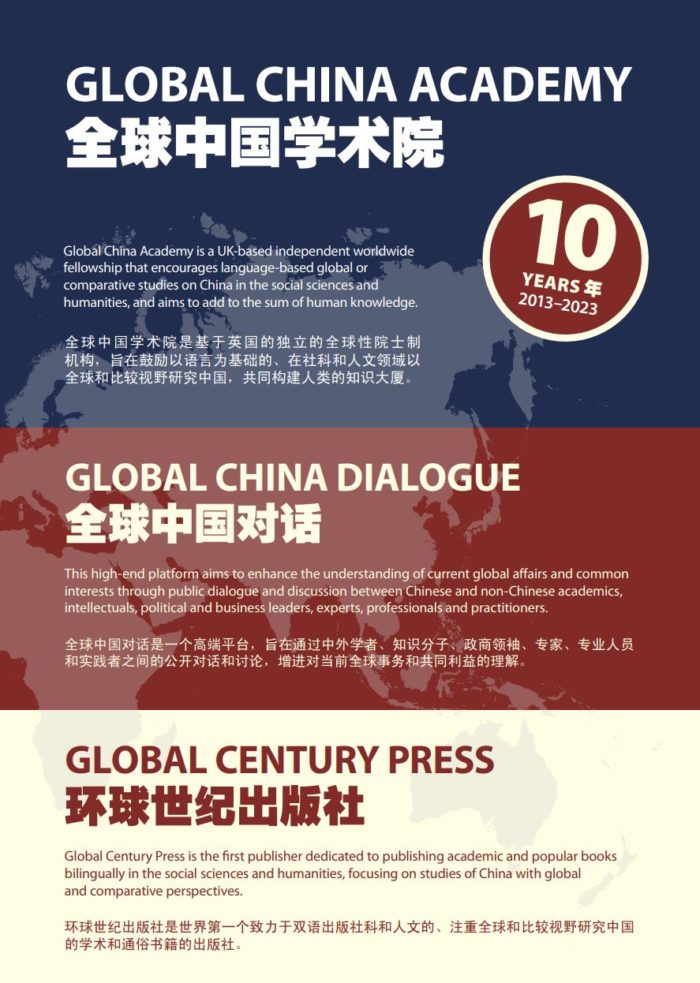
10th Anniversary of Global China Academy (CCPN Global, 2013-2023)
To celebrate ten years since the founding of Global China Academy (formally CCPN Global and Global China Institute, 2013–2023), we have produced a brochure. It includes information about:
- Global China Academy
- the GCA Fellowship
- the Global China Dialogues
- Global Century Press
Global China Academy: An Introduction
About Global China academy
Global China Academy (GCA) is a UK-based independent worldwide fellowship that encourages comprehensive studies on China in the social sciences and humanities. Taking language-based global or comparative perspectives, it aims to add to the sum of human knowledge. It also encourages participation in global society building and governance. All of this is achieved through the dissemination of academic research, knowledge transfer, social consultancy and public engagement.
- Our publishing subsidiary, Global Century Press (GCP, UK Company No.: 08892970) is the only independent platform in the world dedicated to publishing uncensored work on China.
- Global China Dialogue (GCD) series forum is a high-end discourse platform facilitating communication between the Chinese and the rest of the world.
Board of Trustees
GCA was formerly known as CCPN Global, founded in 2013 (Charity No. 1154640), and Global China Institute. As a UK Charitable Incorporated Organisation (CIO, Charity No. 1198983), GCA is governed by a Board of Trustees, who are responsible for running the organisation in accordance with charity law, and for making risk assessments and taking the lead in implementing appropriate action if any risk should occur. Chair: Ingrid Cranfield. Founding and Past Hon. President (2013–2021): Martin Albrow FAcSS.
GCA Council
The GCA Council is composed of prominent individuals who have a keen interest in the study of China and the Chinese in a global context. The Council plays a vital role, advising and guiding the next phase of the Academy’s development and beyond. It is active in a range of other ways, including the recruitment of new Fellows, contribution of articles to our journals, recommendation and submission of books for publication by Global Century Press, recommendation of themes and speakers for our Global China Dialogues, and in raising the Academy’s profile around the world.
- Council Chair Prof Tony McEnery FAcSS FRSA FGCA, Lancaster University, UK
- Chinese Council Chair: Prof LI Qiang FGCA, Tsinghua University, China
- Non-Executive Chair, Prof LI Wei FBA FAcSS FRSA FGCA, IOE of University College London, UK
- Chinese Non-Executive Chair, Prof ZHANG Xiaodong FGCA, CEO of Agile Think Tank and Nanjing University of Finance & Economics, China
- President: Prof Xiangqun Chang FRSA FGCA, Global China Academy, UK
- Chinese President: Prof XIE Lizhong FGCA, Peking Uinversity, China
- Vice-President (Fellowship), Prof Peter Schröder, University College London, UK
- Vice-President (Publications), Prof Julia C Strauss, SOAS, University of London, UK
- Vice-President (Asian engagement), Prof Shigeto Sonoda, University of Tokyo, Japan
- Vice-President (European engagement), Prof Carsten Herrmann-Pillath, Erfurt University, Germany
- Honorary Secretary: Ms Ingrid Cranfield, Global China Academy and Global Century Press, UK
- Treasurer: Dr Thomas Clarke, Imperial College London, UK
- Member (Events): Dr Boyi Li, The London School of Economics and Political Science, UK
- Member (Publications): Dr Qing Cao, Durham University, UK
- Member (Media): Dr Yan Wu, Swansea University, UK
Global China Academy Fellowship
Types of fellowship
- Founding Fellows and Life Fellows were granted by Global China Academy’s founding Honorary Presidents (UK and China), Presidents (UK and China), and the Board of Trustees at the founding of the Global China Academy in 2021.
- Full Fellows are distinguished scholars, academics and professionals whose expertise and knowledge provide GCA with access to the best possible advice and guidance. They also contribute to the publications of Global Century Press and the Global China Dialogue series of forums.
- Associate Fellows are typically early to mid-career scholars, academics and professionals who have demonstrated potential in their field but may not yet have the extensive accomplishments or tenure of a Full Fellow. They often collaborate on research projects, contribute to publications and may participate in dialogues or forums.
- Institutional Fellows are organizations that share our academic and social missions and support the work of Global China Academy, Global Century Press and the Global China Dialogue series forums.
Eligibility criteria
Full Fellowship
- Has made a significant contribution to advancing the understanding or promotion of studies on China and the Chinese with global or comparative perspectives in the social sciences and humanities.
- Has an established track record of participating in transcultural initiatives, fostering dialogue and engaging with the governance of global society.
- Has shown leadership, innovation and influence in the above-named fields.
- Has clearly demonstrated ethical and moral integrity that aligns with the values of the GCA.
Associate Fellowship
- Aged 21 or over, and based in the UK or overseas.
- Has demonstrated an interest in the understanding or promotion of studies on China and the Chinese with global or comparative perspectives in the social sciences and humanities through research, teaching, training, professional work, publications or other similar work.
- Has demonstrated potential in their field, although they may not yet have attained extensive accomplishments and hence are not ready for Full Fellowship.
Institutional Fellowship
- The institution shares Global China Academy’s academic and social missions.
- The institution supports the work of Global China Academy, Global Century Press and the Global China Dialogues.
How to Apply
Before submitting a proposal please download the following information from the webpage https://globalchinaacademy.org/fellow-ship-nominations:
- Guidance for Nomination
- Nomination form
- Diversity Monitoring form
More Information
Please visit www.globalchinaacademy.org/gca-fellowship for more information:
- Fellowship Lists
- Fellowship Benefits and Obligations
- Fellowship Subscriptions
- Support us
Global China Dialogue and Other events
About the Global China dialogues
The annual Global China Dialogue (GCD) forum is a core event held by Global China Academy in collaboration with various organisations. The GCD is a high-end forum that focuses on ‘transculturality’ and social creativity. Our aim is to enhance public understanding of current global affairs and common interests. We do this via public dialogue and discussion between Chinese and non-Chinese academics, political and business leaders, experts, professionals, practitioners and interested laypeople. Our approach is interdisciplinary and comparative.
Based on GCDs rules of ‘civilized dialogue’, we encourage both sides to listen to the other, understand cultural differences, respect local customs, accept different perspectives and acknowledge the common humanity. In particular, it explores new global governance, encompassing national governments, international organizations, multinational companies, NGOs and citizens, with a mission to build a harmonious, symbiosis-based human community of a shared future.
Past and future dialogues as are follows:
- 2025 GCD X: Governance for Global Education
- 2024 GCD IX: Global Governance for AI
- 2023 GCD VIII: Governance for Global Health
- 2021 GCD VII: Reforming Global Governance
- 2019 GCD VI: Governance for World Peace
- 2018 GCD V: Governance for Global Justice
- 2017 GCD IV: The Belt and Road (B&R) – Transcultural Cooperation for Shared Goals
- 2016 GCD III: Sustainability and Global Governance for Climate Change
- 2015 GCD II: Transculturality and New Global Governance
- 2014 GCD I: The Experience of China’s Modernization from a Comparative Perspective
Other events
Global China Academy organizes and participates in activities relating to China in comparative perspective and social sciences and humanities studies on China, and in activities of a different nature that chime with its academic and social missions.
- 2019 Global China Media Seminar series (2016–19, UK)
- 2018 Academic Publishing and Knowledge Service Conference
- 2018 Digital Interconnection and Intelligent Manufacturing: Social Change and Cultural Transformation in Global Society
- 2017 Chinese for Social Science (CSS) Workshop
- 2017 Globalization of Chinese Social Sciences Symposium
- 2017 Global China Media in Comparative Perspective Symposium
- 2017 Forum Series on Transcultural Cooperation and New Methodologies for Social Sciences
- 2016 Corpus Approaches to Chinese Social Science (CACSS) Workshop
- 2014 A symposium on China-British Cultural Exchange: Strategic Cooperation and Practical Implementation
- 2013 Max Weber and China conference
- 2013 How do Migrants from the BRICS Countries Participate in Shaping the Global Society?
Global Century Press
About Global Century Press
Global Century Press (GCP, formerly Global China Press, UK Company No.: 08892970), founded in 2014, is the first publisher in the world dedicated to publishing social scientific and humanities academic and popular books bilingually. GCP is the only independent platform for uncensored work on China, focusing on studies of China in global and comparative perspectives, Chinese perspectives of the world or human knowledge, and non-Chinese perspectives of China in a global context.
GCP publishes a range of publications, from academic journals, edit ed volumes, selected conference papers and theme-based articles, to research monographs, book series, teaching and learning materials on Chinese for social sciences and reference books, printed mostly in colour. Works are published in various forms, such as print, electronic versions, video, audio, on the internet and the mobile internet. A subsidiary company of the Global China Academy, GCP’s bilingual publications serve the purposes of disseminating related academic research, knowledge transfer and public education globally.
Open access journals and books
Under its open access model, GCP makes 80 percent of its journal and book content freely available to the public, promoting academic exchange and knowledge sharing. This means that readers can freely access and download certain articles or portions of the journal’s content, without any payment or subscription required. At the same time, GCP also offers a subscription model, providing readers who need it with wider access and services. Through subscription, readers can gain access to the full content of the journal, special features or additional resources, as well as other benefits exclusive to subscribers.
House Style Guide
CP House Style Guide can be downloaded in our website. It is designed to take our contributors’ work from initial manuscript to final publication with a minimum of fuss. Our style broadly follows APA 7th edition but has evolved over time through our growing experience of dual language editing and typesetting.
Dual languages
GCP is pioneering a unique approach to integrating English and Chinese in its publications. Its dual language styles and rules have been developed with both English and Chinese academics, graphic designers, editors and proofreaders. GCP applies this house style to all journals and books. GCP has DOI authorization. Any single article with a DOI number. Additional dual language information is displayed at the end of each book, a feature unique to GCP. Additional dual language information is displayed at the end of each book, a feature unique to GCP.
Publication events
Please visit GCP website for publication-related events: https://globalcenturypress.com/events.
Journals
Global Century Press (GCP) publishes three cutting edge academic journals. They are Journal of China in Global and Comparative Perspectives (English and Chinese editions), Journal of Chinese for Social Science (Chinese edition), and Journal of Corpus Approaches to Chinese Social Science (Chinese and English editions). GCP also publishes the ‘Global China Dialogue Proceeding’ series in English and Chinese editions.
- Journal of China in Global and Comparative Perspectives (JCGCP). CGCP launched in 2015 (annually), publishes original multidisciplinary and interdisciplinary comparative research on China on a range of topics in the social and human sciences. Beyond purely academic content it appeals to policymakers and general readers interested in China. Its aim is to bring out the best in scholarship, transcending traditional academic boundaries in an innovative manner.
- Journal of Chinese for social science (JCSS). JCSS formally launched in 2021 (biennially), Formally launched in 2021, JCSS scrutinizes the utilization of the Chinese language in academic contexts, emphasizing the crucial role of precise translation and the issues arising from cross-lingual research in Chinese social sciences. It minimizes risks related to translation in cross-cultural research, and enhances dialogue among various languages, cultures, and communities. JCSS’s commitment to accurate translation forms the backbone of effective intercultural communication, ensuring contextual clarity and contributing to the global exchange of social science knowledge and ideas.
- Journal of Corpus Approaches to Chinese Social Sciences (JCAC SS) launched in 2019 (annually in Chinese and English alternatively), is guided by the founding Director of the ESRC Centre for Corpus Approaches to Social Sciences at Lancaster University, Professor Tony McEnery, and supported by colleagues both domestically and abroad. It introduces innovative corpus methods to the Chinese social sciences field. It addresses challenges in this domain, offers a platform for academic exchange, and publishes pertinent research in the context of big data and the complexities of the global digital age.
- Global China dialogue Proceedings. The Global China Dialogue forums aim to enhance the understanding of current global affairs and common interests through public dialogue and discussion, using interdisciplinary and comparative perspectives. Each issue of the Global China Dialogue Proceedings includes information on the chairs and speakers, topics and abstracts, and content of speeches and Q&A sessions. It also includes photos of the panels, participants, discussions, and networking. It is hoped that this combination of images and text can preserve the dynamic dialogue for interested readers whether or not they participated in the forums.
Book sciences
GCP publishes eight book series on specific themes. They are: and stimulates genuine global dialogue between cultures.
- Chinese Concepts aims to infuse Western social science concepts with uniquely Chinese elements. By revisiting terms such as ‘bao’ (reciprocation), ‘mianzi’ (face), and ‘guanxi’ (reciprocity or deferential relationship), the series enhances the world’s knowledge system by incorporating diverse cultural insights into traditional social science disciplines.
- Chinese Discourse covers discourse studies around Chinese history, culture, current affairs, language and people. It advocates an interdisciplinary, multi-perspective, multi-method knowledge merged with Chinese culture and possessing a global outlook, which bridges the gap between China and the rest of the world and opens a window for the outside world to understand China.
- Understanding China and the World was inspired by a significant 2010 event, ‘Understanding China, Engaging with Chinese People’, commemorating the centenary of renowned sociologist Fei Xiaotong’s birth. The series delves into comprehensive understanding and rational interpretations of China and the world, echoing the multi-dimensional insights from the event.
- China and Chinese in Comparative Perspectives expands the aims of Journal of China in Global and Comparative Perspectives to include Chinese ways of thinking, Chinese people, civilization, and culture, and contrasts between China and elsewhere, Chinese people and non-Chinese people, Chinese perspectives of the world, and non-Chinese perspectives of China globally.
- Globalization of Chinese Social Sciences aims to globally promote prominent Chinese social scientific works and a century’s efforts by social scientists both inside and outside China.
- Transcultural Experiences with ‘Three Eyes’ acts as a bridge in the areas of cross-border cultural communication and mutual understanding. Authors examine their understanding of Chinese culture, non-Chinese cultures, and their specialties and sectors as professionals and practitioners. This ‘triple perspective’ describes and explains the collision and confluence between different cultures and notions they experience in their everyday lives and work in China and abroad.
- China Urbanization studies explores the delay in people’s urbanization in China, highlighting the disparity between migrant workers and urban residents. It underscores China’s commitment to addressing these issues with sustainable, people-oriented policies.
- Cutting Edge and Frontiers provides a platform for readers to explore and understand the forefront of research and development across various fields, offering insights into the most advanced social scientific topics globally.