
ZENG Jinsong 曾劲松先生 General Secretory, Institute for Global Industry, Tsinghua University
Global China Academy’s Activities in April 2024
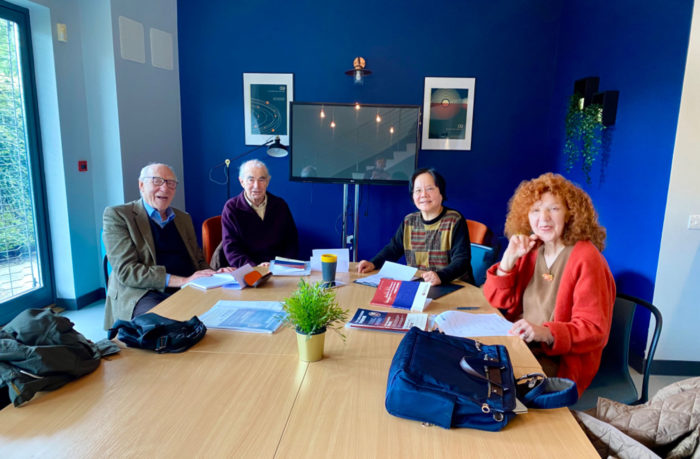
On April 17, Professor Xiangqun Chang visited GCA Fellows at the University Club at Oxford. The fellows are Professor David Parkin, Professor Robin Cohen, and Professor Maria Jaschok. In the morning, they conducted a broad range of discussions. During lunchtime, in addition to discussing work, Professor David Parkin suggested that we should also add a little living to our life. In the afternoon, Xiangqun and Maria discussed detailed work on the GCA Board of Trustees. It was a very productive day.
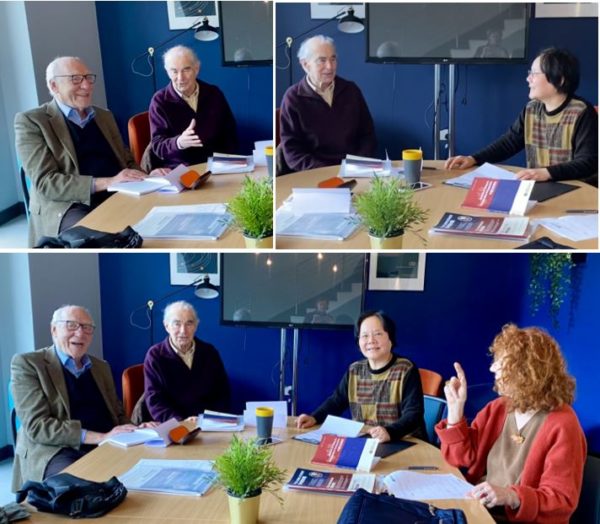
From left to right: Robin Cohen, David Parkin, Xiangqun Chang, and Maria Jaschok. The discussion meeting was similar to a brainstorming session. Based on incomplete audio records, the following topics were covered:
- Transculturality:
- Definition and examples of transcultural practices.
- The concept of transculturality as a tool for understanding global dynamics beyond globalization.
- Comparison between Chinese and Western approaches to transculturality.
2. Reciprocity and Social Exchange:
- Different types of reciprocity: generalized, balanced, and negative exchange.
- The role of reciprocity in social relationships and its implications in different cultural contexts.
3. Academic Contributions and Challenges:
- The need for a Chinese school of sociology and its contributions to global social science.
- The challenges faced by Chinese academics in the global academic landscape.
- Strategies for integrating Chinese perspectives into global academic discussions.
4. Social Practices and Their Cultural Significance:
- The influence of Chinese cultural practices on social relationships and community building.
- Examples of social practices in Chinese villages and their implications for social structure.
5. Historical and Comparative Studies:
- Comparative studies on modernization in different countries.
Historical encounters between Europe and China and their impact on cultural exchange. - The role of Chinese academics in documenting and analyzing these historical interactions.
6. Globalization and Modernization:
- The evolution of globalization and its various forms.
The concept of modernization in China and its comparison with Western perspectives. - The impact of globalization on local cultures and practices.
7. Role of Chinese Women and Feminism:
- The development of Chinese feminism and its integration into global feminist discourse.
- Historical perspectives on Chinese women’s roles and contributions.
8. Networking and Collaboration:
- The importance of collaborating with similar institutions to sustain the mission of the Global China Academy.
- Potential partnerships with organizations like the United Nations Alliance of Civilizations (UNAOC).
9. Impact and Sustainability of the Global China Academy:
- Strategies for ensuring the sustainability of the academy.
The role of publications and academic dialogues in promoting the academy’s mission. - The importance of engaging younger generations in the academy’s work.
10. Fieldwork and Ethnographic Studies:
- Personal anecdotes and experiences from fieldwork in China.
- The significance of understanding local contexts and social dynamics through ethnographic research.
11. Political and Cultural Mapping:
- The role of maps in representing cultural and political relationships.
- The influence of mapping practices on understanding global connections and power dynamics.
12. Challenges of Publishing Uncensored Chinese Work:
- The difficulties in publishing authentic, uncensored academic work on China.
- The role of the Global China Academy in providing a platform for such publications.
13. Global Governance for AI:
- This is the theme of the 9th Global China Dialogue, which will take place at Tongji University in China. It is the first time the event will be held in China, and it will alternate between the UK and China in the future.
- The preparations are ongoing.

Global China Academy Council Chair Professor Tony McEnery’s Academic Activities in Hong Kong and China, March to April 2024
Introduction
In 2024, Professor Tony McEnery’s academic activities expanded in various ways. On the one hand, he led a team from Lancaster University to Xi’an Jiaotong University, establishing academic relations between the two universities in March. On the other hand, his influence extended from Xi’an, Zhejiang, and Shanghai to Kunming and Hong Kong where he gave conference paper and distinguished lecture respectively in April.
Timeline
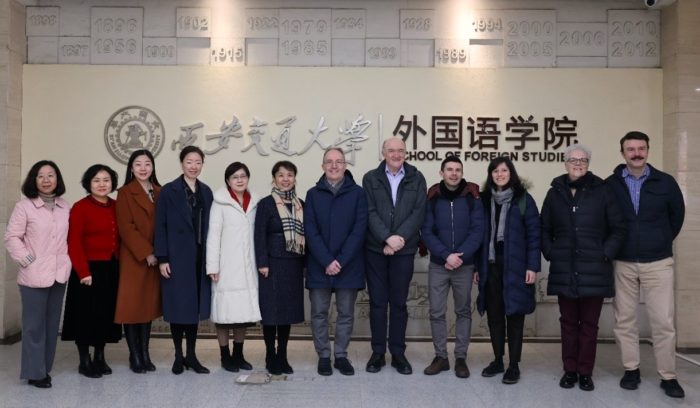
On the 1st March, Tony McEnery from Lancaster University led a delegation to visit Xi’an Jiaotong University, discussing collaborative opportunities with the School of Foreign Studies and the International Cooperation and Exchange Office. The meeting included Professors Paul Baker, Elena Semino, and Jonathan Culpeper, along with Lei Yanjun, Deputy Director of the International Cooperation and Exchange Office, and leaders from the School of Foreign Studies at Xi’an Jiaotong University. The discussions focused on the shared goals and strategies of joint educational programs, including curriculum development and faculty training. Both sides expressed a desire to deepen the partnership based on their existing collaboration. Lancaster University is ranked 122nd in the 2024 QS World University Rankings and 10th globally in linguistics. Since 2021, the two universities have collaborated on various projects, including the Ministry of Science and Technology foreign expert program and the ‘High-End International Expert Masterclass’ series. This visit aimed to further consolidate their strategic partnership.
Source: https://news.xjtu.edu.cn/info/1005/206782.htm
Later the morning, the Foreign Language and Culture Forum at Xi’an Jiaotong University was held, featuring three primary speakers: Professor Elena Semino from Lancaster University, a Fellow of the British Academy of Social Sciences and the Royal Society of Arts, and Director of the ESRC-CASS Research Center; Professor Tony McEnery, a leading international scholar in corpus linguistics and a Distinguished Professor at Lancaster, who also serves as a guest professor at Xi’an Jiaotong University; and Vittorio Tantucci, the China Collaboration Officer for Lancaster University’s Department of Linguistics and English Language.
Professor Semino (top left) gave a lecture titled “Disease and Metaphor.” Using collected data and corpora, she demonstrated the metaphors used to describe different disease experiences and noted that the effectiveness of metaphors depends on how they are expressed. She emphasized that understanding metaphorical expressions relevant to different healthcare stakeholders is crucial for their practical application in disease treatment. Professor McEnery (top right) discussed the expression and usage of “swear words” in English dialogues from a discourse analysis perspective. He emphasized the importance of understanding the discourse structure of such forms and their effects in particular contexts. Afterward, attendees had a lively discussion with him on cultural differences in the use of this language. Dr. Tantucci (bottom left) provided an overview of Lancaster University and its Department of Linguistics and English Language, detailing its primary research areas. He also elaborated on the collaborative master’s program in English Language and Literature between Lancaster University and Xi’an Jiaotong University.
The forum stimulated enthusiasm among attendees for linguistics, particularly data-driven linguistic research, providing a platform for students and faculty to broaden their academic horizons and gain knowledge of the latest research trends.

Source: https://sfs.xjtu.edu.cn/info/1244/7284.htm
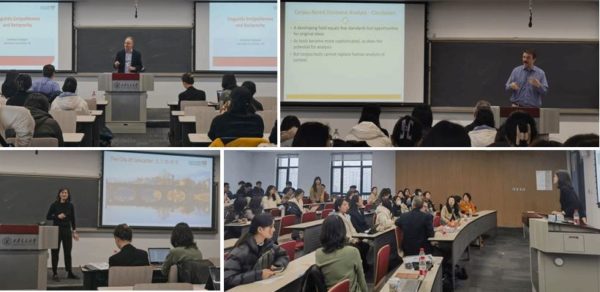
In the afternoon, the ‘Foreign Language and Culture Forum’ organized by the School of Foreign Studies was successfully held. The forum featured Professor Jonathan Culpeper, head of the Department of Linguistics and English Language (LAEL) at Lancaster University, Paul Baker, professor at Lancaster University and a Fellow of the Royal Society of Arts and the British Academy of Social Sciences, and Raffaella Bottini, the Internationalization Director of LAEL. The event was chaired by Vice Dean Cheng Bing and was attended by over a hundred students and faculty members.
This forum combined themed lectures with audience Q&A. Professor Culpeper (top left) delivered a lecture titled ‘Linguistic (Im)politeness and Reciprocity,’ focusing on communication etiquette in daily life. Using numerous examples, he vividly illustrated the differences between polite and impolite language, offering a detailed analysis of the linguistic principles and communication psychology involved. He paid special attention to patterns of conversational reciprocity, revealing politeness strategies and cultural variations. Professor Baker’s lecture (top right), titled “Corpus-Based Discourse Analysis,” explained the application of corpus analysis in linguistic research. He provided many examples demonstrating the unique value of corpus analysis techniques in exploring language usage patterns and uncovering societal and cognitive trends. This sparked interest among attendees in linguistic research methods. Finally, Director Bottini (bottom left) introduced the collaborative exchange program between Xi’an Jiaotong University and Lancaster University. This program offers a broad platform for faculty and students from both universities to collaborate, fostering in-depth academic and educational interactions while supporting international development.
The Foreign Language and Culture Forum not only provided new academic insights but also built an important bridge between Xi’an Jiaotong University and Lancaster University. The academic discussions and program introduction broadened the international outlook of attendees and promoted cross-cultural exchange and understanding. This has injected new vitality and momentum into collaboration between the two universities in education and research. Future cooperation between Xi’an Jiaotong University and Lancaster University is expected to deepen, promoting the development and prosperity of international education.
Source: https://sfs.xjtu.edu.cn/info/1244/7285.htm
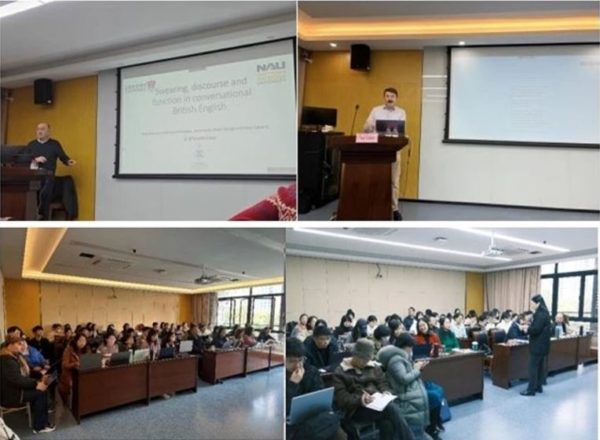
On the 4th March, Professors Tony McEnery and Paul Baker from Lancaster University delivered lectures at at the School of Foreign Studies, Zhejiang Gongshang University.
Professor McEnery (top left), a renowned expert in corpus linguistics, focuses his research on applying corpora, contributing significantly to sociolinguistics, pragmatics, discourse studies, comparative linguistics, translation, and language teaching. His lecture entitled ‘Swearing, Discourse, and Function in Conversational British English’. He began by introducing academic concepts such as ‘macrostructure’ and ‘microstructure’ in discourse and critiqued existing research flaws concerning swearing and macro discourse structures. Building on this, he outlined the core theme of his lecture. Throughout the lecture, Professor McEnery demonstrated methods and approaches for analyzing swearing using corpora, covering the selection of research data, annotation of natural data, and data analysis and interpretation. He provided in-depth explanations about annotating spoken data, discourse units and functions in swearing analysis, and sequential structures of swearing within macro-narrative structures, sparking reflection and discussion. Lastly, he engaged with the audience on questions like ‘How to handle coding ambiguities?’ His patient and detailed answers benefited everyone greatly.
Professor Baker (top right) gave a keynote speech titled ‘An Overview of Corpus-Based Discourse Analysis.’ The report first emphasized the importance of language in shaping positions, representing identities, and conveying evaluations. He pointed out that analyzing large-scale language data can reveal the cumulative effects of language, leading to his proposed “Corpus-Assisted Discourse Studies” (CADS) approach and introducing the “description-interpretation-explanation-evaluation” research paradigm. In his lecture, Professor Baker highlighted the value of this research approach with four case studies: the image of bachelors in British media, the debate in the British Parliament on fox hunting, patient feedback in the UK’s National Health Service, and British news media’s coverage of obesity. These studies demonstrate the significant value of corpus research methods in helping linguists gain insights into discourse and society and fostering collaboration with other disciplines.
They were chaired by Professor Qian Yufang (bottom right), the lecture attracted many young faculty members, doctoral students, and master’s students who participated and exchanged ideas. The lively and academically rich atmosphere left a strong impression.
From March 5 to 7, Professor Baker conducted a three-day workshop on ‘Corpus-Based Discourse Analysis’ for the faculty and students of the School of Foreign Studies. The first session discussed ‘Visual Analysis of an Obesity News Corpus,’ primarily focusing on analyzing the interaction between textual and visual elements in The Daily Express’s coverage of obesity. The second session explored ‘Sociological Analysis of Language and Gender in a Spoken Corpus.’ The third workshop centered on ‘Corpus Analysis of Patient Feedback,’ aiming to understand patient feedback in the UK’s National Health Service. The fourth workshop addressed “Keywords in News Corpora.” The workshops were chaired by Professors Li Wenzhong and Pu Jianzhong.
This academic event attracted many faculty members and students, including university staff and undergraduates, master’s students, and PhD. candidates at various stages. The event was fully attended, creating a strong academic atmosphere. The Q&A sessions were especially lively, with attendees asking questions and engaging in discussions. Participants found the experience invaluable, gaining a solid understanding of key corpus discourse research methods and recognizing the importance of choosing research topics, clarifying research questions, collecting data, and determining research approaches
Sources: https://mp.weixin.qq.com/s/yay61_sACX38bDR4bmPs7Q and https://sky.zjgsu.edu.cn/2024/0402/c2108a169400/page.htm
On the 5th of March, as an Advisory Professor (2023-2026) at Shanghai International Studies University (SISU), Professor Tony McEnery delivered a lecture at the Institute of Corpus Studies and Applications at SISU. The lecture, titled ‘Swearing, Discourse, and Function in Conversational British English,’ examined the role of macrostructures in the study of swearing. While macrostructures have been studied in isolation, they have not yet been comprehensively analyzed, and the range of those studied is limited. In contrast, research on microstructures is better developed. Using spoken corpus data from BNC2014, the lecture presented two approaches to studying discourse. The first approach explored spoken data annotated with a functional discourse coding scheme that reveals the distribution of a set of macrostructures (discourse units) that generally characterize conversation. The goal was to observe how swearing is distributed according to discourse unit function and explain any patterns identified. The second approach focused on a single macrostructure of discourse—narrative—and its sub-elements, to determine whether swearing interacts with this macrostructure and its components. The lecture concluded by emphasizing the importance of discourse as a dimension along which the use of swearing can vary, likely in relation to emotion. The complementary perspectives on macrostructure discussed in the lecture further underscore this point.
Sources: https://corpus.shisu.edu.cn/corpusen/ae/dd/c12945a175837/page.htm and https://corpus.shisu.edu.cn/bd/7d/c10015a179581/page.htm
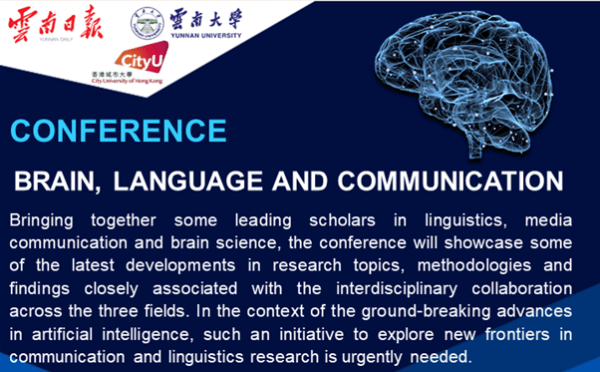
On the 22nd April, Professor Tony McEnery presented paper on ‘Corpus-based View on News Media Representation of Slavery in the 19th Century Britain’ at An International Conference on Brain, Language, and Communication, Kunming, 22-23 April 2024. It was co-organised by School of Journalism (College of International Communication of South and Southeast Asia), Yunnan University, Subcommittee of Journalism and Communication, the South and Southeast Asian University Network, and the Halliday Centre for Intelligent Applications of Language Studies, City University of Hong Kong, in partnership with Yunnan Key Laboratory of Media Convergence.
This conference is organized on the theme of brain, language, and communication. It is motivated by the latest consensus that the interdisciplinary collaboration across the three will generate synergies to enable the sustained growth and development of communication studies and linguistic research, particularly for corpus-based approaches and neurolinguistics. This collaboration is also timely, in response to the latest development in artificial intelligence as well as the initiatives in Nuralink implant research that highlight the interaction across the three important subjects. The event brings together some of the internationally outstanding scholars in linguistics, media communication and data science on their cutting-edge research in the cross-feeding between language, communication, the understanding of the human mind and their statistical models. The conference therefore showcases some of the most recent developments in research topics, methodologies and findings in the relevant areas.
Source: https://hallidaycentre.cityu.edu.hk/12_Kunming_2024.html
On the 26th April, Professor Tony McEnery met with Prof Alex Fang (方稱宇), Director of the Halliday Centre for Intelligent Applications of Language Studies, City University of Hong Kong. They discussed matters related to joint collaborations and dearly remembered those whom they knew in common, including Prof Sidney Greenbaum at UCL, Shichun Gui at Guangdong University of Foreign Studies, Michael Halliday at Sydney and Geoffrey Leech at Lancaster, who inspired them immensely in their corpus-based approaches to language. The Computational Analysis of English (Longman 1987) given by Geoff to Tony and by Shichun to Alex prompted both of them into computational experiments on corpus data using programming languages such as LISP and Prolog.
Source: https://hallidaycentre.cityu.edu.hk/08_news.html
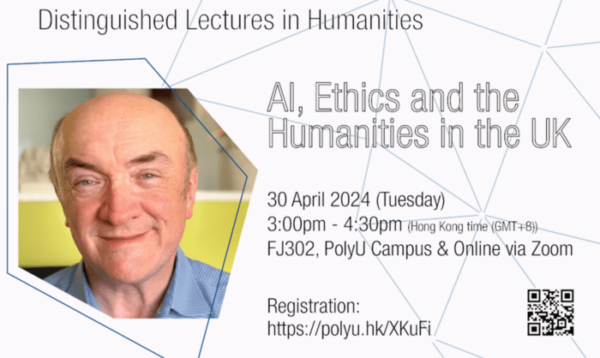
On April 30th, Professor Tony McEnery delivered a Distinguished Lecture in Humanities: ‘AI, Ethics, and the Humanities in the UK,’ at the Faculty of Humanities, The Hong Kong Polytechnic University (PolyU). The lecture surveyed the intersection of artificial intelligence (AI), ethics, and the humanities in the UK. It integrated insights from bibliometric analyses, interviews with various stakeholders, and reviews of existing research infrastructure and policies. The talk examined the current state of AI ethics research in the UK, identifying the contributions of the arts and humanities, the obstacles researchers face, and the potential impacts of their work. It also considered the international research environment and strategic investments made by other countries in AI and ethics, drawing comparisons with the UK’s approach. Opportunities and threats were identified in the contexts of academia, public perception, and commerce, including the impacts of AI on diverse populations and industries. The talk concluded by comparing the situation in the UK with that in Hong Kong.
Sources: https://www.polyu.edu.hk/events/2024/4/0430_distinguished-lectures-in-humanities and https://www.polyu.edu.hk/fh/news-and-events/event/2024/4/dlh_20240430
- Click here to view Global China Academy Council Chair Professor Tony McEnery’s Academic Activities in China, September-November 2023.
- Click here to view Global China Academy Council Chair Professor Tony McEnery’s Academic Activities in China, April-May 2023.
- Click here to visit Professor Tony McEnery FGCA page.
- Click here to visit News section.
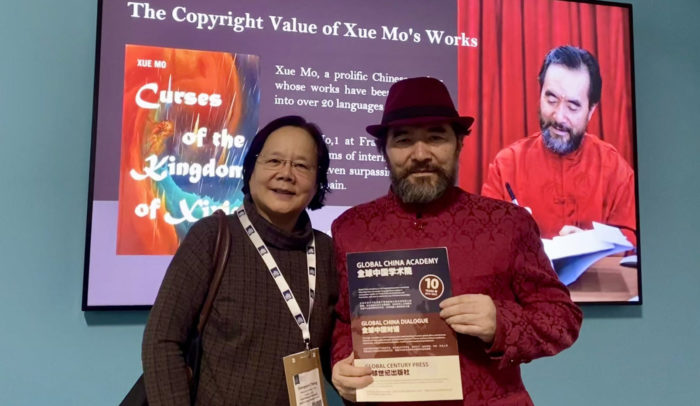
Global China Academy’s Activities in March 2024
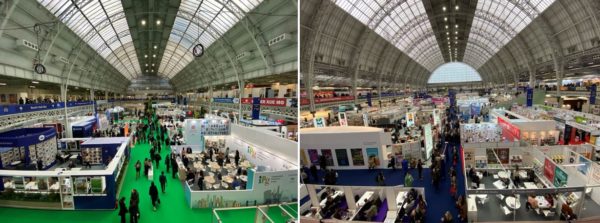
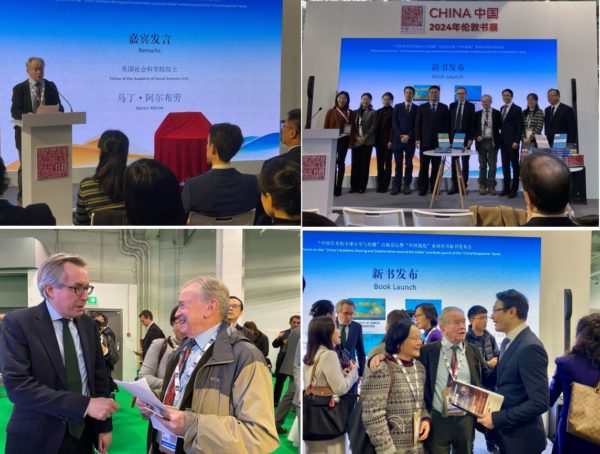
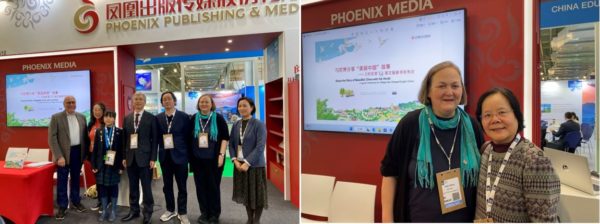
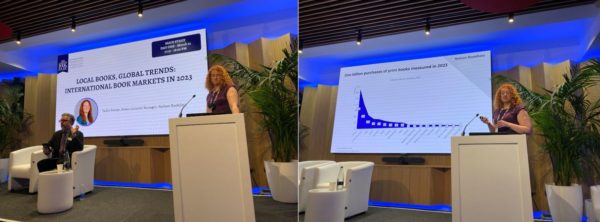
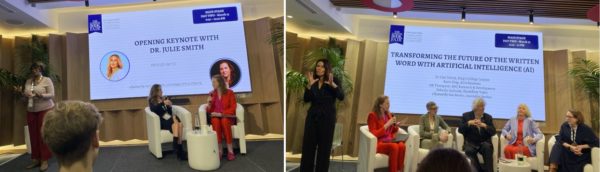
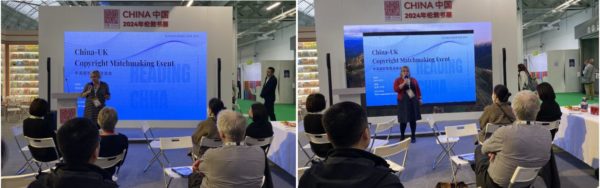
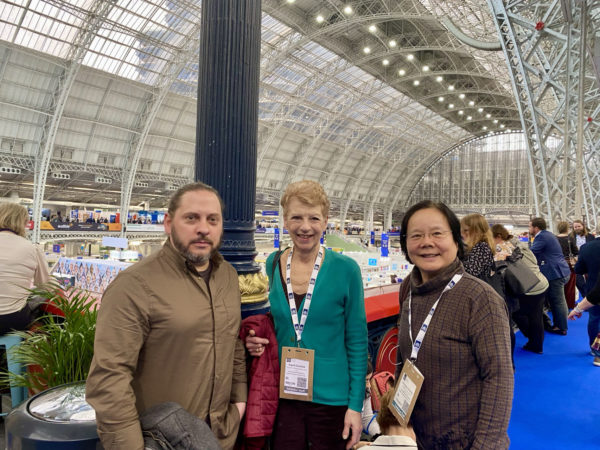
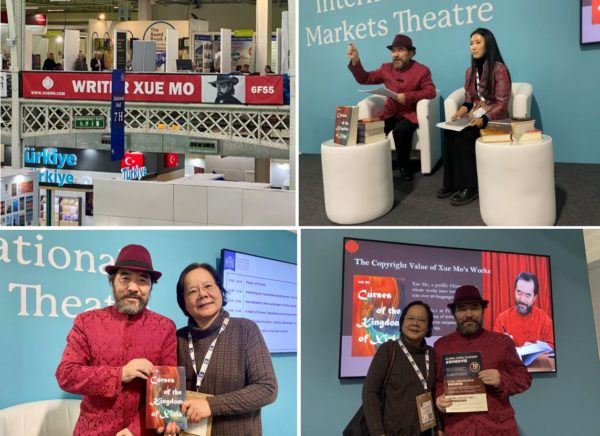
There were three types of events that happened in March. They are: participating in the London Book Fair, which is one of two major events for GCA and GCP; the GCA Council and Chinese Council meetings; and GCA team activities.
Note: The text on this page is to be updated.
10 March
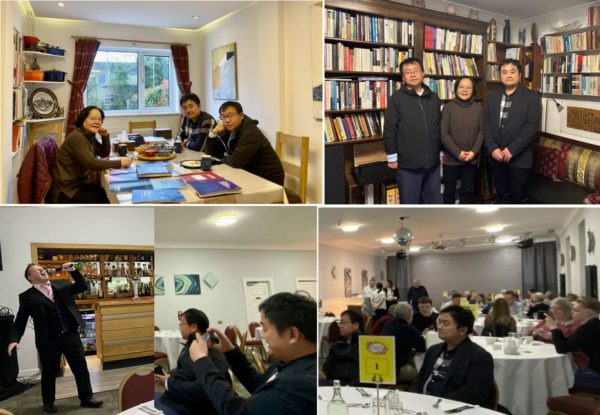
12th March

13 March


14th March


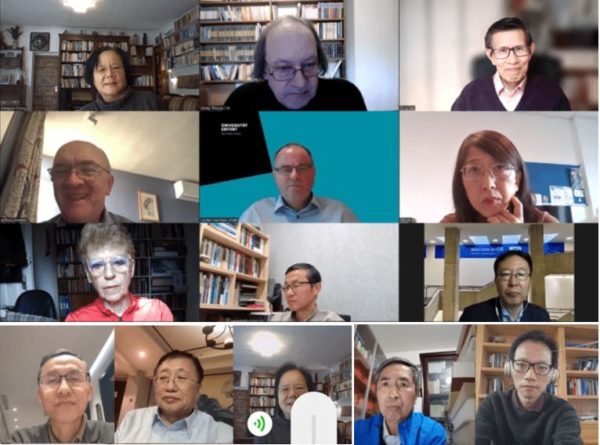
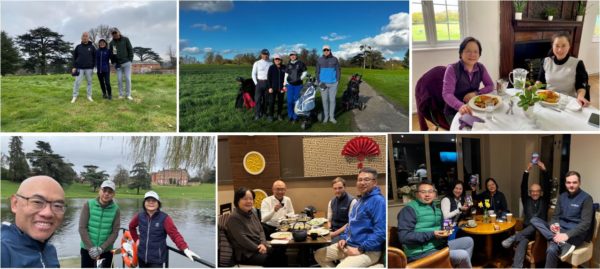

Global China Academy Fellow Professor Carsten Herrmann-Pillath’s Academic and Social Missions in China, March 2024
Introduction
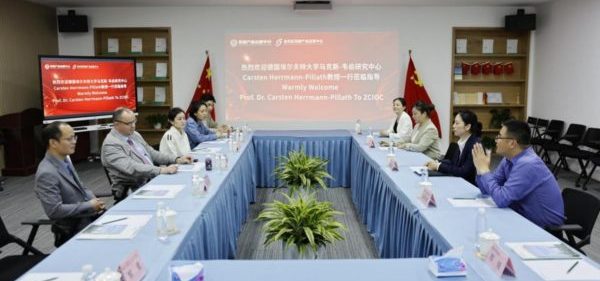
In mid to late March, Professor Carsten Herrmann-Pillath from Germany visited Shenzhen, China. He represented the University of Erfurt in signing a carbon neutrality strategic agreement with a Chinese university, research institution, and enterprises. He also visited Jintian Elementary School to observe its green and low-carbon practices and participated in the international symposium ‘Nature-based Solutions (NbS 2.0)’ hosted by the China (Shenzhen) Comprehensive Development Institute.
Timeline
In recent years, green sustainable development has become a global focus. From integrating carbon emission standards and addressing international carbon barriers to corporate ESG and product carbon footprints, these factors influence national strategies for carbon neutrality and peak carbon emissions. To deepen international cooperation and build an integrated ecosystem of industry, academia, and research, the Zero Carbon Industry Operations Center (Shenzhen) Co., Ltd., CNOOC, the University of Erfurt in Germany, Harbin Institute of Technology, and the China Development Institute (Shenzhen) have reached a strategic partnership. Professor Carsten Herrmann-Pillath from the University of Erfurt signed the cooperation agreement, aiming to enhance green and low-carbon industrial development through Sino-European standards and technological innovation cooperation.
On the 18th March, Professor Herrmann-Pillath, accompanied by Director Liu Yu and professors from Harbin Institute of Technology, visited the near-zero carbon campus project at Jintian Elementary School. This project, provided by the Zero Carbon Industry Operations Center, includes design, implementation, platform development, and a dual-carbon education system, making it a ‘Shenzhen City Green and Low-Carbon Scene Demonstration Base.’ Experts were impressed with Jintian Elementary School’s low-carbon practices, recognizing its globally exemplary model of integrating production and education.
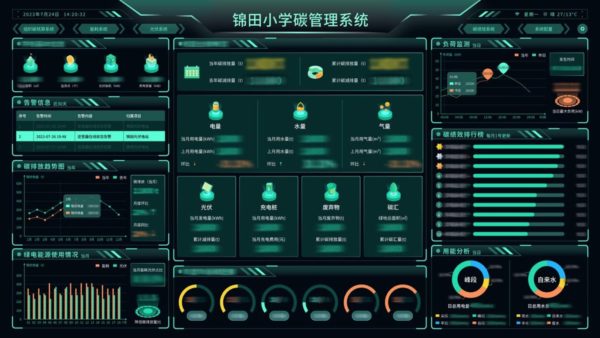
Professor Herrmann-Pillath was deeply impressed by Jintian Elementary School’s low-carbon practices. Not only has the school upgraded its hardware to be more environmentally friendly and established a carbon emission management system, but it has also introduced dual-carbon education to the students, which aligns with the core essence of education. From practical demonstrations to theoretical knowledge cultivation and subtle influence in daily life, this integration of industry and education forms a collaborative community for green sustainable development. This advanced and exemplary approach has global significance.
After the visit, experts learned about the achievements of the Zero Carbon Industry Operations Center in assisting enterprises with green low-carbon transitions. The center’s ‘Zero Tan Cloud’ platform, focused on carbon calculation, management, reduction, and elimination, has developed one-stop service capabilities and participated in setting various standards.
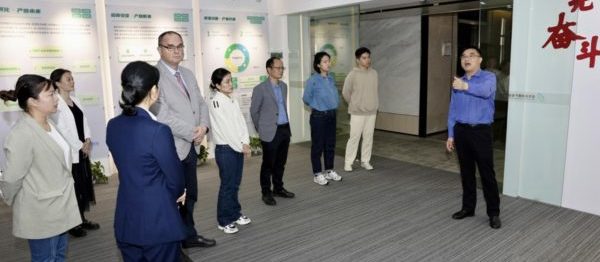
In 2022, the Zero Carbon Industry Operations Center and the Longhua District Government established Shenzhen’s first dual-carbon industry public service platform. Professor Herrmann-Pillath praised this innovative and advanced model, expressing his pleasure in becoming the first international expert in the dual-carbon expert pool.

Experts also discussed ESG, EU carbon tariffs, and Amazon Climate Pledge certifications, planning to conduct broader and deeper cooperation from a global perspective in the future.
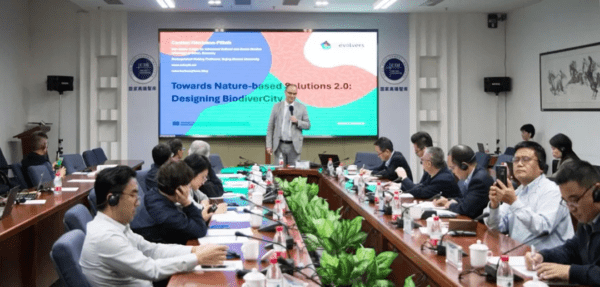
On the 19th March, 2024, the China (Shenzhen) Comprehensive Development Institute hosted an international symposium titled ‘Nature-based Solutions (NbS 2.0).’ Professor Carsten Herrmann-Pillath from the Max Weber Centre for Advanced Cultural and Social Studies at the University of Erfurt in Germany delivered the keynote speech on ‘Nature-based Solutions 2.0: Designing Biodiverse Cities.’ Experts and scholars from Tencent, the Shenzhen Municipal Policy Research Office, the Shenzhen Municipal Bureau of Ecology and Environment, Shenzhen University, and other institutions participated in the seminar to share new theories and practices in urban ecological civilization construction.
Nature-based Solutions (NbS) involve actions that protect, sustainably manage, and restore ecosystems to address societal, economic, and environmental challenges. Since being proposed by the World Bank in 2008, NbS has been increasingly applied to climate change, disaster risk reduction, food security, water security, ecosystem degradation, and biodiversity loss. In the context of building a Beautiful China, a significant theoretical and practical issue is how the cities in the Guangdong-Hong Kong-Macao Greater Bay Area can develop a new relationship between humans, nature, and society, promoting the coordinated development of ecology, society, economy, and culture.
Professor Herrmann-Pillath pointed out that NbS is an effective solution to climate change challenges, with biodiversity being the key. Cities play a crucial role in addressing biodiversity loss, despite emitting over 75% of global CO2. Designing biodiverse cities is essential, as emphasized in a recent World Economic Forum report, which suggests that cities should become places where nature thrives. This concept is gaining popularity in Europe, with initiatives such as the biodiversity city tour in northern Italy and the International Union for Conservation of Nature’s (IUCN) Urban Nature Index, which assesses cities’ support for biodiversity. Professor Herrmann-Pillath also discussed the practice of NbS in China, such as sponge city construction, and introduced Shenzhen’s Bao’an District Shanghe Park project, highlighting the importance of rewilding cities. He noted that Singapore leads globally, with 29.3% of its urban space covered by trees, providing more space for nature to evolve autonomously. Finally, Professor Herrmann-Pillath called for a fundamental change in our way of life to address future ecological challenges. He advocated for recognizing the rights of nature, respecting its freedom to evolve, and making nature a significant player in our ecosystems. This approach aims to create cities that are shared and mutually beneficial for both humans and non-humans, ushering in a new era of ecological and biocentric rights.
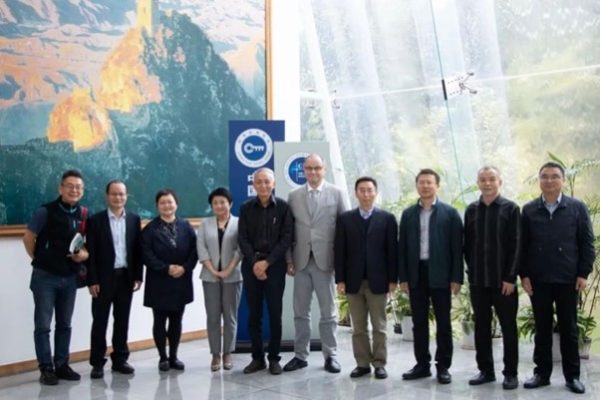
At the symposium, Wanda emphasized the significance of ecological civilization, biodiversity, and green development for China’s modernization, highlighting the need for strong protection measures to drive high-quality development. Zhai Yongping urged focusing on biodiversity loss and changing economic frameworks to balance profit with ecological preservation. He noted Tencent’s philanthropic support for new technologies but emphasized the need for broader collaboration. Huang Duobin shared Shenzhen’s Nature-based Solutions (NbS) experiences, including pollution control, low-carbon development, human-nature harmony, and valuing marine ecological products. Liu Chang highlighted Shenzhen’s proactive climate adaptation efforts, integrating goals into urban planning, developing monitoring systems, and promoting green infrastructure. Wu Wenyuan discussed integrating human life with natural rhythms in urban design and emphasized the need for management changes to implement NbS.
Professor Yuan Yiming discussed the development-ecology relationship, driving mechanisms for ecological progress, and the importance of institutional innovation, praising Shenzhen’s collaborative success. Liu Yu concluded by emphasizing global NbS exploration, proposing integrated climate and biodiversity solutions, and thanking participants for their insights.

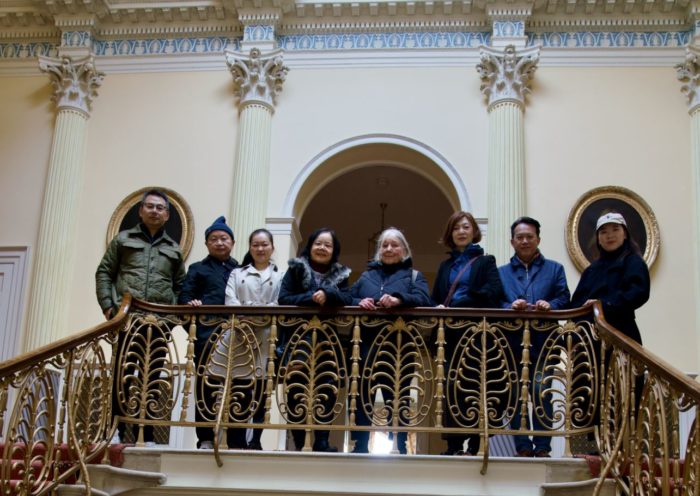
GCA’s Two-Day Team Building: Blending Academic Insight with Cultural, Historic and Nature Discovery, February 2024
After the intensive preparations and the successful hosting of the 8th Global China Dialogue and the 10th anniversary celebration of the Global China Academy, we decided to schedule the team-building activities for early February 2024. Our team consists of the following members: Xiangqun Chang (GCA President), Alan Fang (Legal Adviser), Katie Zheng (Administrative Manager), David Liu (Domestic Manager), LI Li, and Xi Shen (GCA8 Volunteers).
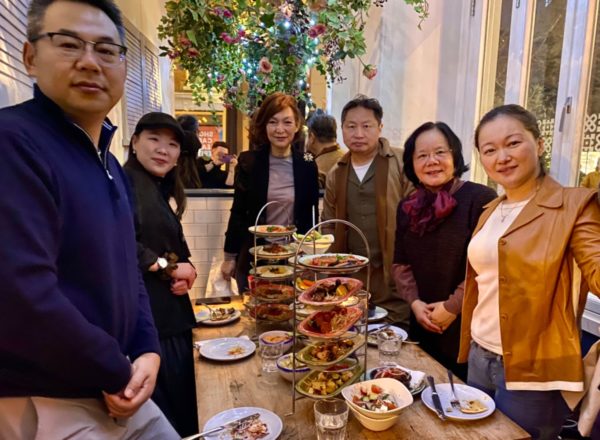
The first day of GCA’s two-day team-building event was scheduled for February 3rd, a time when people usually look forward to Chinese New Year celebrations. However, our team of six broke with convention and chose The Real Greek in Covent Garden for a culinary exploration. The restaurant was adorned with delicate flowers, adding a touch of Greek aesthetic that is quite different from the bold reds and golds of Chinese celebrations. The Mediterranean ambiance provided a fresh contrast to the red lanterns and decorations typical of Chinese New Year. The food was presented on tiered trays, a vibrant arrangement that stood in contrast to the communal style of Chinese dining where dishes are usually placed in the center of the table for everyone to share.
We ordered Greek Flatbread and Crudités, as well as a variety of dishes including Yellow Fava, Hummus, Tzatziki, Spicy Feta Dip (Htipiti), Melitzanosalata, Chicken Skewer, Loukaniko Beef & Pork Sausage Skewer, Pork Skewer, Halloumi & Vegetable Skewer, Lamb Meatballs, Gigandes with Spinach, Falafel, Grilled Aubergine, Vegan Meatballs, along with shared sides such as Mediterranean Rice, Aegean Slaw, Chips, Pourgouri – Bulgur Wheat, New Potatoes, and Greek Salad. For dessert, we shared Baklava, Orange Cake, and Greek Yogurt with walnuts in syrup.
The flavours of these dishes were diverse and rich, ranging from the refreshing tzatziki to the mildly spicy feta cheese dip, each bite filled with surprise. The smoky taste of the grilled aubergine offered a contrast to the commonly sweet and spicy flavours found in Chinese cuisine, while the falafel, with its crunchy exterior and soft interior coupled with a deep spice flavour, presented a completely different taste from traditional Chinese spring rolls. The various skewers we provided, including chicken, mixed meat sausage, pork, and halloumi cheese with vegetable skewers, were similar to Chinese lamb, grilled fish, and beef skewers, all involving grilling meat or other ingredients on bamboo or metal sticks. However, Greek skewers emphasized the use of herbs and olive oil in their flavours, while Chinese barbecue tends to favour seasonings like cumin and chili to enhance the flavour. The Mediterranean rice and Greek salad brought a refreshing taste that was a sharp contrast to the familiar Chinese rice and mixed vegetable dishes. The sweetness of the baklava and the soft, fluffy texture of the orange cake were delightful complements to Chinese festive sweets.
Through these various flavours and styles, our team not only enjoyed the unique charm of Greek cuisine but also deepened our understanding and appreciation of the differences between Western and Chinese culinary cultures. This visual and culinary journey not only provided a necessary break from our hard work in preparing for both the 8th GCD and 10th anniversary of GCA but also acted as a cultural bridge, connecting our team with the diverse traditions of the world. The shared Greek Flatbread and Crudités, the variety of dips and skewers, and the assortment of sides and desserts provided a communal experience that, although different in presentation, reflected the collective joy found in Chinese dining traditions. This experience was both a cultural immersion and a testament to the universal language of food in bringing people together.
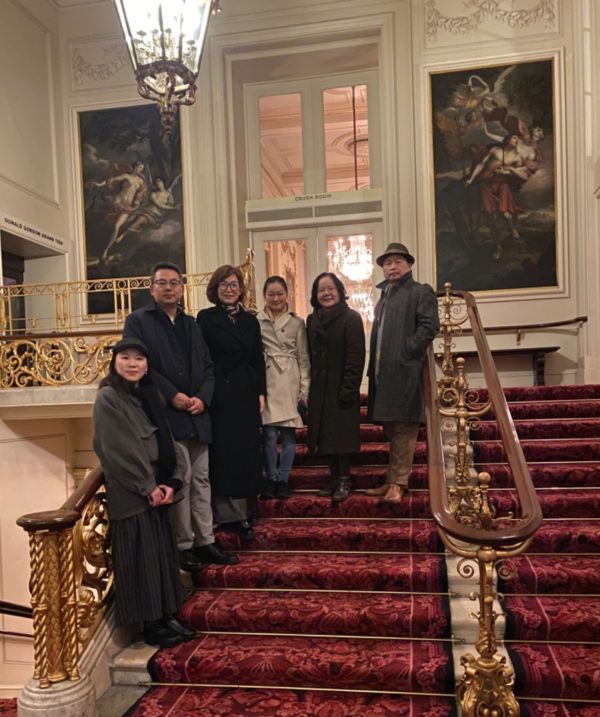
After enjoying a Greek dinner, our team went to the Royal Opera House to watch the ballet Manon. The Royal Opera House, located in London’s Covent Garden, is one of the world’s leading opera houses, renowned for its outstanding opera and ballet performances. It serves as the home of The Royal Opera, The Royal Ballet, and the Orchestra of the Royal Opera House. The building itself is a masterpiece of Victorian architecture, featuring a magnificent auditorium, luxurious public spaces, and state-of-the-art stage facilities. Its history dates back to the 18th century, making it a historic landmark and cultural icon in the UK. Manon is a three-act ballet created by Kenneth MacMillan, with music by Jules Massenet. It premiered by The Royal Ballet in London in 1974. The ballet is based on the 1731 novel The Story of the Chevalier des Grieux and Manon Lescaut by Abbé Prévost. It tells the story of the young and naive Manon who falls in love with the Chevalier des Grieux but is persuaded by her brother to leave him for the wealthier Monsieur GM. The ballet is known for its expressive choreography, emotional depth, and beautiful music, showcasing the talent and technical skills of its dancers. Manon and the Royal Opera House represent the pinnacle of Western classical performing arts, focusing on storytelling through dance, music, and set design.
In contrast, the Chinese equivalent in the realm of traditional performing arts can be considered Peking Opera or Kunqu Opera. Peking Opera and Kunqu Opera embody the essence of Eastern performing arts traditions, emphasizing vocal performance, poetic dialogue, and symbolic gestures. The main difference lies in the cultural expressions and artistic mediums used to convey stories and emotions. Western ballets like Manon typically use the universal language of dance to narrate stories, while Chinese operas incorporate a more integrated approach, combining singing, acting, and martial arts to express complex narratives and characters. However, both offer deep insights into their respective cultures and traditions, showcasing the universal appeal of storytelling through performing arts. Peking Opera is one of the most famous traditional Chinese theater arts, characterized by its unique combination of song, spoken dialogue, and codified action sequences, including gestures, movement, fighting, and acrobatics. It is known for its elaborate costumes, makeup, and the distinctive vocal style of its performers. Kunqu Opera is considered one of the oldest forms of Chinese opera, celebrated for its elegant movements, refined music, and literary excellence. Both forms of Chinese opera have deep historical roots and play a significant role in China’s cultural heritage, similar to the role of ballet and opera in Western cultures.
After watching Manon at the Royal Opera House, we were deeply moved and filled with a sense of appreciation and emotion. The performance in one of the most prestigious classical art venues was an unforgettable experience that resonated with us deeply. The dancers’ exquisite skills, coupled with the thrilling music and the poignant narrative of love and tragedy, transported us into the world of Manon and Des Grieux, allowing us to experience their joy, love, and despair firsthand. The choreography’s blend of classical ballet with richly expressive dramatic movements captured the complex emotions of the characters and the dramatic turns of the story. The grandeur of the Royal Opera House and the production’s lavish costumes and sets added an extra layer of enchantment to the evening, making us feel as though we were part of the opulent world depicted on stage.
This experience was not only an artistic delight but also a cultural enrichment, reminding us of the power of performing arts to evoke deep feelings and connect with audiences profoundly. As we left the opera house, we were in awe of the talent and hard work of the performers and creative team, yet also left with a lingering melancholy from the ballet’s tragic ending. Most importantly, we were grateful for the opportunity to witness such a masterful ballet display, which entertained and emotionally moved us, leaving a lasting impression on our hearts and minds.
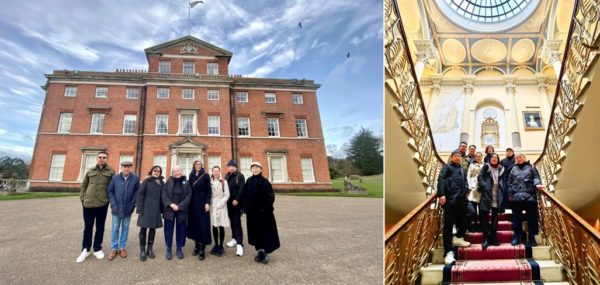
Day two, February 4th, our team visited Brocket Hall. We had the privilege of being accompanied by Dr Frances Wood, a historian and sinologist who previously served as the curator of the Chinese Collection at the British Library and is a trustee of the Global China Academy, as well as Dr James Lin, the curator of the Asian art collection at the Fitzwilliam Museum, University of Cambridge. Guided by their knowledge and insights, we toured almost every room in the estate, closely examining the furniture, paintings, and various collections. Afterwards, we walked through the lush fields, beside the lake and trees along the bridge.
Brocket Hall, located in Hertfordshire, England, is a classic English country house with centuries of history. The architecture of Brocket Hall is an excellent example of the Palladian style, characterized by symmetry, classical forms, and grand scale. The interior of the estate is equally impressive, with elegantly decorated rooms reflecting the era’s grace and luxury. This magnificent estate was once the residence of two British Prime Ministers, Lord Melbourne and Lord Palmerston, marking it as a site of significant historical and political importance. We explored almost every room, such as the bedroom of Queen Victoria, Lord Melbourne, Lady Melbourne, Lord Palmerston, Lady Palmerston, with each room narrating the stories of its past occupants and their times. Brocket Hall is renowned for its stunning architecture, extensive grounds, and its role in British social and political history.
Lord Palmerston served as the British Prime Minister during the First Opium War and was the Foreign Secretary at that time, playing a significant role in initiating and managing the conflict. He supported the use of force to protect Britain’s opium trade interests and advocated for a tough stance against China, leading to the outbreak of the conflict. The war ended with China’s defeat and the signing of the Treaty of Nanjing, which forced China to cede Hong Kong to Britain and open several trading ports, having a long-term negative impact on China. Palmerston’s policies expanded Britain’s global influence but also marked the beginning of a humiliating period in modern Chinese history, having profound effects on both China and world history.
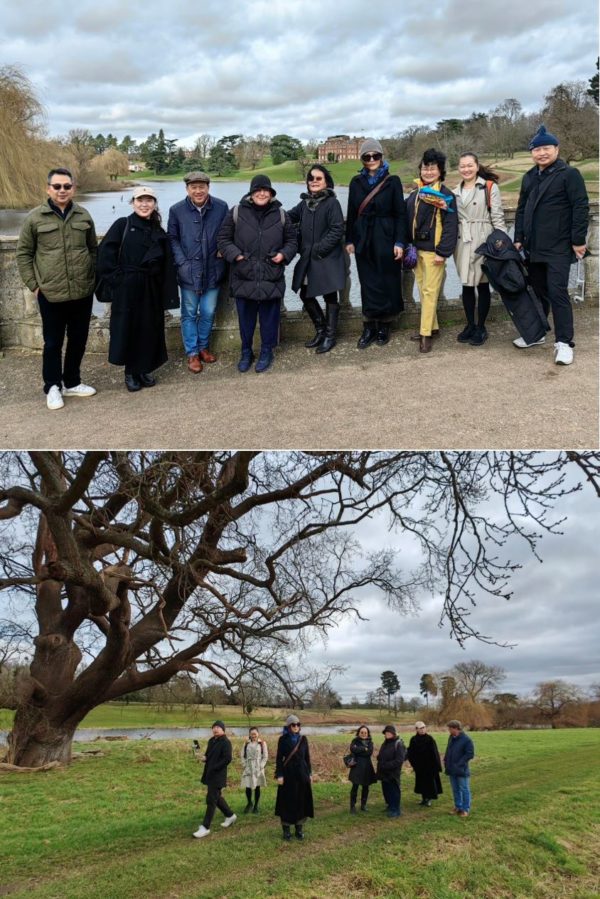
The gardens of the estate are a testament to the British tradition of landscape gardening, featuring expansive fields, neatly trimmed lawns, and mature trees, all set against the backdrop of picturesque lakes and bridges. This landscape provides a tranquil and pastoral setting where one can enjoy leisurely strolls and the natural beauty of the English countryside. This land and lake later became home to two golf courses, named after Lord Melbourne and Lord Palmerston, the two British Prime Ministers.
The horticulture and history of Brocket Hall can be compared to those of classical Chinese estates, which are typically designed according to Feng Shui principles to harmoniously integrate architecture, gardens, and water elements. Similar to Brocket Hall, these estates were once residences of high-ranking officials and centers of cultural and political activity. Classical Chinese gardens, such as those in Suzhou, are famous for their intricate designs that include pavilions, ponds, rockeries, and meticulously arranged plants, creating serene landscapes that reflect the philosophical and aesthetic ideals of traditional Chinese culture.
Brocket Hall embodies the heritage of English country estates, symbolizing political history and architectural beauty, while China’s classical estates represent the Eastern philosophy of harmony between man and nature, showcasing the art of garden design and the integration of indoor and outdoor spaces. Both traditions provide us with a window into their respective cultures, emphasizing the importance of history, nature, and architecture in shaping the identity and legacy of these remarkable estates.
During our visit to Brocket Hall, we deeply felt the profoundness of British history and the significant role these historical figures and locations played in world history. The explanations provided by Dr Frances Wood and Dr James Lin not only gave us a deeper understanding of the Hall’s history and architectural style but also offered a comprehensive view of Lord Palmerston’s role in the First Opium War and its impact on Sino-British relations. This journey was not only a visual and intellectual pleasure but also an opportunity for deep reflection and understanding of past events.
The natural beauty and tranquil atmosphere of the estate momentarily took us away from the hustle and bustle of modern life, as if we were transported back to an era filled with historical stories. Walking through the expansive fields and beside the lake, we couldn’t help but ponder the course of history and how it has shaped today’s world.
This visit not only broadened our horizons but also deepened our understanding of the complexities of historical exchanges between China and Britain. Such cross-cultural learning and exchange are invaluable, encouraging us to cherish our own cultural heritage while remaining open and respectful towards other cultures. The trip to Brocket Hall was an unforgettable experience, offering new insights and appreciation for the power of history and the beauty of natural landscapes.
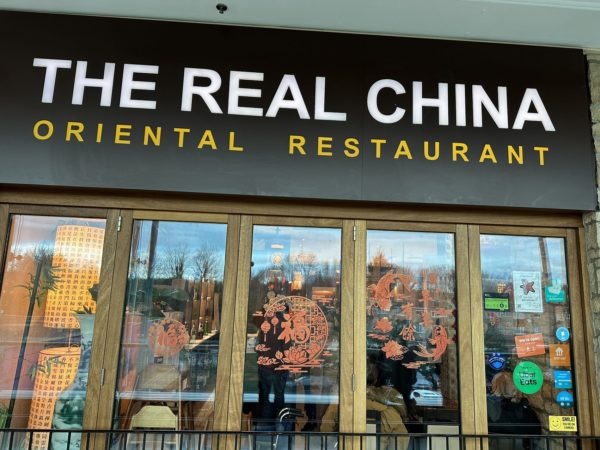
Finally, after enjoying a buffet meal at the nearby Chinese restaurant, ‘The Real China,’ we noticed an interesting phenomenon: although the restaurant’s name sounds very Chinese and mainly serves Chinese cuisine, we couldn’t find its Chinese name. Additionally, we noticed that all the staff were Indian, and it’s said that the restaurant’s owner is Chinese. This unexpected discovery added a layer of multicultural richness to our experience. It reminded us of the global nature of cuisine and culture, how food can transcend geographical and cultural boundaries to bring diverse people together.
Our team-building activity began at a restaurant named ‘The Real Greek’ and concluded at one named ‘The Real China,’ a coincidence that carries several interesting meanings or symbolic significances, adding intriguing implications to the event, such as:
- Cultural Diversity and Inclusion: The journey from a Greek to a Chinese restaurant showcases respect and appreciation for different cultures (Měirén zhīměi 美人之美 in Fei Xiaotong’s words). This may indicate that our team or organization values diversity and inclusion, willing to explore and celebrate various cultural traditions.
- A Journey from West to East: From a cultural and geographical perspective, Greece is often seen as the cradle of Western civilization, while China represents Eastern culture. The arrangement from ‘Real Greek’ to ‘Real China’ might symbolize a cultural journey from the West to the East (The mini ‘Journey to the East’ in the opposite direction of Journey to the West 与《西游记》反向的迷你“东游记”), reflecting a broad exploration of global cultural heritage.
- Exploration and Connection: Starting and ending our activity in two different but equally ‘real’ cultural venues might mean that our team values deep exploration and establishing cross-cultural connections. This experience could encourage team members to be open-minded, learning to appreciate different lifestyles and traditions (again, Měirén zhīměi 美人之美, in Fei Xiaotong’s words).
- A Culinary Journey: From a culinary standpoint, this arrangement offers a taste journey from Greek to Chinese cuisine. This not only allows team members to enjoy a diverse food experience but may also symbolize the team’s willingness to try new things and explore the unknown (Further Měirén zhīměi 美人之美, in Fei Xiaotong’s words).
- Symbolic Beginning and Ending: starting with ‘Real Greek’ and end with ‘Real China’ might have its symbolic meaning, such as beginning with the enlightenment of one culture and concluding with the wisdom of another, representing a complete cycle of growth or learning (To achieve understanding of ‘shared beauty’ Měiměi yugòng 美美与共, in Fei Xiaotong’s words).
Over two days of enriching team-building activities, our team grew not only closer to each other but also became more connected to the broad spectrum of global culture. The delicious dishes from our visits to ‘The Real Greek’ and ‘The Real China’ provided a perfect culmination to our journey, deepening our understanding of history and culture while bolstering camaraderie and satisfaction within the team. These shared experiences undoubtedly brought us closer, enriching our collective memory and fostering a greater appreciation for the diverse cultural heritage we were privileged to explore. Visiting ‘The Real China’ highlighted the beauty of transcultural encounters and opened up possibilities for appreciating the world’s diversity in unexpected ways.
Notes: Later, we met the owner of Real China and learned about some of the reforms the restaurant implemented in response to changes in clientele and staff due to the pandemic. The following is an excerpt from our sixth walking-chatting-eating route (https://globalchinaacademy.org/six-walk-talk-routes-tea-lunch-gca-centre/)
The Real China Restaurant is a chain of oriental buffet restaurants in the UK. It provides over 50 freshly prepared speciality dishes from Sezchuan, Chinese, Cantonese to Sushi and more. The modern and contemporary design of the restaurant and bar creates a great environment to dine and enjoy a cocktail with family and friends.
The Real China Restaurant at the Galleria Outlet Shopping Centre in Hatfield has undergone some reforms:
- The health and safety of customers and staff is the top priority. The floor space has been trained and redesigned to comply with current health and safety requirements.
- There is excitement about introducing the new ‘Table service buffet,’ where dishes can be ordered contactlessly using a QR code, with food delivered directly to tables.
- A new extensive menu offers more choices, with each dish freshly prepared, yet maintains the traditional Chinese buffet experience, allowing unlimited orders.
Other related events
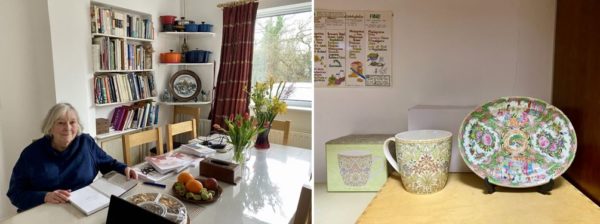
Left photo was taken on February 10th when Dr. Frances Wood signed a copy of her book Betrayed Ally: China in the Great War for Professor Xiangqun Chang. Afterwards, they enjoyed the GCA Centre’s ‘Walk and Talk’ Route 4 on Chinese New Year Day. Coincidentally, Dr. Wood brought lily flowers and a fine China mug with William Morris’s design. He was a British textile designer, poet, artist, writer, and socialist activist associated with the British Arts and Crafts movement in the 19th century. The flowers brought by LI Li from Cambridge were placed at the end of the table near the window, which had more varieties.
The right photo shows the mug and plate were displayed at the GCA Centre. Both are masterpieces of decorative art, each carrying the uniqueness of its culture and history. The mug’s colors are relatively soft, dominated by greens and yellows, complemented by delicate floral patterns. In contrast, the Canton enamel plate is more vibrant, using a variety of colors, including pink, green, yellow, and blue. William Morris’s designs are typically representative of the British Arts and Crafts movement of the late 19th century, characterized by complex natural patterns, symmetry, and repetitive botanical motifs. The Canton enamel plate reflects the artistic style of the Thirteen Hongs period in Guangdong Province, China, famous for its rich colors, complex landscapes, and symmetrical decorations. The mug might be a product of industrial pattern printing, whereas the making of the Canton enamel plate might be more complex, involving multiple firings and hand painting. The mug is a daily use item for drinking liquids; the Canton enamel plate is more likely a decorative piece or a vessel for special occasions. William Morris’s designs reflect the socio-cultural background of late 19th-century Britain, emphasizing craftsmanship and anti-industrialization. The Canton enamel plate reflects the trade prosperity and cultural exchanges of Guangdong Province during the Thirteen Hongs period.

During the Chinese New Year period, GCA received some visitors who expressed willingness to support GCA voluntarily in different ways. DOU Qing and her son from Macao (left photo), and Dr. William Zhengdong Hu (right photo), Fellow of The Sociological Review, discussed a broad range of topics within and beyond disciplinary and cross fields.
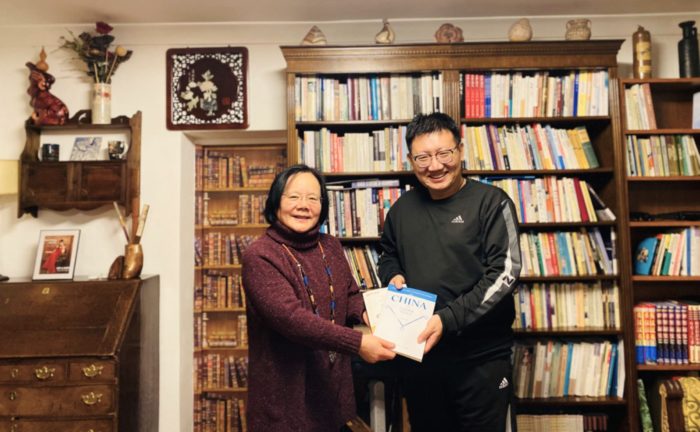
Professor Zhao Kejin visits GCA with the last wish of LI Qiang, former Chinese chairman of the Global China Academy Council (20 Jan. 2024)
On January 5, 2024, Professor ZHAO Kejin, Deputy Dean of the School of Social Sciences at Tsinghua University, contacted me to inform me that he would be visiting the UK in two weeks, with a meeting scheduled for January 20. Coincidentally, Professor FANG Lili, Distinguished Chief Professor at Southeast University, planned to bring a few copies of her book, Fei Xiaotong’s Inquiry: How Human Society Can Achieve ‘Beauty in Diversity and Shared Harmony’ (《费孝通之问:人类社会如何走向“美美与共”》Beijing: Commercial Press, 2021), to the UK as a gift for me and the academy.
Professor Fang was the last postdoctoral researcher supervised by the renowned Chinese anthropologist and sociologist Fei Xiaotong (1910-2005) at Peking University. During our visit to the United States in 2019, she summarized her understanding of Fei Xiaotong’s thoughts to me: In his early years, Fei was primarily concerned with ecological issues (the relationship between people and the land) and how China could achieve modernization. In his later years, he focused more on the issue of ‘mentality’ (人心, the relationship between people), considering how mutual understanding between individuals, as well as harmony between ethnic groups and nations, could lead to a world beyond the divisions of civilization and barbarism, or East and West, toward achieving ‘beauty in diversity and shared harmony’ in human society. [Note 1]
The above contact occurred just three weeks after Professor LI Qiang (1950-2023) passed away. LI Qiang served as Dean of the School of Social Sciences and Humanities at Tsinghua University and was the Founding Dean of the School of Social Sciences (two terms). He was also the Honorary Chinese President of the Global China Institute and the Chinese Chair of the Global China Academy Council. Recommended by Professor LI Qiang, Professor ZHAO Kejin traveled to London to participate in the 6th Global China Dialogue: Governance for World Peace at the British Academy and participated online in the 7th Global China Dialogue: Reforming Global Governance in 2021. Professor ZHAO Kejin’s visit in summer holds significant meaning for the academy, symbolizing a continuation and development of past efforts.
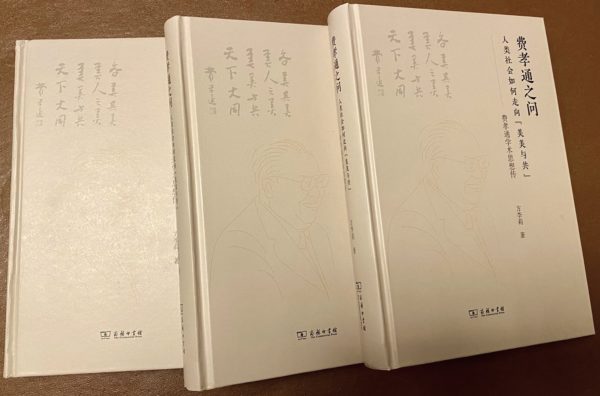
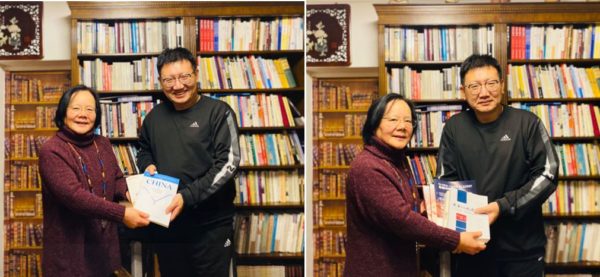
During his visit to the UK, Professor Zhao brought FANG Lili’s book on Fei Xiaotong’s thoughts, along with his own book China & Global Peace (Gale Asia, 2020) and other titles. I, in turn, presented ZHAO Kejin with my book Guanxi or Li shang wanglai?: Reciprocity, Social Support Networks, and Social Creativity in a Chinese Village (Chinese edition, Liaoning People’s Publishing House, 2009), as well as the Global China Academy leaflets and the brochure for the 7th Global China Dialogue.
Later, Zhao Kejin told me that Professor LI Qiang had left a will asking them to maintain the relationship with the Global China Academy (GCA). From ZHAO Kejin’s different expressions in the above photos, it might suggest that we discussed a serious topic. ZHAO Kejin proposed visiting the UK in the summer and mentioned that he might bring a delegation from Tsinghua University, possibly with delegations from other universities in China. For the Global China Academy, which serves as a platform to promote academic exchange between China and the world, this would undoubtedly be a great opportunity.
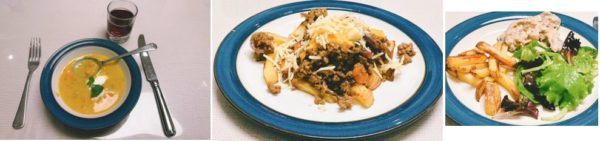

For dinner, I prepared a Western-style meal for Professor ZHAO Kejin and his PhD student ZHAO Danyang [Note 2].
- Starter: The pumpkin soup is a French-style dish, mainly enjoyed during the autumn and winter seasons. Although this soup appears simple, nutritious, and delicious, it was not easy for someone like me, who is not skilled in cooking, to make. First, the pumpkin needs to be peeled, deseeded, and cut into small pieces. These are then sautéed with onions, garlic, and other ingredients before adding broth and seasoning, and cooking until soft. After cooking, the soup is strained, and cream is added for a smoother texture. The soup is garnished with a dollop of yogurt and mint leaves, whose fresh flavor adds a refreshing touch to the rich pumpkin soup, enhancing its layers of taste.
- Main Course (Large Plate): Cheeseburger Loaded Fries. This dish is typical of American fast food, combining classic burger elements such as beef mince, cheese, tomatoes, onions, and burger sauce, which are layered over fries (instead of being placed between two buns), creating a dish that is rich, flavourful, and low in carbohydrates.
- Main Course (Medium Plate): Creamy Double Mushroom Penne is a classic Italian pasta dish. The combination of creamy sauce and two different types of mushrooms provide a rich taste and flavour, with the addition of cheese further enhancing the aroma and texture of the dish. However, to reduce carbohydrate intake, this dish was served not with penne but with a Mediterranean-style salad.
- Dessert: Fruit platter + snacks (details omitted).
Professor Zhao and Danyang appreciated the meal (photos provided by ZHAO Danyang). Our ‘International Cuisine’ concept and its practice, as reflected in this dinner experience, can be seen as an embodiment of Fei Xiaotong’s concept of ‘beauty in each culture appreciating the beauty of others’ (learning to appreciate different lifestyles and traditions) in everyday life, with the hope of achieving an understanding of ‘shared beauty in harmony’.
Note:
- Without a doubt, Fang Lili’s summary contributes to the understanding of Fei Xiaotong’s thoughts. However, from the corpus of The Complete Works of Fei Xiaotong, it can be observed that the term ‘ecology’ is mentioned a total of 304 times, all of which appear after Volume 8 (1957); the term ‘cultural ecology’ is mentioned 61 times, mainly between Volumes 10 and 15 (1983-1996). The term ‘human mind’ (人心) is mentioned 43 times, appearing in various volumes after Volume 3 (1942); ’mentality‘ (心态) is mentioned 113 times, in Volumes 14-17 (1992-2004). The term ‘people-to-people’ is mentioned 116 times, with references in every volume starting from the first, with as many as 23 mentions in Volume 16 (1997-1999). The term ‘nation-to-nation’ is mentioned 9 times, appearing in Volumes 8-9 and 13-17, while ‘country-to-country’ is mentioned 6 times, in Volumes 13, 16, and 17. Volumes 16-17 collect Fei Xiaotong’s works from 1996 until his death. If we consider Fei Xiaotong’s later years starting from 1996 (at age 86), we can say that he expanded his reflections on ‘people-to-people’ relationships to include ‘nation-to-nation’ and ‘country-to-country’ relationships. However, to fully understand the connections between these terms and ‘cultural ecology’ and ‘mentality,’ much more research is needed.
- I previously used Gousto, a UK-based meal kit with environmentally friendly packaging that allows you to easily enjoy fresh and delicious meals at home with convenience and flexibility. This time, I tried Hello Fresh, a meal kit that operates in multiple countries, including the US, UK, Germany, and Australia, and offers fresh ingredients in a simple and quick way. However, after using it for a while, I decided to stop because I am more suited to low-carb dishes.
Xiangqun Chang, 30 January 2024
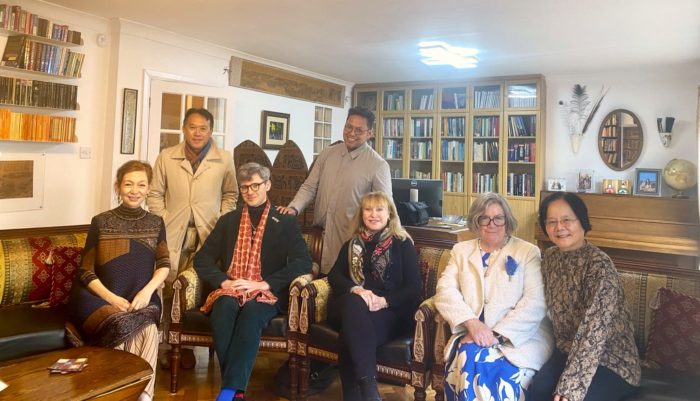
2023年:全球中国学术院中心实施“改革开放政策”的第一年
The year 2023 marks the 10th anniversary of the Global China Academy (GCA), which was founded in 2013 as CCPN Global. GCA’s operations are supported through outsourcing to experts in various fields, such as website design and maintenance, graphic design, translation, copy editing, and more. Additionally, individuals who align with our academic and social missions significantly contribute on a voluntary basis. As an independent non-profit academic institution, our independence is evident in the transparency of our funding sources, which are open for examination at any time, and our commitment through Global Century Press to publishing uncensored work on China.
2023年标志着全球中国学院(GCA)成立10周年,该学院于2013年作为全球中国比较研究会(CCPN Global)成立。GCA的运营通过外包给各个领域的专家支持,如网站设计与维护、平面设计、翻译、文案编辑等。此外,与我们的学术和社会使命一致的个人也通过自愿贡献显著地参与其中。作为一个独立的非营利学术机构,我们的独立性在于我们资金来源的透明度,这些资金来源随时开放供审查,以及我们通过全球世纪出版社对中国的未经审查的作品的出版承诺。
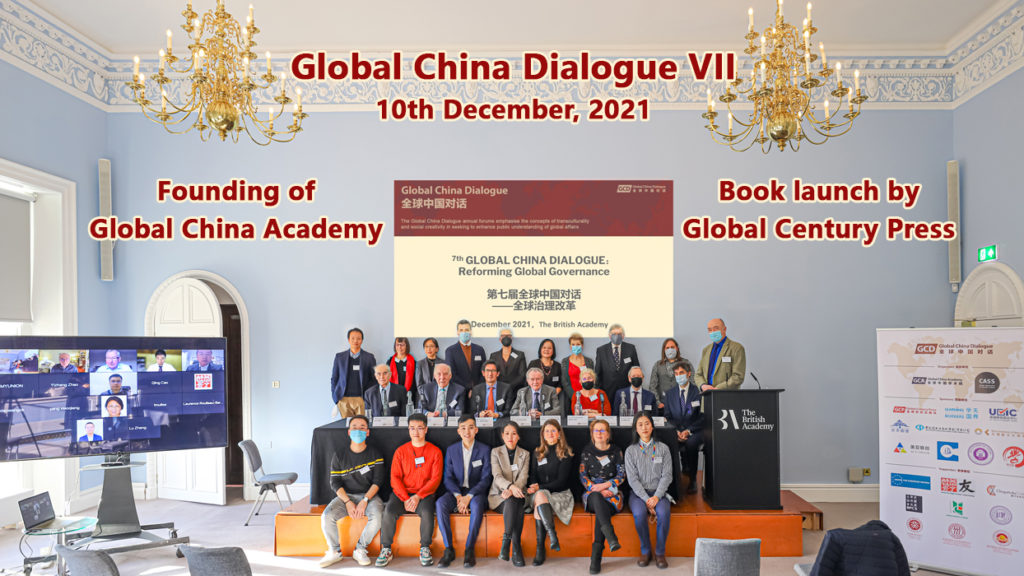
One of panels of the 7th Global China Dialogue: reforming global governance is ‘Reforming the Institutions’. Professor Martin Albrow, Founding and Past Honorary President of GCA, encouraged the GCA to reform itself into a sustainable institution. In addition to leveraging existing publication revenues, dialogue-based income, and small fellowship subscriptions, in 2023, after seeking advice and approval from the GCA Board of Trustees, we have implemented an innovative policy. This policy involves utilizing the property occupied by the GCA Centre to create funding opportunities through extensive networking. This page showcases some reform-related activities, outcomes, or potential long-term benefits.
第七届全球中国对话的其中一个小组讨论是“改革全球治理:改革机构”。GCA的创始人及前荣誉会长马丁·阿尔布罗教授鼓励GCA将自身改革成为一个可持续的机构。除了利用现有的出版收入、基于对话的收入和小额研究员订阅外,2023年,在征求GCA董事会的建议和批准后,我们实施了一项创新政策。该政策涉及利用GCA中心占用的房产通过广泛的网络创建资金机会。本页展示了一些与改革相关的活动、成果或潜在的长期利益。
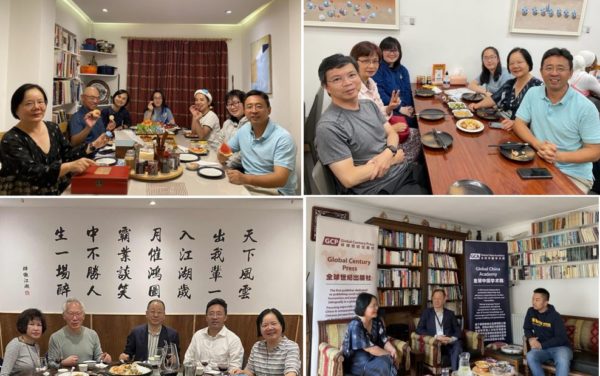
从7月4日至10日,GCA研究员之家欢迎了来自香港和澳门的客人。尽管GCA中心此前已经为GCA活动的演讲者和参与者提供了免费住宿以换取志愿服务,但这次是首次将其开放给GCA的朋友们进行网络交流,旨在实现学术和社会使命。由向群昌教授的高尔夫朋友,凯亮(汉普顿宫高尔夫俱乐部大使兼MEL科学的业务发展总监,左边照片中从左数第二位),介绍,蔡朴博士(升华资本合伙人(亚洲)有限公司,香港,总裁,左边照片中最右边)及其女儿们被安排在研究员之家住宿。蔡博士向向教授介绍了一些他的朋友,包括来自澳门的客人(左边照片中从右数第三位),新加坡的客人(第二张照片中从左数第一位和第二位),伦敦的客人,包括陈博士及其丈夫(右边照片中从左数第一位和第二位),以及郭峰博士(新辉集团董事长,左二照片中间)。
7月26日,郭博士(右边照片中间)参加了与杜一超的会面,杜一超为了准备8月份的无锡市代表团访问英国而来。他是无锡新文化研究所所长,UCL的博士生以及GCA的合作伙伴。
From July 4-10, the GCA Fellows’ Home welcomed guests from Hong Kong and Macau. While the GCA Centre has previously hosted speakers and participants for GCA events, offering free accommodation in exchange for volunteer work, this occasion marked the first time it was opened to GCA friends for networking purposes, aiming to fulfil both academic and social missions. Introduced by Professor Xiangqun Chang’s golf friend, Kai Liang (an Ambassador of the Hampton Court Golf Club and Director of Business Development of MEL Science, second from the left in the left photo), Dr Pu Zhai (President for Ascendent Capital Partners (Asia) Limited, Hong Kong, first on the right in the left photo) and his daughters were accommodated at the Fellows’ Home. Dr Zhai introduced some of his friends to Professor Chang, including guests from Macau (third from the right in the left photo), Singapore (first and second from the left in the second photo), and London, including Dr Chen and her husband (first and second from the left in the right photo), and Dr Frank Guo (Chairman of New Beacon Group, in the middle of the second photo from the left).
On July 26, Dr Guo (middle in the right photo) attended a meeting with DU Yichao, who visited the UK in preparation for the Wuxi City delegation in August. He is Director of Wuxi Institute of New Culture, PhD student of UCL and GCA Associate.
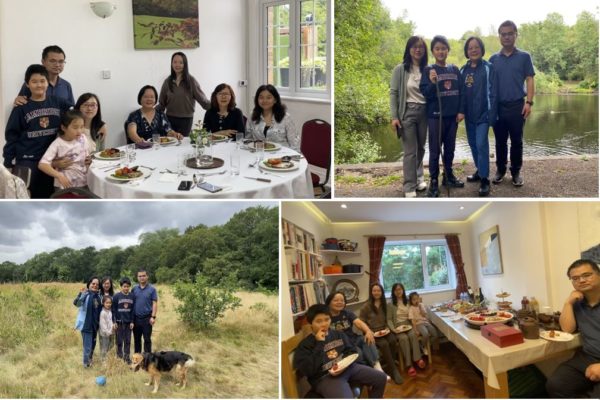
7月22日,那两位5月份在伦敦大学亚非学院(SOAS)与向群昌教授会面的中国社会学家访问了GCA中心。他们是河海大学的副教授秦晨博士(站在左边照片中的画下面),以及江苏省社会科学院的副研究员岳少华博士(在左边照片中与一家四口一起的人)。岳博士的妻子,张海华博士,来自南京农业大学,是伦敦经济学院的访问学者。他们都是在宋林飞教授或周晓虹教授的指导下于南京大学毕业的,宋林飞教授是江苏省社会科学院以及中国社会学会的前任院长,周晓虹教授是南京大学社会与行为科学学院的创始院长。他们享受了GCA中心的“边走边谈”第二路线,其中包括午餐和茶点,提供了休闲、学习和体育活动的完美结合,以增强访客的体验。
On July 22, the two Chinese sociologists whom Professor Chang met at SOAS in May visited the GCA Centre. They are Dr QIN Chen (who stands under the picture in the left photo), Associate Professor at Hohai University, and Dr YUE Shaohua (who is pictured with a family of four in the left photo), Associate Research Fellow at the Jiangsu Academy of Social Sciences. Dr Yue’s wife, Dr ZHANG Haihua, is a Visiting Fellow at LSE from Nanjing Agricultural University. All of them graduated from Nanjing University under the supervision of either Professor SONG Linfei, former President of the Jiangsu Academy of Social Sciences and the Chinese Sociological Association, or Professor ZHOU Xiaohong, the founding Dean of the School of Social and Behavioural Sciences at Nanjing University. They enjoyed the GCA Centre’s ‘walk and talk’ route 2, which includes lunch and tea, offering a blend of leisure, learning, and physical activity to enhance the experience for visitors.
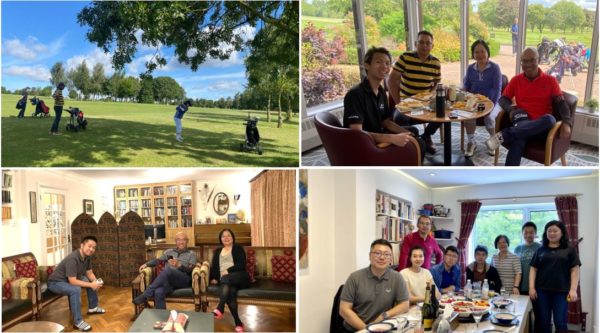
从8月6日至7日,凯亮先生参加了在GCA中心与杜一超的会议,为8月9日计划的无锡(伦敦)推广会做准备。次日,向群昌教授与布罗克特霍尔高尔夫俱乐部的经理刘大卫先生会面,并与凯亮先生及其儿子一同在冬山高尔夫俱乐部打高尔夫。他们讨论了第七届全球中国对话:全球健康治理(GCD II)的准备工作。几天后,大卫的家人和亲戚访问了GCA中心。他们都分享了GCA的社会使命,并表达了对GCD II的支持。
From August 6-7, Mr Kai Liang attended a meeting with DU Yichao at the GCA Centre in preparation for the Wuxi (London) Promotion Conference scheduled for August 9. The following day, Professor Chang met with Mr David Liu, Manager of the Brocket Hall Golf Club, and played golf with Mr Kai Liang and his son at the Winter Hill Golf Club. The preparations for the 7th Global China Dialogue: Governance for Global Health (GCD II) were discussed. A few days later, David’s family and relatives visited the GCA Centre. They all shared GCA’s social mission and expressed their support for GCD II.
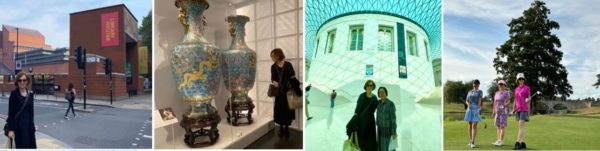
从9月10日至11日,广州十三行博物馆的创始人兼名誉馆长李丽在GCA研究员之家度过了两天。她是剑桥大学菲茨威廉博物馆的访问学者和露西·卡文迪许学院的研究员。该博物馆位于广州清代贸易哨所的历史遗址上。它收藏了超过6600件文物,凸显了广州在古代海上丝绸之路中的重要角色及其与欧洲和美洲的独家海上贸易。大量融入中国元素的西式产品展示了18和19世纪中西之间的共享美,代表了跨文化交流的成果。它们今天的重要性突出了全球化的早期阶段,强调了在塑造全球社会、国际关系和贸易中,相互理解与合作的关键重要性。在李丽的访问期间,她和向教授参观了大英图书馆,参加了大英博物馆的“中国的隐藏世纪”展览,并在布罗克特霍尔打高尔夫。
From September 10-11, LI Li, the Founder and Honorary Curator of the Guangzhou Thirteen Hongs Museum, spent two days at the GCA Fellows’ Home. She is a Visiting Fellow at the Fitzwilliam Museum and a Fellow of Lucy Cavendish College, University of Cambridge. The museum is located on the historical site of the Qing Dynasty trading posts in Guangzhou. It houses more than 6,600 artifacts, highlighting Guangzhou’s significant role in the ancient Maritime Silk Road and its exclusive maritime trade with Europe and America. A large number of Western-style products that incorporate Chinese elements showcase the shared beauty between China and the West during the 18th and 19th centuries, representing the outcomes of transcultural exchange. Their importance today highlights the early stages of globalization, emphasizing the critical importance of mutual understanding and cooperation in shaping a global society, international relations, and trade. During LI Li’s stay, she and Professor Chang visited the British Library, attended the ‘China’s Hidden Century’ exhibition at the British Museum, and played golf at Brocket Hall.
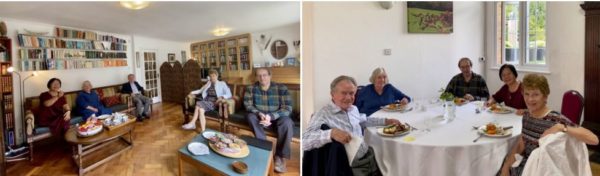
9月13日,一些GCA同事在GCA中心和米尔希尔高尔夫俱乐部进行了社交聚会。马丁·阿尔布罗教授(右图左侧)讨论了他一个月后即将前往中国的行程。向群昌教授分享了她的经历,讲述了在她的丈夫托马斯·克拉克博士(GCA信托人,左图右侧)因新冠疫情搬到他父亲家后决定留在那里,即使在他父亲去世后,她也开始采纳一种新的生活方式,独自生活在“空巢”中,并“与分离共处”(查尔斯·斯塔福德,2003)。弗兰西斯·伍德博士(两张照片中均为从左数第二位)分享了她对广州十三行历史的了解,并表示赞赏GCP考虑出版伊莎贝尔·克鲁克(1915-2023)的口述历史,她对此人非常了解。
On September 13, some GCA colleagues gathered socially at the GCA Centre and Mill Hill Golf Club. Professor Martin Albrow (left in the right photo) discussed his upcoming trip to China in one month. Professor Xiangqun Chang shared her experiences of adopting a new lifestyle of living alone in an ’empty nest’ and ‘living with separation’ (Charles Stafford, 2003), after her husband, Dr Thomas Clarke (GCA Trustee, right in the left photo), moved to his father’s house after the COVID-19 and decided to stay there even after his father’s passing. Dr Frances Wood (2nd from the left in both photos) shared her knowledge about the history of the Guangzhou Thirteen Hongs and expressed appreciation that GCP was considering publishing an oral history of Isabel Crook (1915-2023), whom she knew very well.
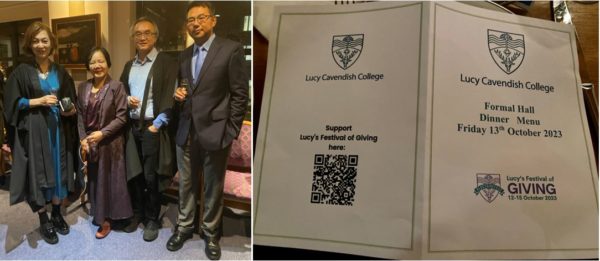
10月13日,向群昌教授和刘大卫被李丽邀请参加露西的布施节,在那里他们遇到了范欣博士(左图中从右数第二位),一位“全球公民”,他在中国、德国、美国和英国的大学中学习和教学。他担任亚洲和中东研究的研究主任以及现代中国历史的教学副手,属于亚洲和中东研究系。向教授和简·格雷托里克斯博士在高桌上交换了他们的联系方式。她是一位高级导师、研究生和本科生导师、临床前第二部分兽医学研究的研究主任以及英国公共卫生署的荣誉科学家。这个活动为来自不同学术和文化背景的专业人士提供了一个宝贵的交流和分享见解的机会,丰富了关于全球公民身份和跨学科合作的对话。
On October 13, Professor Xiangqun Chang and David Liu were invited by LI Li to attend Lucy’s Festival of Giving, where they met Dr Xin Fan (second from the right in the left photo), ‘a global citizen’ who has studied and taught at universities in China, Germany, the USA, and the UK. He serves as Director of Studies in Asian and Middle Eastern Studies and as a Teaching Associate in Modern Chinese History at the Faculty of Asian and Middle Eastern Studies. Professor Chang and Dr Jane Greatorex exchanged their details at the high table. She is a Senior Tutor, Graduate and Undergraduate Tutor, Director of Studies in Pre-Clinical Part II Veterinary Medicine, and Honorary Scientist at Public Health England. The event provided a valuable opportunity for networking and sharing insights among professionals from diverse academic and cultural backgrounds, enriching the dialogue on global citizenship and interdisciplinary collaboration.
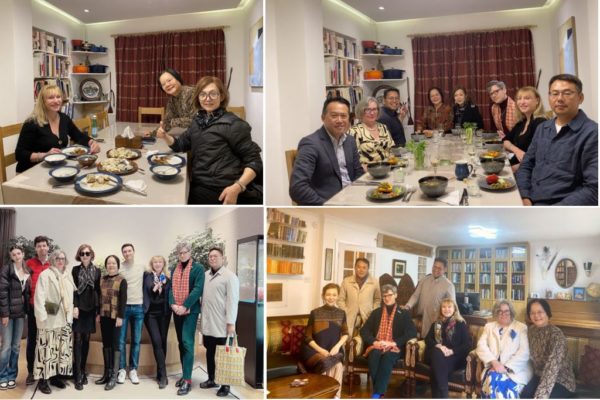
从10月27日至29日,在伦敦亚洲艺术活动期间,GCA中心欢迎了来自剑桥的研究员和客人。杰出的访客包括露西·卡文迪许学院(LCC)的研究员李丽;Alison Vinnicombe,LCC的讲师、注册官、档案管理员和纪律院长;剑桥菲茨威廉博物馆亚洲部门的馆长林詹姆斯博士;孔令娟,孔子第七十八代后裔的儿媳妇,也是孔子家族唯一的非华裔人士,同时也是孔子更美好世界基金会的信托人;设计师Rory Hutton,Rory Hutton有限公司的创始人;以及WaveBreak的首席科学家金雅博士。刘大卫在主持这次活动中发挥了关键作用。这是GCA中心首次接待非GCA活动的客人。共有来自八个不同学科和五个种族背景的八位个体聚在一起,他们因共同的兴趣而团结。讨论充满了热情和活力。每个人都感觉GCA中心真正配得上“研究员之家”的称号,并享受如此的待遇。
From October 27-29, during the Asian Art in London event, the GCA Centre welcomed Fellows and guests from Cambridge. The distinguished visitors included LI Li, Fellow of Lucy Cavendish College (LCC); Alison Vinnicombe, Praelector, Registrar, Archivist, and Dean of Discipline LCC; Dr James Lin, Curator of the Asia Department at the Fitzwilliam Museum, Cambridge; Jeni Kong, Trustee of the Confucius Better World Foundation and daughter-in-law to the 78th generation descendant of Confucius, notably the only person of non-Chinese ethnic; Rory Hutton, Designer at Rory Hutton Ltd; and Dr Kim Yahya, Principal Scientist at WaveBreak. David Liu played a key role in hosting the event. It is the first time the GCA Centre has received guests for non-GCA events. A total of eight individuals from eight different disciplines and five ethnic backgrounds came together, united by their shared interests. The discussions were engaging and filled with enthusiasm. Everyone felt that the GCA Centre truly deserved to be called a ‘Fellows’ Home’ and enjoyed being treated as such.
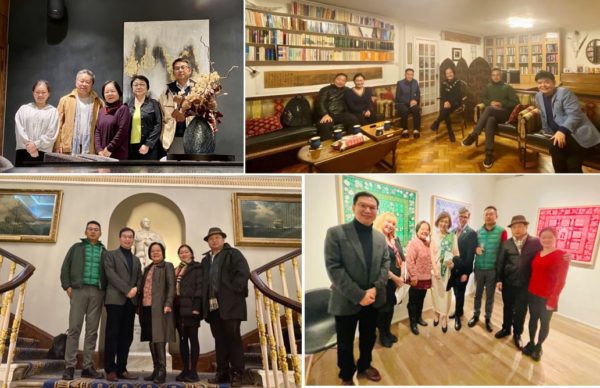
从11月7日至10日,GCA信托人成远博士(左边照片中从右数第二位)访问了英国。巧合的是,她与来自牛津剑桥校友网络的蔡朴博士是朋友。继蔡博士在7月初他在GCA中心的停留期间的推荐之后,成博士和向教授会见了蔡博士建议的一些专业人士。这些人包括方律师(左边照片中从左数第二位)、他的妻子郑律师(左边照片中最左边)、朱博士(会计师,从左第二张照片中最右边)、和何先生(会计师,从右第二张照片中从左数第二位)。他们中的许多人参加了Rory Hutton的“亚麻刻印中的园艺”展览,在那里他们遇到了李丽、Rory和Joni。他们享受展出的独特艺术风格,并在其中发现了中国文化的元素。
From November 7-10, Dr Yuan Cheng (second from the right in the left photo), a GCA Trustee, visited the UK. Coincidentally, she is a friend with Dr Pu Zhai from the Oxbridge Alumni Network. Following Dr Zhai’s recommendation in early July during his stay at the GCA Centre, Dr Cheng and Professor Chang met with some professionals suggested by Dr Zhai. These included Alan Fang (a lawyer, second from the left in the left photo), his wife Katie Zheng (a solicitor, first on the left in the left photo), Dr Ian Zhu (an accountant, first on the right in the second photo from the left), and Terry Ho (an accountant, second from the left in the second photo from the right). Many of them attended Rory Hutton’s ‘Gardening in Linocut’ exhibition, where they met LI Li, Rory, and Joni. They enjoyed the distinct styles of art on display and discovered elements of Chinese culture within them.
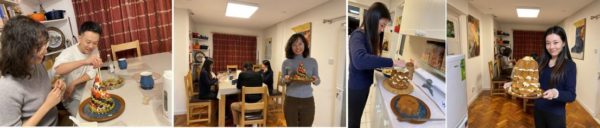
On December 7, participants and volunteers of GCD VIII took pleasure in preparing snacks and cakes for the Tea Party scheduled to be held at Lucy Cavendish College’s ‘Fellows’ Home’—Marshall House. WANG Conghan, a PhD candidate from Zhejiang Gongshang University (second from the left in the left photo), and SHA Yuze, a PhD candidate from Lancaster University (in the second photo from the left), created the Christmas Tree Cheese Ball Appetizer. MENG Jialin, an interpreter (featured in the right two photos), prepared an Italian Pandoro Christmas Tree Cake. Their contributions were greatly appreciated by the party attendees. Dr Jane Greatorex of LCC specifically mentioned their efforts in her email.
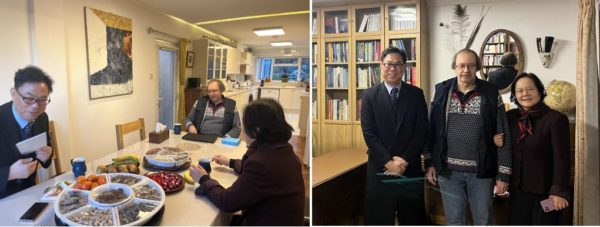
12月11日,钱振华博士在GCA中心与GCA财务主管托马斯·克拉克博士会面,讨论了中国复杂的全球关系,包括台湾问题、南中国海争议以及其对东盟国家的影响。他们探讨了民主面临的挑战,如民族主义和错误信息。克拉克博士询问了中国在全球进步中的角色。钱博士赞赏克拉克的愿景,但指出由于内部和外部因素,中国影响力面临的挑战。
On December 11th, Dr QIAN Zhenhua met with GCA Treasurer Dr Thomas Clarke at the GCA Centre to discuss China’s complex global relationships, including Taiwan, South China Sea disputes, and its influence on ASEAN countries. They explored the challenges facing democracy, such as nationalism and misinformation. Dr Clarke inquired about China’s role in global progress. Dr Qian admired Clarke’s vision but cited challenges for Chinese influence due to internal and external factors.
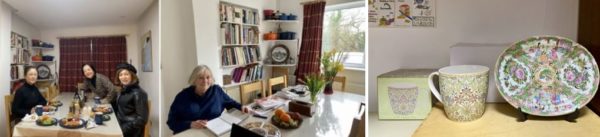
12月21日,在她返回中国之前,与李丽一起,为广州医科大学第三附属医院整形外科主任医师廖浓(左边照片中左侧的人)在GCA研究员之家举行了一次欢送会。她在2023年12月8日的第八届全球中国对话会议上提交了一篇关于“医疗美容行业面临的挑战”的论文。在聚会期间,李丽强烈希望能够见到弗兰西斯·伍德博士,以寻求关于广州十三行博物馆数字化的建议和资源。会议安排在2024年2月4日进行户外活动。
右边的照片拍摄于2月10日,当时弗兰西斯·伍德博士为向群昌教授签署了她的书《背叛的盟友:大战中的中国》的副本。之后,他们享受了GCA中心“边走边谈”第4路线,在中国新年当天(注:后来进行了更新)。
On December 21st, before her departure back to China, together with LI Li, a farewell gathering was held at the GCA Fellows’ Home for LIAO Nong (left in the left photo), Chief Physician of the Plastic Surgery Department at the Third Affiliated Hospital of Guangzhou Medical University. She presented a paper on ‘Challenges faced by the medical beauty industry’ at the 8th Global China Dialogue on December 8th, 2023. During the gathering, LI Li expressed a strong desire to meet Dr Frances Wood to seek advice and resources for digitalizing the Guangzhou Thirteen Hongs Museum. The meeting was arranged with outdoor activities on February 4th, 2024.
巧合的是,伍德博士带来了百合花和一只精美的中国马克杯,上面有威廉·莫里斯的设计。他是一位与19世纪英国艺术与工艺运动相关联的英国纺织设计师、诗人、艺术家、作家和社会主义活动家。李丽从剑桥带来的花被放置在靠近窗户的桌子一端,那里的花卉种类更多,而广彩盘看起来也更加色彩丰富。
The right photo was taken on February 10th when Dr. Frances Wood signed a copy of her book Betrayed Ally: China in the Great War for Professor Xiangqun Chang. Afterwards, they enjoyed the GCA Centre’s ‘Walk and Talk’ Route 4 on Chinese New Year Day (Note: This photo and caption were updated afterwards).
中间的照片拍摄于2月10日,当时弗兰西斯·伍德博士为向群昌教授签署了她的书《背叛的盟友:大战中的中国》。之后,他们在中国新年当天享受了GCA中心的“边走边谈”第4路线。巧合的是,伍德博士带来了百合花和一只精美的中国马克杯,上面有威廉·莫里斯的设计。他是一位19世纪英国的纺织设计师、诗人、艺术家、作家和社会主义活动家,与英国艺术与工艺运动有关。李丽从剑桥带来的花被放在靠窗户的桌子一端,那里的花种类更多。马克杯的颜色相对柔和,以绿色和黄色为主,补充以精致的花卉图案。相比之下,广彩盘色彩更加鲜艳,使用了包括粉红色、绿色、黄色和蓝色在内的多种颜色。
右边的照片展示了在GCA中心展出的马克杯和盘子。两者都是装饰艺术的杰作,各自承载着其文化和历史的独特性。马克杯的颜色相对柔和,以绿色和黄色为主,辅以精致的花卉图案。相比之下,广彩盘色彩更加鲜艳,使用了多种颜色,包括粉红色、绿色、黄色和蓝色。威廉·莫里斯的设计通常代表了19世纪末英国艺术与工艺运动的特点,其特点是复杂的自然图案、对称性和重复的植物图案。广彩盘反映了中国广东省十三行时期的艺术风格,以其丰富的颜色、复杂的风景和对称的装饰而著名。马克杯可能是工业印刷图案的产品,而广彩盘的制作可能更为复杂,涉及多次烧制和手工绘画。马克杯是日常使用的饮用器皿;而广彩盘更可能是装饰品或用于特殊场合的器皿。威廉·莫里斯的设计反映了19世纪末英国的社会文化背景,强调手工艺和反工业化。广彩盘反映了十三行时期广东省的贸易繁荣和文化交流。
注:此照片及其说明文字后来已更新。
总之,2023年对于全球中国学院(GCA)来说是一个具有里程碑意义的时期,标志着自成立以来十年来显著的增长、扩展和创新。庆祝其成立十周年,GCA不仅坚持了促进学术交流、研究传播和文化交流的承诺,而且还通过实施“改革开放政策”进入了新的领域。在GCA董事会的支持下,这一政策代表了一个战略转向,旨在更有效地利用GCA的资产,从而确保机构的可持续性并扩大其影响力。
全年的多样化活动和参与凸显了GCA作为促进中国与全球社区之间理解和合作的动态平台的角色。GCA中心的引入和研究员之家作为学术款待空间的建立,进一步巩固了GCA作为一个前瞻性和包容性机构的声誉。
通过战略合作、广泛的网络和对其使命的坚定奉献,GCA继续塑造全球治理、文化交流和学术合作的对话。当我们回顾过去一年的成就并展望未来时,很明显,GCA正准备为全球学术和社会使命做出更大的贡献,这一切都是出于对改革、开放和相互理解的承诺。通过拥抱变化、培养创新和促进包容性,GCA正在重新定义21世纪全球学术机构的含义。
In conclusion, the year 2023 has been a landmark period for the Global China Academy (GCA), marking a decade of significant growth, outreach, and innovation since its inception. Celebrating its 10th anniversary, GCA has not only upheld its commitment to promoting academic exchange, research dissemination, and cultural communication but has also ventured into new territories with the implementation of the ‘Reform and Opening-Up Policy.’ Endorsed by the GCA board, this policy represents a strategic pivot towards utilizing GCA’s assets more effectively, thereby ensuring the institution’s sustainability and expanding its impact.
The diverse range of activities and engagements throughout the year underscores GCA’s role as a dynamic platform for fostering understanding and cooperation between China and the global community. The introduction of the GCA Centre and the establishment of the Fellows’ Home as a space for academic hospitality have further cemented GCA’s reputation as a forward-thinking and inclusive institution.
Through strategic collaborations, extensive networking, and a steadfast dedication to its mission, GCA continues to shape the dialogue on global governance, cultural exchange, and academic collaboration. As we reflect on the achievements of the past year and look forward to the future, it is clear that GCA is poised for even greater contributions to global academic and social missions, driven by a commitment to reform, openness, and mutual understanding. By embracing change, fostering innovation, and promoting inclusivity, GCA is redefining what it means to be a global academic institution in the 21st century.
Click here to visit the GCA News & Blog section.
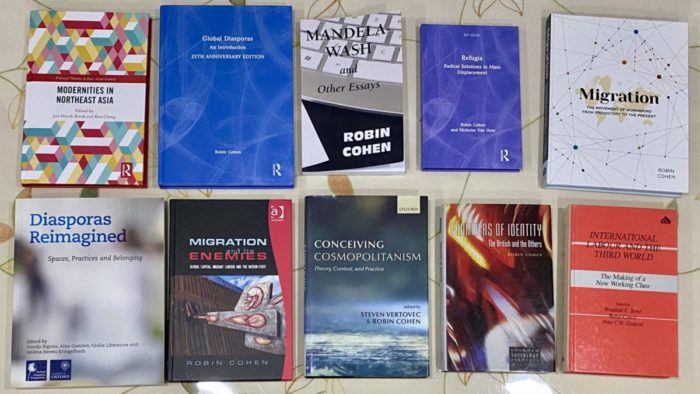
A GCA Fellow’s Donation of Books Enriches the Global China Academy’s Library Collection
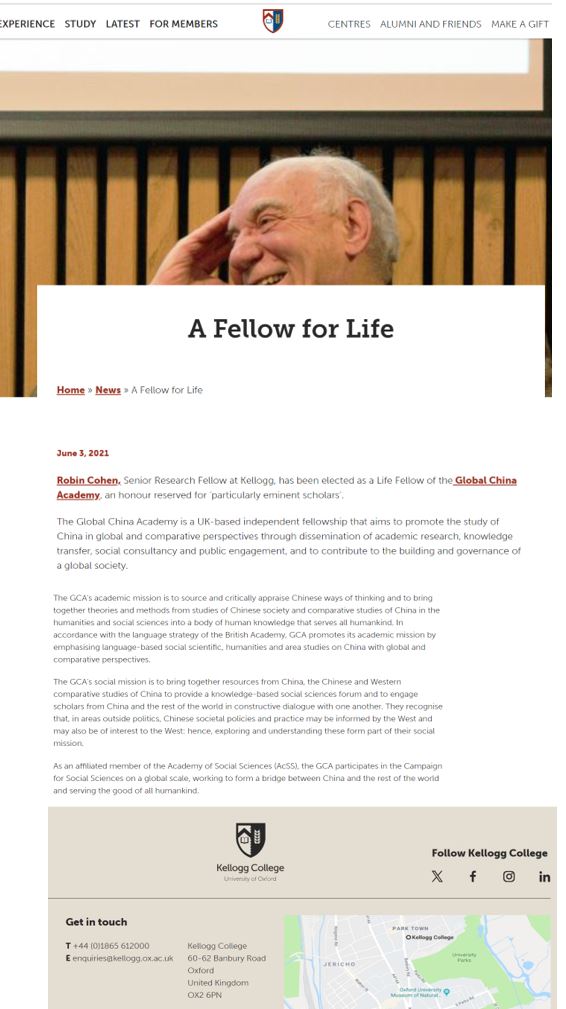
In a generous contribution to the academic community, Professor Robin Cohen, a Life Fellow of the Global China Academy (FGCA), has donated an invaluable collection of ten academic books to the GCA library. This significant donation highlights Professor Cohen’s dedication to enhancing education and advancing sociological knowledge through global and regional perspectives.
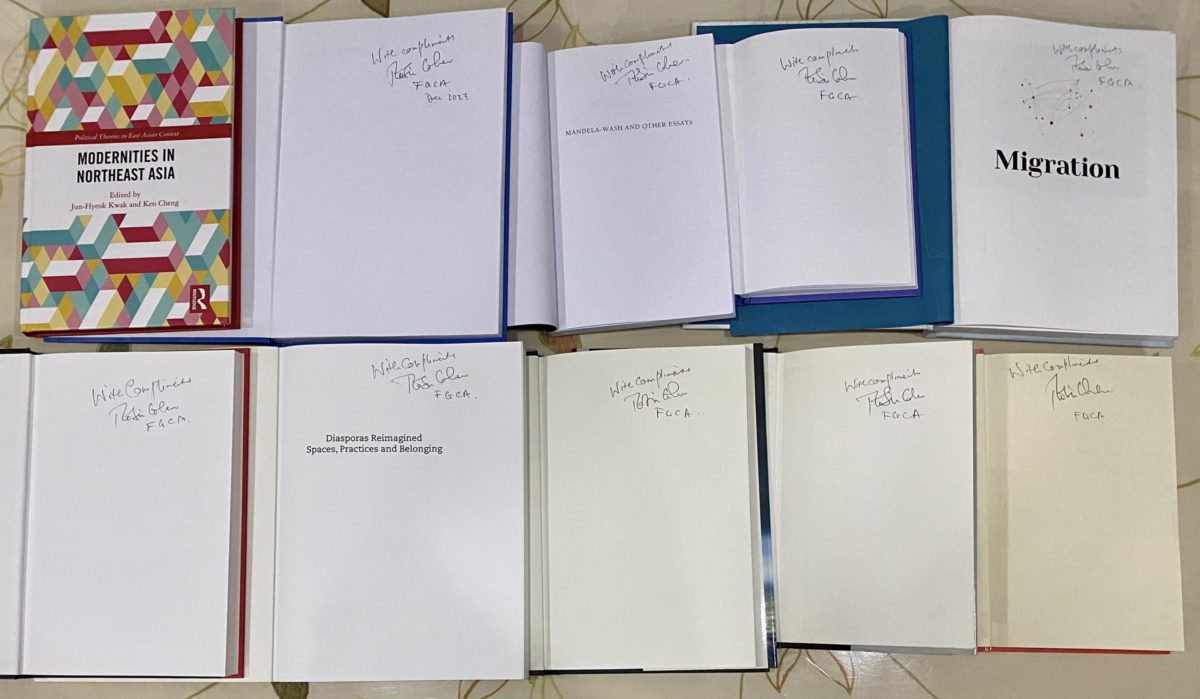
These books, cover various topics, offering insights into global migration, cultural diversity, and the dynamics of international relations. The collection features influential works edited or authored by Robin Cohen and others, encompassing diverse topics in sociology and political science:
- Modernities in Northeast Asia (2024), edited by Jun-Hyeok Kwak and Ken Cheng, provides a transformative view of modernity through the lens of Northeast Asian intellectual and political movements, challenging Western-centric perspectives.
- Global Diasporas: An Introduction (2022) by Robin Cohen, in its 25th anniversary edition, explores the concept of diaspora through case studies of Jewish, Armenian, African, and other diasporas, offering comprehensive guidance for students and scholars.
- Mandela-wash and other essays (2022) by Robin Cohen, is a collection of essays addressing contemporary topics such as vaccine rollouts, electoral reform, and citizenship.
- Refugia: Radical Solutions to Mass Displacement (2020) by Robin Cohen and Nicholas Van Hear, proposes innovative solutions to mass displacement.
- Migration: The Movement of Humankind from Prehistory to the Present (2019) by Robin Cohen, examines various types of migration throughout history.
- Diasporas Reimagined: Spaces, Practices and Belonging (2015), edited by Nando Sigona, Alan Gamlen, Giulia Liberatore, and Hélène Neveu Kringelbach, is a collection of essays from the Oxford Diasporas Programme.
- Migration and its Enemies: Global Capital, Migrant Labour and the Nation-State (2006) by Robin Cohen, explores the interplay between global capital, migrant labor, and national politics.
- Conceiving Cosmopolitanism: Theory, Context, and Practice (2003), edited by Steven Vertovec and Robin Cohen, is a compilation of essays on cosmopolitanism.
- Frontiers of Identity: The British and the Others (1994) by Robin Cohen examines British national identity.
- International Labour and the Third World: The Making of a New Working Class (1987), edited by Rosalind E. Boyd, Robin Cohen, and Peter C. W. Gutkind, discusses the international role of the working class.
Professor Cohen’s donation timed perfectly for the GCA, as the institution continues to expand its resources to support research and learning in sociology and related disciplines. The new additions to the library will be invaluable resources for GCA Fellows, researchers and students, facilitating a deeper understanding of the complex social issues shaping the modern world.
The GCA plans to hold a small ceremony session during the 10th GCA dinner on 8th December to acknowledge Professor Cohen’s contribution. Although the books were not present at the House of Lords for the dinner, the GCA’s website records Professor Cohen’s benevolence and ongoing support for academic excellence. Professor Xiangqun Chang, President of the GCA, expressed profound gratitude for this donation, noting it as an investment in knowledge and future research, particularly in global and comparative perspectives.
Appendixes
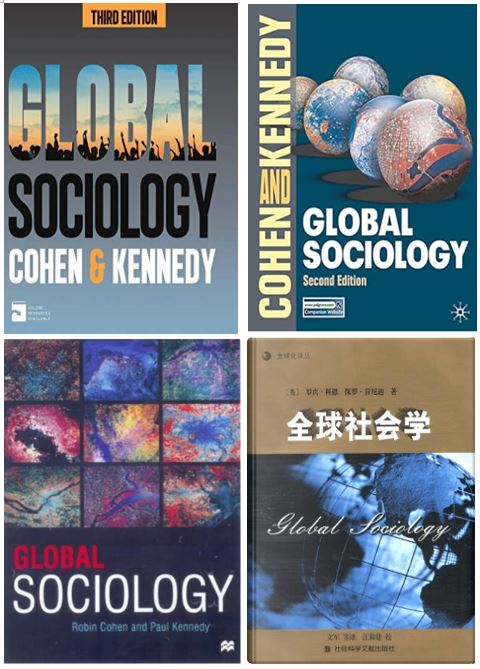
- In addition to the aforementioned books, Global Sociology (2017, 2012, 2000) by Robin Cohen and Paul Kennedy is a well-known textbook worldwide. Following the 1st edition, the Chinese edition 《全球社会学》was published in 2001, translated by Wen Jun 文军. It has been introduced to the Chinese academic community as a landmark work:
- creatively integrates existing theoretical traditions in sociology with emerging research perspectives, strongly focusing on contemporary issues and the dynamics of social change.
- offers a highly promising and inspiring new perspective for sociological research, especially in terms of sociological theory and methods. Through a detailed examination of global viewpoints and paradigms, it vividly reiterates the value and vision of sociology in understanding the complex and rapidly changing world in which we live.
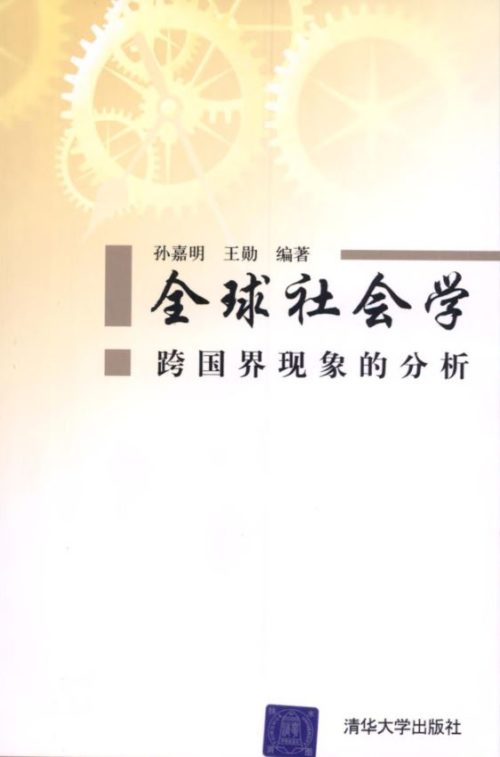
Contrastingly, it’s worth mentioning another book, Global Sociology: Analysis of Transnational Phenomena (2006), by Jiaming Sun of Texas A&M University-Commerce and Xun Wang of University of Wisconsin-Parkside, in the USA. This book is only available in Chinese (《全球社会学: 跨国界现象的分析》, 孙嘉明 王勋 著). It consists of eight chapters covering topics such as formation of global society and global sociology, major theories and schools of global social studies, economic globalization, global social environment, etc
2. News at University of Oxford website: A Fellow for Life: https://www.kellogg.ox.ac.uk/news/a-fellow-for-life