
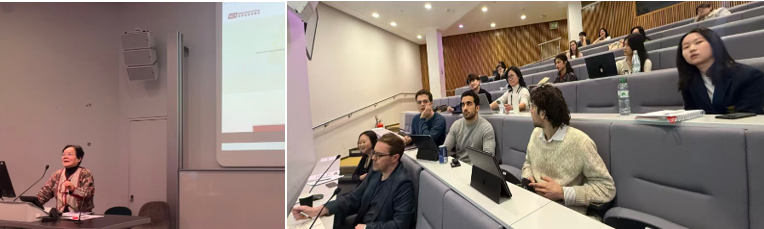
《社科汉语研究期刊》编委会成员参加第四届中国研究学生论坛
中国研究学生论坛由伦敦大学亚非学院(SOAS)的韩雪宸 Sam Hardy 发起并于2023年举办了第一届论坛。第二届和第三届论坛分别于2024和2025年在伦敦国王学院KCL和伦敦经济学院LSE举办。这是一个由学生组织、学生参与,在这三校之间轮流主办、由三校汉语教师支持的跨校学术平台。相关教师同时担任由环球世纪出版社出版的《社科汉语研究期刊》(中文版)(Journal of Chinese for Social Science)编委。“社科汉语”或“社会科学汉语言”是“专门用途汉语”(CSP)的一个分支,如同“科技汉语”或“商务汉语”,它审视汉语在特定背景下的使用,并引起学术界对现有翻译文本和中国社会科学语言运用的关注。
在伦敦大学语言、文化与语言学学院首席教学研究员、《社科汉语研究期刊》创刊主编之一宋连谊博士,全球中国学术院院长、环球世纪出版社主编常向群教授以及相关教师/编委的支持下,论坛得以持续运行与发展。论坛采用英汉双语发表与讨论,不仅展示了社科汉语教学的成果,也推动了学术表达的双语转化。遴选的优秀论文已在《社科汉语研究期刊》发表,使这一跨校学术平台逐渐形成“会议—发表”的学术转化机制。
第四届中国研究学生论坛于2026年3月21日在伦敦大学亚非学院SOAS成功举办。本届论坛由韩雪宸组织并主持,得到了语言、文化与语言学学院首席语言讲师宣力Lik Suen女士的大力帮助。来自LSE、KCL、牛津、格拉斯哥等高校的12位本硕博学生发表了研究成果,系统呈现了当代中国研究在不同学科与方法之间的交叉发展。研究主题大致分为三类:一是历史与思想研究(如主权翻译、地方议会与早期跨文化认知),二是国际关系与比较政治(如欧洲对华话语、印尼与中国的比较、瑞士中立性),三是当代社会与知识生产(如留学生信任、青年就业、媒体中的中国想象等)。这些研究不仅关注“中国本身”,更通过比较、翻译与跨文化视角,将中国置于全球知识与话语体系之中,体现出明显的跨学科与转文化transcultural研究取向。
在既有汉语教师点评的基础上,本届论坛新增两位外部评委参与评议。他们是伦敦大学亚非学院历史系系主任劳曼Lars Peter Laamann副教授和?。 论坛的最后环节,由常向群教授简单介绍《社科汉语研究期刊》网站的相关内容,期刊主编、伦敦政治经济学院中文部副主任施黎静博士与作者易蔚洋Derin Bohcaci对谈。他发表的文章是“现代性”或“欧洲中心主义”——对比土耳其与中国的语言改革‘Modernity’ or ‘Eurocentrism’— A Comparative Study of Language Reforms in Turkey and China,他们分享的投稿与发表经验,进一步强化了论坛与期刊之间的互动与学术生态建设。
以下为论坛议程
- 从“合法性身份”到“项目性身份”,姚承哲,格拉斯哥大学
- 晚清中国“主权”概念的翻译,陈乐言,伦敦政治经济学院(LSE)
- 欧洲各国政府如何构建对华政治关系的话语?,Victor El-Khoury,伦敦政治经济学院(LSE)
- 苏哈托政权倒台以来,印尼在多大程度上能够效仿中国的崛起?,Sam Stephens,伦敦大学亚非学院(SOAS)
- 20世纪初广东省议会研究,赵逸轩,利物浦大学
- 20世纪初中国人对纽约犹太移民的认知,刘元昊,伦敦国王学院(KCL)
- 来华外国留学生对中国的信任度,Eleonora Di Benedetto,四川大学
- 从“勤劳革命”重新思考资本主义,胡嘉珍,牛津大学
- 精英学生如何应对中国青年失业危机,Hedi Deban,伦敦政治经济学院(LSE)
- 中国对瑞士中立性及其“桥梁作用”的认知,Jael Lorena Stettler,伦敦国王学院(KCL)/中国人民大学
- 新闻中的中国技术“技术东方主义”想象,Hatty Liu,伦敦政治经济学院(LSE)
- 1938–1978年中泰教育政策中的民族主义与意识形态控制,Jaruwan Teanmahasatid,伦敦大学亚非学院(SOAS)
(中文名待确认)
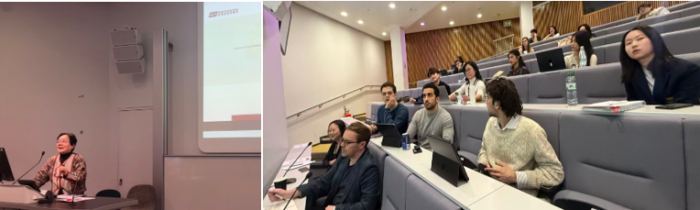
以下为论坛活动照片选
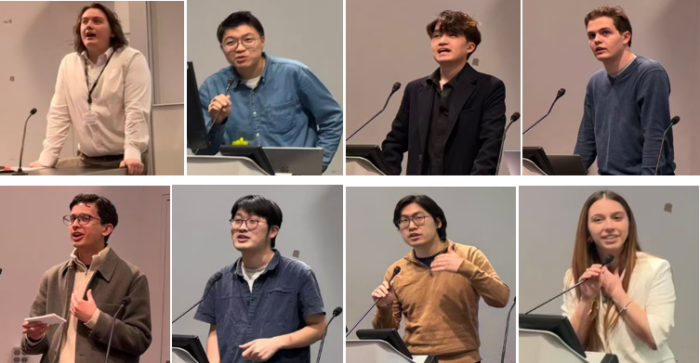
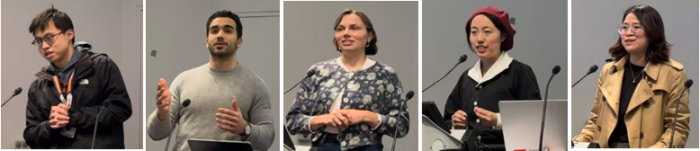
上面照片为主席与发言人(按出场顺序排列)。
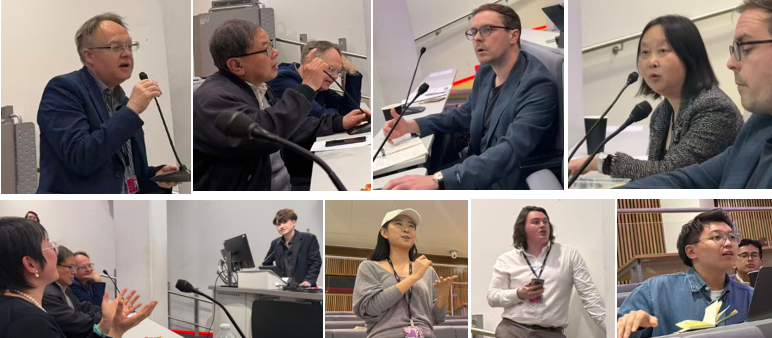
上图为讨论与问答环节。

茶歇期间的交流。
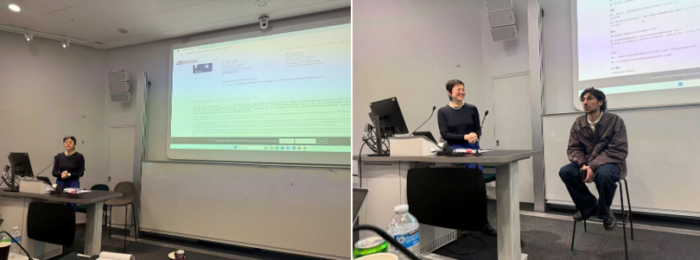
期刊网站介绍(上)及主编与作者的对谈(下)。
Editors of the Journal of Chinese for Social Sciences Participate in the 4th China-Focused Student Research Forum at SOAS
The China-Focused Student Research Forum was initiated by Sam Hardy at SOAS, University of London, with its first forum held in 2023. The second and third forums were hosted in 2024 and 2025 at King’s College London (KCL) and the London School of Economics and Political Science (LSE), respectively. The forum is a cross-institutional academic platform organised by students and for students, rotating among SOAS, KCL, and LSE, and supported by Chinese language teachers across the three institutions. They also serve on the editorial board of the Journal of Chinese for Social Sciences (Chinese edition), published by Global Century Press. ‘Chinese for social science’ or ‘Chinese language for Social Science’ is a branch of ‘Chinese for Specific Purposes’ (CSP), like ‘Chinese for science and technology’ or ‘business Chinese’. It examines the use of the Chinese language in context and draws academic attention to the usefulness and validity of existing translated texts and language usage in Chinese social science.
With the support of Dr Song Lianyi, Principal Teaching Fellow at the School of Languages, Cultures and Linguistics, University of London, and one of the founding editors of the Journal of Chinese for Social Sciences; Professor Xiangqun Chang, President of the Global China Academy and Editor-in-Chief of Global Century Press; as well as the above teachers and editorial board members, the forum has been able to sustain its development. Conducted bilingually in Chinese and English, both in presentations and discussions, the forum not only showcases achievements in teaching Chinese for social sciences but also promotes the bilingual transformation of academic expression. Selected outstanding papers have been published in the Journal of Chinese for Social Sciences, gradually establishing a “conference-to-publication” mechanism within this cross-institutional platform.
The 4th China-Focused Student Research Forum was successfully held on 21 March 2026 at SOAS, University of London. The event was organised and chaired by Sam Hardy, with strong support from Ms Lik Suen, Principal Lector at the School of Languages, Cultures and Linguistics. A total of 12 undergraduate, master’s, and doctoral students from institutions including LSE, KCL, Oxford, and Glasgow presented their research, collectively demonstrating the interdisciplinary and methodological diversity of contemporary China studies.
The research topics can be broadly grouped into three areas: (1) historical and intellectual studies (e.g. the translation of sovereignty, provincial assemblies, and early cross-cultural perceptions); (2) international relations and comparative politics (e.g. European discourses on China, Indonesia’s comparison with China, and Swiss neutrality); and (3) contemporary society and knowledge production (e.g. international students’ trust in China, youth employment, and media imaginaries of China). These studies not only focus on China itself but also situate China within global knowledge and discursive systems through comparative, translational, and cross-cultural perspectives, reflecting a distinctly interdisciplinary and transcultural approach.
In addition to the established commentary by Chinese language instructors, this year’s forum introduced two external discussants, including Associate Professor Lars Peter Laamann, Head of the Department of History at SOAS, University of London, and [name to be confirmed].
In the concluding session, Professor Xiangqun Chang briefly introduced the Journal of Chinese for Social Sciences website. This was followed by a dialogue between Dr Shi Lijing, Deputy Head of the Chinese Programme at LSE and Editor-in-Chief of the journal, and the author Derin Bohcaci, whose published article, “‘Modernity’ or ‘Eurocentrism’? A Comparative Study of Language Reforms in Turkey and China,” served as the basis for discussion. They shared their experiences of submission and publication, further strengthening the interaction between the forum and the journal, and contributing to the development of a sustainable academic ecosystem.
The following section outlines the programme of the forum.
- From Legitimised Identity to Project Identity, Chengzhe Yao, University of Glasgow
- Translating Sovereignty (主權) in Late Qing China, Lok Yin Chan, London School of Economics and Political Science (LSE)
- How Do European Governments Frame Political Relations with China? Victor El-Khoury, London School of Economics and Political Science (LSE)
- To What Extent Has Indonesia Since the Fall of the Suharto Regime Been Able to Emulate China’s Rising Status? Sam Stephens, SOAS, University of London
- The Guangdong Provincial Assembly in the Early 1900s, Yixuan Zhao, University of Liverpool
- Early Twentieth-Century Chinese Perceptions of Jewish Immigrants in New York, Yuang Marcus Liu, King’s College London (KCL)
- Trust of International Students in China, Eleonora Di Benedetto, Sichuan University
- Rethinking Capitalism through the Industrious Revolution, Jiazhen Hu, University of Oxford
- How Elite Students Navigate China’s Youth Unemployment Crisis, Hedi Deban, London School of Economics and Political Science (LSE)
- China’s Perception of Swiss Neutrality and Its Bridge-Builder Role, Jael Lorena Stettler, King’s College London (KCL) / Renmin University of China
- Techno-Orientalist Imaginaries of China in Journalism, Hatty Liu, London School of Economics and Political Science (LSE)
- Nationalism and Ideological Control in Sino–Thai Education Policy, 1938–1978, Jaruwan Teanmahasatid, SOAS, University of London
The following are selected photographs from the event.
The above are the chair and presenters (in order of appearance).
The above shows the discussion and Q&A session.
Networking during the break.
Introduction to the journal website (top) and a dialogue between the editor-in-chief and a contributor (bottom).