In early June 2024, Professor Zhao Kejin of Tsinghua University contacted Professor Xiangqun Chang to propose two academic visiting programmes. The first was a 22-day field study (27 July–17 August), led by Professor Zhao, focusing on British modernisation and its global development experience. The second was a seven-day visit (17–23 August) to the United Kingdom by scholars from four universities in Beijing and Shanghai, centred on the development of artificial intelligence and global governance.
These visits formed part of the concrete measures agreed upon during Professor Zhao Kejin’s visit to the Global China Academy Centre on 20 January 2024, where institutional cooperation between Tsinghua University and the Global China Academy (GCA) was discussed and confirmed. They also represented the fulfilment of the late Professor Li Qiang’s (1950–2023) long-held vision — founding dean of the School of Social Sciences at Tsinghua University and former Chinese Chair of the GCA Council — to continue strengthening and developing the academic relationship between the two institutions.
For this reason, both the GCA Board of Trustees and the GCA Council attached great importance to the visit of Tsinghua and other Chinese scholars to the UK, and hoped to sustain and deepen the partnership through collaboration with the School of Social Sciences at Tsinghua University. Based on a previous invitation-letter template, Professor Tony McEnery (Chair of the GCA Council) and Professor Xiangqun Chang (President/Director of GCA) jointly issued formal invitations, clearly stating that all programme arrangements and services would be organised and delivered by the Global China Academy, while the associated costs would be covered by the Institute for Global Industry (IGI), Tsinghua University. As the visit took place during the holiday period, GCA also ensured that each key activity would be attended by different GCA leaders or Fellows.
With regard to transport and accommodation, we appropriately outsourced certain elements; for catering, thanks to sponsorship from two entrepreneurs, we raised the standard where appropriate. We also proactively added a clause to the previously signed contract stating that any excess costs beyond the agreed level would be borne by GCA, as a gesture of good faith and commitment as the host. Drawing on decades of experience in academic exchange with Chinese scholars, we extended the traditional Chinese literati ideal of “reading ten thousand books and travelling ten thousand miles” by adding another principle: “sharing international meals and making friends from all corners of the world.” For Chinese guests—given the cultural importance of food—“sharing international meals” is also a practical way to embody Fei Xiaotong’s well-known vision of cultural reciprocity and cosmopolitan coexistence: appreciating one’s own beauty, appreciating the beauty of others, and achieving harmony through mutual flourishing—often summarised as “harmony without uniformity.”
All aspects of the programme — including its academic content, travel arrangements, accommodation, meals, site visits, and scheduling — were discussed, reviewed, and confirmed with the delegation in advance of their arrival in the United Kingdom. Below are brief daily summaries of activities and related photos (mainly based on images shared in our WeChat group). This documentation is not only for record-keeping, but also to uphold the authenticity, fairness, and transparency of academic work—and to demonstrate the work undertaken and the effort invested.
17 August (Saturday) Arrival in London · Welcome Party
- Around 10:45 Arrival at Beijing Capital International Airport (Terminal 3). Check-in counter: H.
- 13:45–17:45 Flight CA937 from Beijing Capital International Airport (T3) to London Heathrow Airport (T2). GCA arranged airport pick-up (7 people + 7 suitcases, 9-seat minibus).
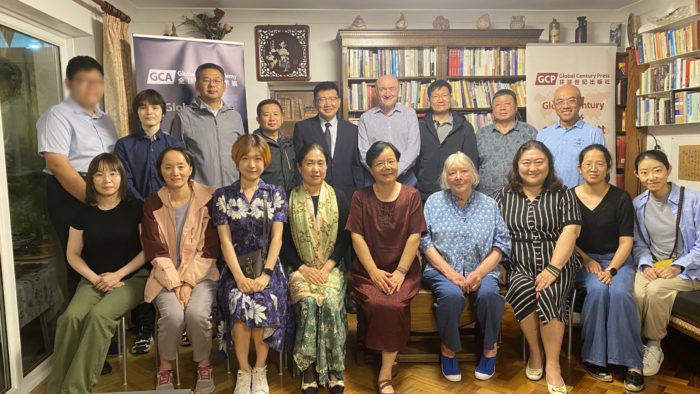
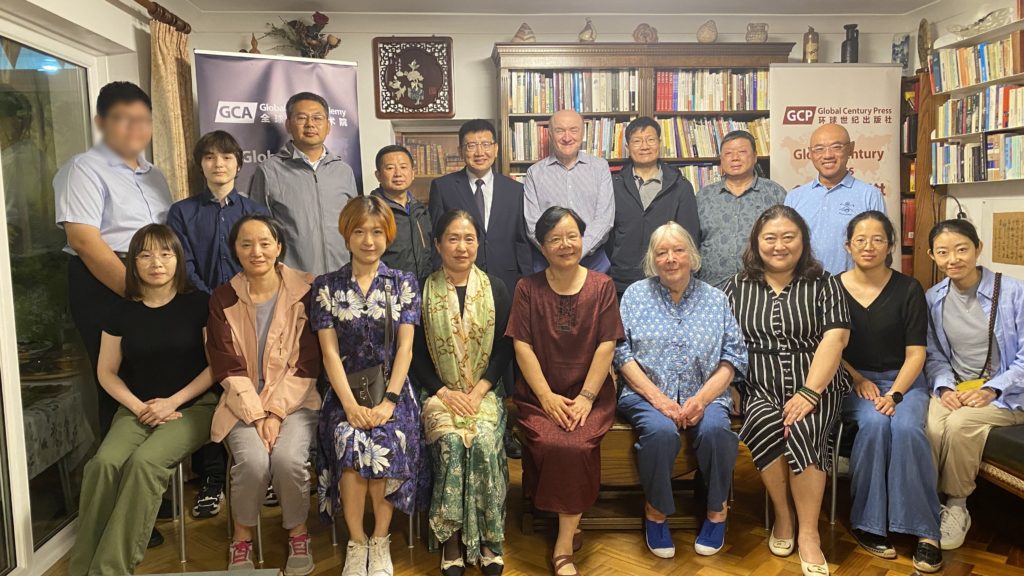
- 20:00 A welcome party was held at the GCA Fellows’ Home. Attendees included:
Chinese delegation (10 people):
- Professor Wang Tianfu (Dean, School of Social Sciences, Tsinghua University);
- Professor Zhao Kejin (Department of International Relations, Tsinghua University);
- Professor Dai Changzheng (Dean, School of International Relations, University of International Business and Economics);
- Professor Zhu Jiejin (Former Vice Dean of School of International Relations and Public Affairs, Fudan University);
- Dr Liu Lina (Assistant Professor, School of International Studies, Renmin University of China);
- Dr Xing Yajie (Department of International Relations, Tsinghua University);
- Ms Yuan Yuhong (Deputy Director, Administrative Office, School of Social Sciences, Tsinghua University);
- Ms Sui Jingzhu (Institute for Global Industry, Tsinghua University);
- and Professor Zhao Kejin’s wife and son.
- In addition, Professor Zhang Shuyan (Northeast Normal University) and her daughter also joined.
Global China Academy participants:
- Professor Tony McEnery (Chair of the GCA Council);
- Dr Frances Wood (former Secretary to the GCA Board of Trustees);
- Professor Xiangqun Chang (President/Director of GCA);
- Mr Liu Daqian (Executive Manager, GCA);
- Mr Liang Kai (GCA Events Officer);
- and volunteer Bruce Liu Hongran (student at King’s College London), among others.
21:30 Check-in at the hotel. Accommodation in London
- The Manor Elstree, Barnet Lane, Elstree, WD6 3RE, UK
(33–55 minutes’ drive from the airport; 65–90 minutes to Oxford; 55–75 minutes to Cambridge) - GCA Fellows’ Home, 32 Hankins Lane, London NW7 3AG
The drive between the two locations is approximately 6–8 minutes, and both are about 40–120 minutes from central London depending on traffic. The minibus first dropped luggage at The Manor Elstree, then proceeded to the Fellows’ Home for the welcome reception.
The welcome party was hosted by Global China Academy at the Fellows’ Home. By early evening, staff and volunteers had already set up a long table. The buffet featured mainly Western hot dishes and cold platters, accompanied by salad, fruit, desserts, and drinks—allowing guests to serve themselves freely and socialise at ease. This welcoming dinner also became a cross-institutional, cross-cultural, and cross-generational exchange carried out in a relaxed atmosphere, laying a warm and solid emotional foundation for the intensive academic itinerary of the week ahead.
Scholars chatted freely by the table, in the garden, and on the steps, creating a rare sense of ease and closeness. Scholars from Tsinghua University, Renmin University of China, the University of International Business and Economics, Fudan University, and Northeast Normal University sat together with UK academics, members of the GCA Board of Trustees and Council, and volunteers. Conversations ranged from research, teaching, and international collaboration to observations of cities, family life, and personal interests. It was precisely in this informal setting that many exchanges—hard to unfold in formal meetings—took place naturally.
Professor Tony McEnery (Chair of the GCA Council), Dr Frances Wood (former Trustee), and Professor Xiangqun Chang (President) each delivered words of welcome, warmly greeting the delegation on their first collective UK visit after the pandemic and thanking them for their trust and support for transnational academic exchange. Professor Wang Tianfu (Dean, Tsinghua SSS), Professor Zhao Kejin (Executive Director, IGI, Tsinghua), and other members of the delegation then expressed appreciation for GCA’s invitation and the careful arrangements throughout, sharing their anticipation for the resumption of face-to-face exchange; applause and laughter were frequent.
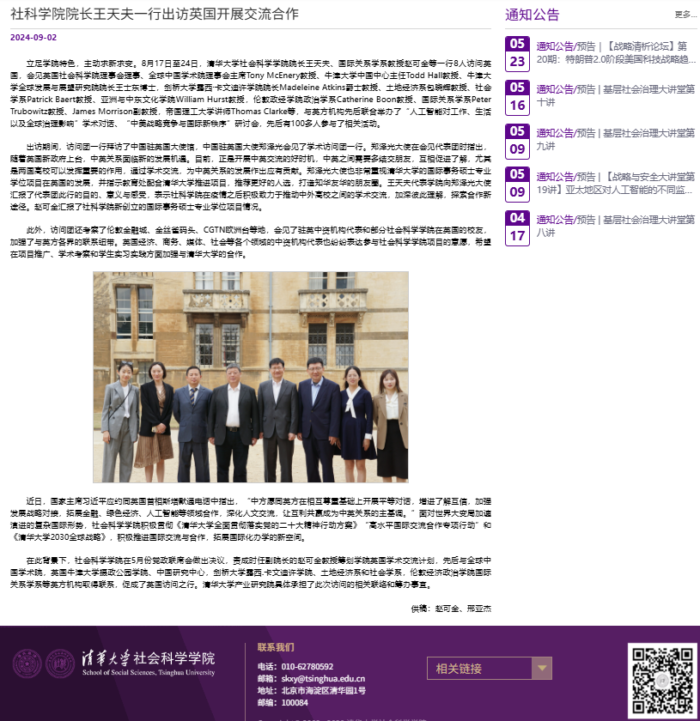
On behalf of Tsinghua University, Professor Wang Tianfu presented GCA with a highly symbolic commemorative gift—an art installation themed around “TSINGHUA.” Here, the word “Tsinghua” was no longer merely a university name; it became an academic token crossing geography and institutional boundaries. It marked the reconnection of UK–China academic exchange after the pandemic and signalled a shared commitment to continued collaboration in global academic dialogue and knowledge production.


18 August (Sunday) Greenwich · Canary Wharf · River Thames
- 08:00 Departure. Two cars took participants from their accommodation to the local station.
- 08:14 Jubilee Line from Stanmore Station.
- 09:02 Arrive at North Greenwich.
- 09:09 Bus 129 (towards Lewisham) from North Greenwich Station (Stop C).
- 09:21 Get off at Trafalgar Estate (Stop T).
- 09:34 Arrive at Royal Observatory Greenwich.
- 10:00 Visit the Royal Observatory Greenwich.
- 11:00 Visit the University of Greenwich.
- 11:45 Take the driverless DLR (Cutty Sark → Canary Wharf).
- 12:00 Explore Canary Wharf, Europe’s largest financial district/enterprise zone.
- 12:30 Lunch: Big Easy Canary Wharf (American BBQ & seafood; 12 people).
- Accompanying staff: Bruce Liu Hongran (full day); Fang Zhou (Landmark Pinnacle visit + lunch)
- 14:00 Travel from Canary Wharf to RB1 Tower Pier.
- 15:30 Visit Tower Bridge and the Tower of London (around the sites).
- 16:30 Thames river cruise (London Tower Pier → Westminster).
- 17:00 Visit Westminster Abbey.
- 18:00 Visit the Palace of Westminster (not open on Sundays; visit the surrounding area).
- 18:30 Dinner: Peacock London, County Hall, The Queen’s Walk, London SE1 7PB (10 people + Xiangqun Chang, Liu Daqian, Yu Li, Bruce Liu Hongran)
Background Notes
- Royal Observatory Greenwich: the site of the Prime Meridian (0° longitude), symbolising a global coordinate for time and space.
- University of Greenwich: formerly the Royal Naval College (1890); Yan Fu once studied here.
- Canary Wharf: transformed from a declining docklands area into Europe’s leading financial district—an emblematic case of UK urban regeneration.
- Landmark Pinnacle: Europe’s tallest residential building (75 floors), offering panoramic views of the City, the O2, London City Airport, etc.
- Westminster Abbey: a symbolic site of Britain’s parliamentary monarchy; on Sundays it is open primarily for worship.
On Sunday, the delegation’s first day in London focused mainly on sightseeing and recovery from travel. The itinerary followed the Thames—stretching from Greenwich to Canary Wharf and back to Westminster—forming a classic route through which to understand London’s time, space, and urban transformation.
In the morning, visits to the Royal Observatory and the University of Greenwich began from the global temporal reference point of the Prime Meridian, offering a direct sense of Britain’s historical foundations in navigation, science, and higher education. The group then took the DLR to Canary Wharf to observe the UK model of docklands regeneration into a financial and commercial hub, and went up to Landmark Pinnacle to view London’s wider urban landscape. Lunch in Canary Wharf—seafood and barbecue—provided an easy and restorative break after the journey.
In the afternoon, the group cruised down the Thames, passing Tower Bridge and the Tower of London before reaching Westminster. The Sunday atmosphere around Westminster Abbey and Parliament was calm and spacious. Delegates sat on the grass, slowing down briefly and experiencing London’s distinctive Sunday ease and composure.
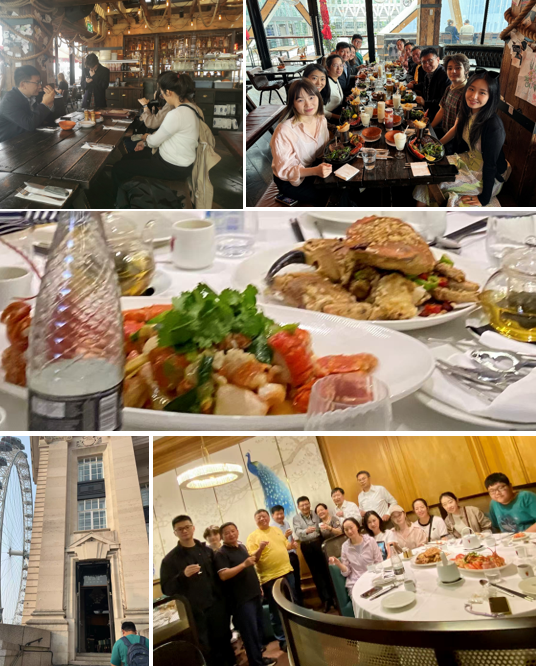
What left the strongest impression that day was not only London’s iconic landmarks, but also the lived experience of the city. The day moved from a river journey to moments of rest on the grass, and finally to a carefully structured rhythm of meals. Lunch was a Sunday brunch in Canary Wharf, where a single plate combined lobster and steak, offering a distinctly modern, financial-district version of a London weekend. Dinner, by contrast, was a Chinese meal at County Hall on the South Bank, directly facing Big Ben and the Houses of Parliament. The meal, which happened to pair lobster with crab, echoed the richness of the earlier lunch in a different cultural register. In the evening light by the Thames, familiar flavours returned in a setting framed by the symbols of British governance. The convergence of urban space, institutional landmarks, and everyday dining created a sense of balance and continuity, providing a composed and grounded transition into the intensive academic programme that followed.
19 August (Monday) University of Oxford · Academic Dialogue on AI and Global Governance
- 07:30 Departure for Oxford. Visits included: Christ Church College, University of Oxford and Oxford University Libraries (library system)
- 13:00 Lunch: Comptoir Libanais (Lebanese restaurant; 11 people).
- 15:00–17:20 Academic dialogue at Oxford. Theme: “The Impact of Artificial Intelligence on Work and Life, and the Discussion of Its Global Governance”; Venue: Lecture Hall, Merton College
- 18:00 Dinner: COSMO World Buffet Restaurant
Accompanying staff: Hugo Tai (MSc Politics, University of Oxford; former President of the British Postgraduate Network for Chinese Studies, BPCS)
Participants: the delegation + 4 from GCA (Xiangqun Chang, Robin Cohen, David Parkin, Hugo Tai). Dinner also included two Oxford-based scholars and others such as Cheng Yutong (PhD student, UCL), etc.


That morning, the delegation travelled from London to Oxford and visited Christ Church College—one of Oxford’s most emblematic historic colleges—and the Oxford University library system. In the courtyards of ancient colleges and within library spaces, delegates experienced at close range the academic traditions, institutional culture, and spatial order that Oxford has sustained as a world-leading university, setting a strong scholarly atmosphere for the later dialogue.
At midday, the group had lunch at Comptoir Libanais in central Oxford. The colourful, diverse Mediterranean dishes created a relaxed interlude within a tightly scheduled day. Conversation continued around the morning visits and provided a natural transition to the afternoon academic dialogue on AI and global governance.
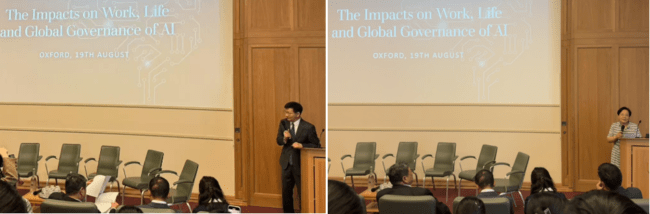
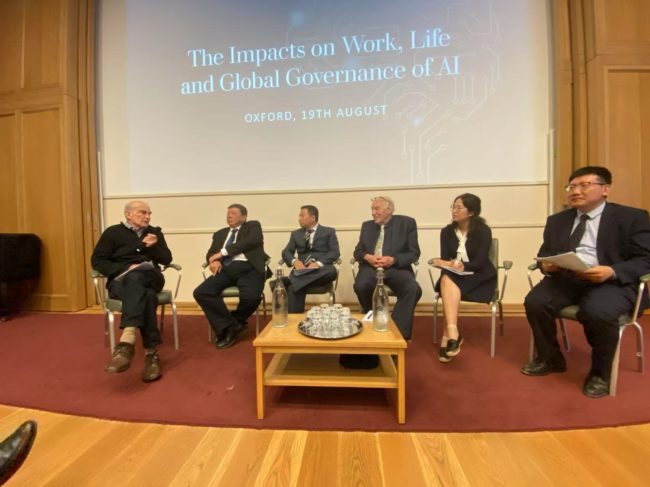
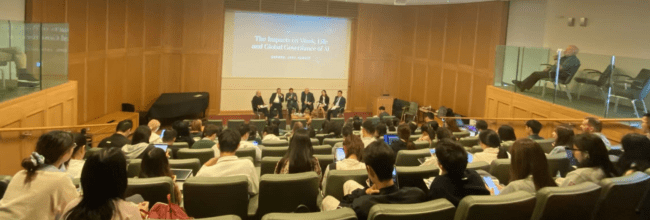
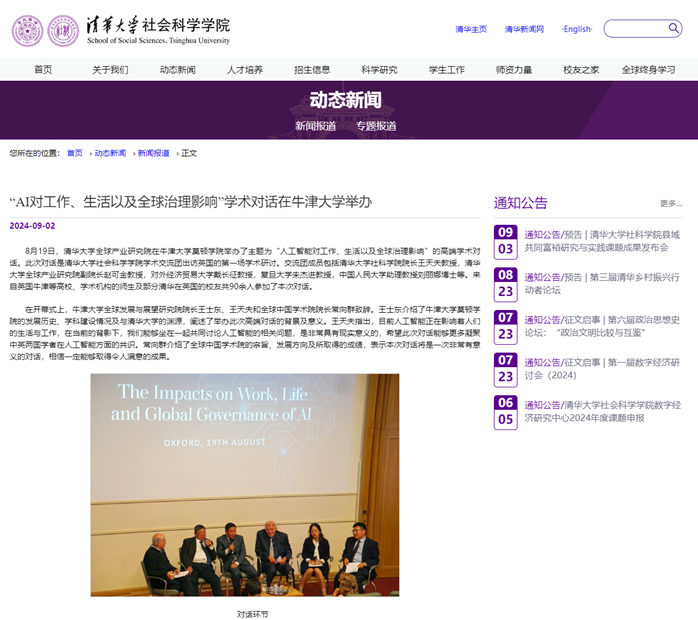
In the afternoon, the delegation attended an academic dialogue at Merton College, University of Oxford, themed “The Impact of AI on Work, Life, and Global Governance.” The event was hosted by the Oxford Prospects and Global Development Institute, and co-hosted by the Institute for Global Industry at Tsinghua University and the Global China Academy. It constituted an important interdisciplinary exchange between Chinese and UK scholars on the societal impact of AI.
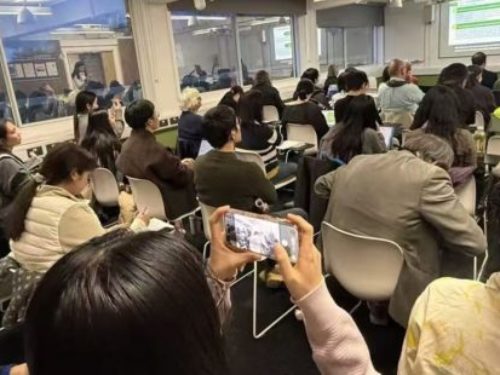
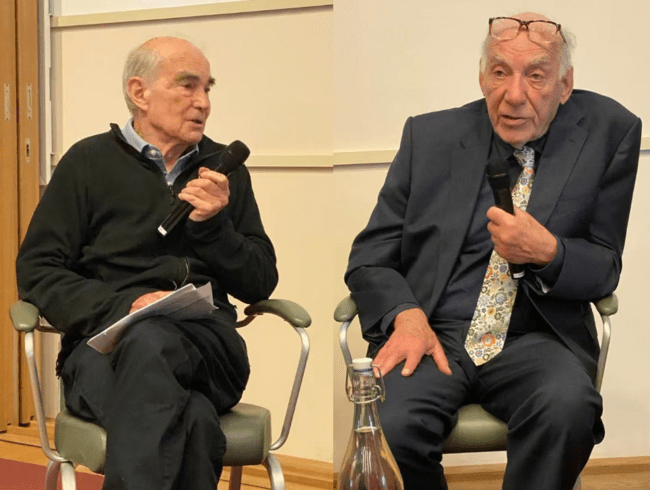
The meeting was opened and chaired by Dr Wang Shidong, who delivered introductory remarks. Professor Wang Tianfu and Professor Xiangqun Chang also offered opening speeches, noting that AI is profoundly reshaping human work, social structure, and governance—and that international academic dialogue is urgently needed to deepen understanding and build consensus. The roundtable was chaired by Professor Zhao Kejin. Scholars discussed opportunities and challenges from perspectives including international relations, global governance, public policy, and social research. The contributions of two GCA Fellows were particularly memorable to participants: Professor David Parkin (left) emphasised, from the standpoint of language and politics, that language is fundamentally a tool of communication, and that in formal settings such as political negotiation, AI can play a particularly significant role in persuasion and expression; Professor Robin Cohen (right), from the perspective of migration studies, noted that while AI brings convenience, it also raises challenges including energy consumption, privacy, and ethics—making responsible use of AI a global challenge.
This dialogue deepened UK–China scholarly understanding of AI’s broad societal implications and laid a foundation for continued collaboration on global governance and technological transformation.
Related coverage
20 August (Tuesday) Cambridge · Brocket Hall · Walking–Talking Route
- 07:30 Depart for Cambridge.
- 09:15 Punting on the River Cam.
- 10:30 Visit King’s College, University of Cambridge.
- 12:00 Lunch: The Ivy Cambridge Brasserie.
- 14:00 Most members of the delegation travelled to Brocket Hall (Welwyn Garden City). Professor Wang Tianfu and Professor Xiangqun Chang stayed behind in Cambridge for visits and exchanges.
- 17:30 Dinner: Brocket Hall Clubhouse.
- 19:00 Return to the hotel and the Fellows’ Home.
- 20:00 Leadership exchange between the School of Social Sciences (Tsinghua) and GCA.
Cambridge hosts/support:
- Jeni Kong (a white British daughter-in-law of Kong Zhong, 72th-generation descendant of Confucius; speaks Chinese);
- Dr Liu Chong (Tsinghua SSS alumna; postdoctoral researcher at Cambridge’s Department of Land Economy);
- Guo Haotian (PhD student, Cambridge Sociology).
- Brocket Hall hosts/support: David Liu, General Manager.

In the morning, the delegation arrived at Cambridge, visited King’s College and its chapel, and took a punt along the River Cam. Moving among historic colleges, lawns, and waterways, delegates engaged in walking conversations and gained an intuitive understanding of the spatial structure, collegiate system, and academic traditions of a leading UK university. This segment of the day opened the academic visit in the mode of “scholarship in motion.” At noon, the delegation had lunch at The Ivy Cambridge Brasserie. Located in central Cambridge, the restaurant is known for its blend of British tradition and contemporary design, making it a classic setting for rest and conversation between academic visits. In a relaxed atmosphere, scholars continued to exchange reflections from the morning and transitioned naturally into the afternoon programme.

Afterwards, Professor Wang Tianfu (Dean, Tsinghua SSS) and Professor Xiangqun Chang (President, GCA)—both sociologists—visited the teaching and research environment of Cambridge Sociology, accompanied by Dr Liu Chong (Tsinghua SSS alumna, postdoctoral researcher in Cambridge’s Department of Land Economy) and Mr Guo Haotian (PhD student, Cambridge Sociology). As it was the summer vacation, there were relatively few people in the department, and the visit focused mainly on on-site observation and understanding of the academic environment.
The group then met with Professor Bao Xiaohui (Department of Land Economy) for discussion, focusing on topics including urban development, institutional analysis, and comparative research. Finally, they visited Selwyn College and met Professor Patrick Baert in his office, engaging with themes such as social theory, AI, comparative research, and academic training. Exchanges took place across office, library, and college spaces. The pace was unhurried and the discussions substantive—reflecting the British academic style in which openness and seriousness coexist, even during the holiday period.
In the afternoon, most of the delegation travelled to Brocket Hall in Welwyn Garden City. The neoclassical estate was once the residence of Prime Ministers Melbourne and Palmerston, the latter of whom played a pivotal role in the First Opium War. Scholars walked and talked across the lawns, lakeside, and buildings, placing contemporary academic questions alongside a historical site in a manner rich with symbolism—forming a “Walking–Talking” discussion. Debates about UK–China relations initiated by the First Opium War, the formation of the modern state system, the shaping of a global trade order, and their lasting impact on China’s modernisation unfolded naturally through the walk. In this setting, history was no longer simply something narrated; it became a site for renewed understanding and reflection.

In the evening, the delegation dined at the Brocket Hall Clubhouse. Situated at the heart of the estate, it offered a calm and open setting: lake and lawns outside, and an interior preserving the ambience of a traditional English country-house dining room. Dinner was served in a Western set-menu style at a measured pace, providing space to unwind and organise thoughts after a full day. Professor Xiangqun Chang and Professor Wang Tianfu joined the dinner, exchanging reflections with delegates on the day’s visits to Cambridge and Brocket Hall and sharing their own observations. Discussion flowed naturally around the table, creating emotional and intellectual continuity for the more in-depth evening conversations.
The delegation then returned to London. That evening, the leadership teams of Tsinghua’s School of Social Sciences and the Global China Academy held a dedicated exchange, discussing future directions, academic mechanisms, and long-term plans for sustained collaboration. The day concluded with informal yet highly focused dialogue, laying a solid foundation for subsequent visits and cooperation.
21 August (Wednesday) British Museum · National Gallery · Musical Theatre
- 08:00 Depart for Mill Hill Broadway Station; take Thameslink to St Pancras.
Visits included: British Library (exterior), British Museum, National Gallery and Trafalgar Square. - 12:30 Lunch: New China (Chinese restaurant).
- 14:00 Oxford Street, Regent Street, Liberty, Carnaby.
- 16:00 Visit to the Embassy of the People’s Republic of China in the UK.
- 17:30 Dinner: Angus Steakhouse.
- 19:30 Watch the musical Les Misérables.
- 21:30 Return by Underground; 22:30 two cars collected the group and returned to accommodation.
The day concentrated on visits to London’s national cultural institutions and public urban spaces, combining cultural exploration with rest and recuperation. Departing from Mill Hill Broadway in the morning and travelling into central London via Thameslink, the group visited the exterior of the British Library, the British Museum, and the National Gallery, stopping at Trafalgar Square to experience London’s museum ecosystem and civic public spaces as a global cultural capital. Lunch at New China offered a pause and recovery. In the afternoon, the delegation walked through Oxford Street, Regent Street, Liberty, and Carnaby, observing London’s commercial districts and the rhythm of city life.
At 4:00 pm, the delegation visited the Chinese Embassy in the UK for formal exchange. During the visit, the delegation was received by Ambassador Zheng Zeguang. They reported on the gradual resumption of UK–China academic exchange over the four years of the pandemic, and described the overall significance of this UK visit as an academic “ice-breaking journey.” Ambassador Zheng highly affirmed the delegation’s efforts to sustain international academic exchange under special circumstances and offered encouragement and support for further strengthening cooperation between UK and Chinese universities and academic institutions. This meeting added an important official and symbolic dimension to the programme.
After dinner at Angus Steakhouse, the group attended the classic musical Les Misérables, experiencing British public culture through music and theatre. Les Misérables is one of the world’s most famous and longest-running musicals, adapted from Victor Hugo’s novel. Set against the backdrop of nineteenth-century France, it follows the fate of Jean Valjean and explores themes of justice, redemption, love, and revolution. Since its London premiere in 1985, it has remained a flagship production in the West End, emblematic of London’s theatre culture and Britain’s global influence in musical production and dissemination. After the performance, the delegation returned by Underground and was driven back to accommodation by two cars, concluding a culturally rich day.
22 August (Thursday) The British Academy · Buckingham Palace · LSE Workshop
- 07:45 Depart for central London.
- 09:00 Visit the exterior of The British Academy.
- 09:45 Visit Buckingham Palace (interior visit).
- 11:20 Lunch at the Royal Automobile Club (RAC).
- 13:45 Registration for the LSE workshop.
- 14:00–17:15 Workshop theme: “China–US Relations and the New International Order” (Professor Wang Tianfu left after the tea break to take flight CA856 back to Beijing that evening.)
- 17:15–18:15 Drinks (Lincoln’s Inn Fields).
- 19:00 Dinner: Santoré.
The day unfolded along a clear line: “academic institution—national symbol—international dialogue.” In the morning, the delegation travelled into central London, visited the exterior of the British Academy, and entered Buckingham Palace for an interior tour. As one of the most important symbolic buildings of the British monarchy, Buckingham Palace is both the King’s official London residence and the core site for state ceremonies, diplomatic receptions, and major national celebrations. The tour covered multiple State Rooms, including halls and galleries used for state banquets, investitures, and diplomatic events. The rooms display a significant collection of royal paintings, furniture, and decorative arts, offering a concentrated view of the monarchy’s continuity across art, institutions, and national history. Through this visit, the delegation gained a more direct understanding of the relationship between monarchy and governance, public symbolism and political ritual within a constitutional monarchy—completing an on-site observation of institutions and culture within spaces of British academic tradition and national symbolism. This also provided a vivid institutional contrast and real-world context for the afternoon discussions on international order and governance at the London School of Economics.

Afterwards, the delegation had lunch at the Royal Automobile Club (RAC), using this high-end social space—rich in academic and civic tradition—for exchange. This arrangement was supported by Mr Martin Garthwaite, Fellow of Royal Society of Arts, an Outstanding Client Manager at PwC, and Co-Chair of the Social Mobility Network.
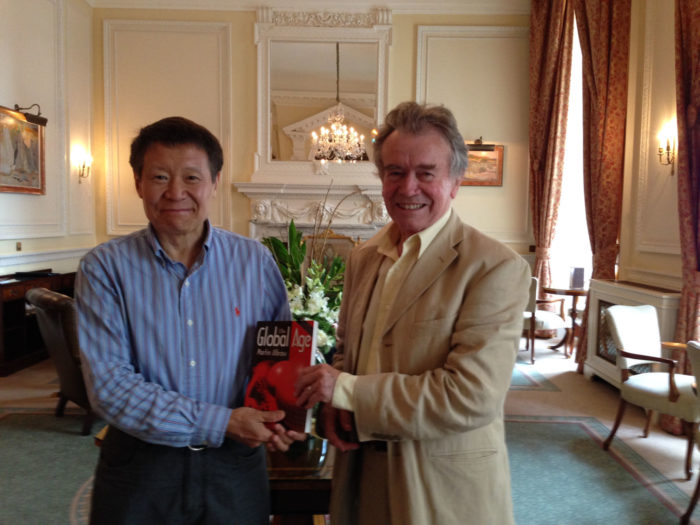
This segment of the programme also carried an important academic memory. In July 2014, Professor Li Qiang, Founding Dean of the School of Social Sciences at Tsinghua University, visited the UK for a short holiday and academic exchange with his wife, Ms Zhang Hua. Professor Xiangqun Chang—then President of the CCPN Global, the predecessor of today’s Global China Academy—planned the itinerary in advance as a friend and hosted them throughout their time in London. It left precious and unforgettable memories for both sides. Within just a few days, Professor Li and Ms Zhang visited many of London’s key cultural and academic landmarks, including RHS Wisley Gardens, Tower Bridge, Westminster, Trafalgar Square, the British Museum, the British Academy, and the London School of Economics; they also met and exchanged with Professor Martin Albrow, a leading UK sociologist. The itinerary combined on-site observation of Britain’s history, culture, and institutions with in-depth discussions on globalisation, urbanisation, and social-science methodology. That visit was not only a memory of friendship and scholarly exchange, but also an emotional and intellectual starting point for the long-term engagement between Tsinghua University and the UK academic community—its meaning and value becoming even clearer when revisited ten years later.
Notably, Professor Martin Albrow, former President of the British Sociological Association, hosted Professor Li Qiang—then President of the Chinese Sociological Association and Dean of Tsinghua’s School of Social Sciences—and his wife at the Royal Automobile Club, and presented him with his major work, The Global Age. It was through that meeting that Professor Albrow and the School of Social Sciences at Tsinghua University established sustained and stable academic ties. This relationship continued for many years until Professor Li’s passing, becoming a deep and enduring scholarly friendship in the history of UK–China social-science exchange.
Ten years later, when the Tsinghua SSS delegation returned to the UK in 2024, Professor Albrow happened to be away on holiday and could not meet the delegation in London. In GCA’s overall arrangement, the programme intentionally extended Professor Li’s earlier academic route in London: the delegation again came to RAC for dining and exchange, experiencing the club’s distinctive tradition of academic sociability and public cultural ambience. This visit served both as a tribute to Professor Li’s scholarly footsteps and as a symbol of continuity across time in UK–China academic exchange—people may change, but the pathway endures; the friendship continues forward.
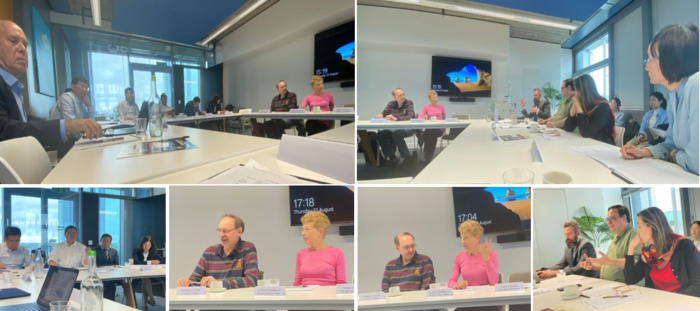
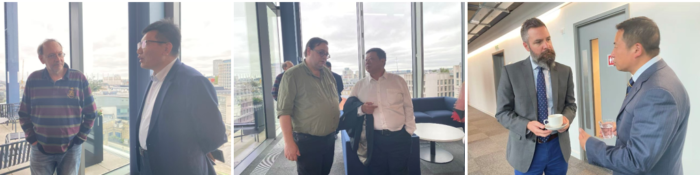
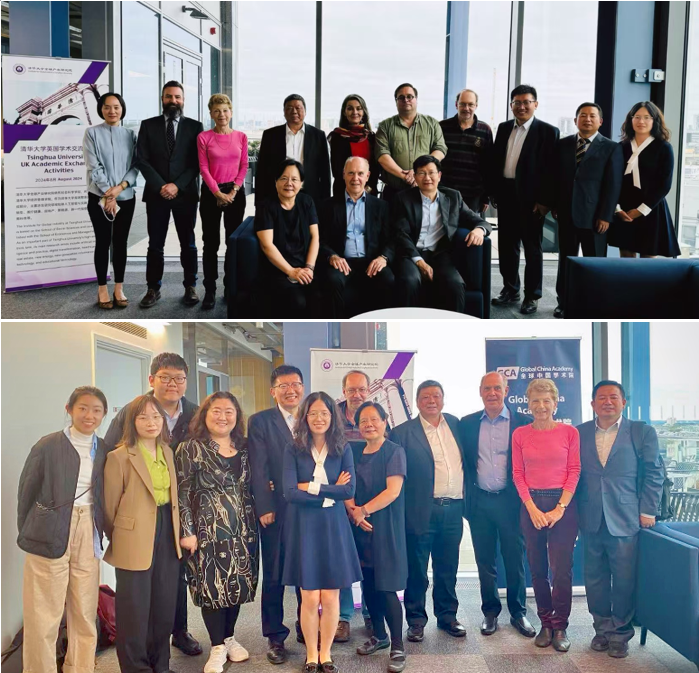
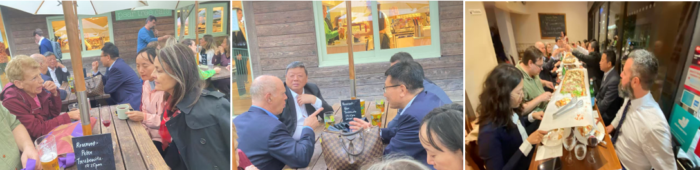
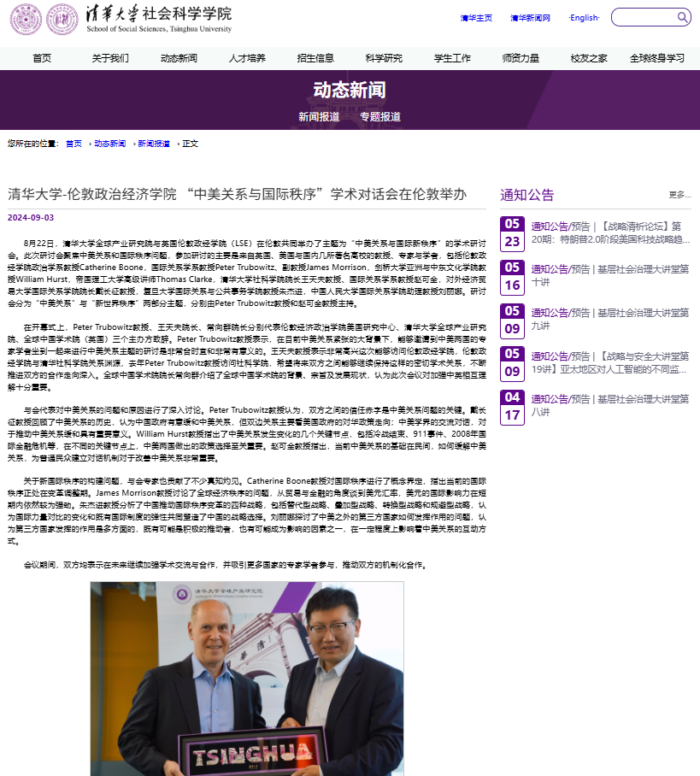
In the afternoon, on 22 August 2024, “US–China Relations and the New World Order” workshop was held at the London School of Economics and Political Science (LSE). The event was jointly organised by the Phelan United States Centre at LSE, the Institute of Global Industry at Tsinghua University, and the Global China Academy (UK).
The workshop brought together scholars from leading universities in China and the UK to discuss the evolving trajectory of US–China relations and the restructuring of the global order, with particular attention to international politics, global governance, and institutional change. Through two themed sessions and interdisciplinary dialogue, participants exchanged perspectives on trust, strategic competition, global monetary systems, and the role of third-party countries in shaping international relations.
The event was opened by Professor Peter Trubowitz (LSE), Professor Wang Tianfu (Tsinghua University), and Professor Xiangqun Chang (Global China Academy). Discussions highlighted both the structural challenges and the necessity of sustained academic dialogue in a period of global uncertainty.
Following the formal sessions, participants continued their exchanges during informal discussions over coffee and dinner, extending scholarly dialogue beyond the workshop setting and strengthening personal and institutional connections. The workshop not only enhanced mutual understanding of the current international landscape but also laid a foundation for future academic collaboration and more institutionalised communication between UK and Chinese research communities.
Related coverage
23 August (Friday) GCA Exchange · Airport Departure
- 09:00 Depart for the GCA Fellows’ Home.
- 09:30 Exchange meeting with the Global China Academy.
- 12:00 Brunch: Mill Hill Golf Club.
- 16:00 Coach transfer for all delegation members (10 people) and luggage to the airport.
- 17:00 After seeing the delegation off, GCA Executive Manager Mr Liu Daqian returned to the Fellows’ Home and met with the President and volunteers, then took a walk around Mill Hill Golf Club.
- 20:25 Flight CA938.

That morning, the delegation travelled from accommodation to the GCA Fellows’ Home for a final exchange meeting with the GCA team. Both sides reviewed the overall outcomes of the visit, discussed future directions of cooperation, and reflected on mechanisms for more institutionalised academic exchange—clarifying pathways for continued collaboration.
At noon, the delegation had brunch at Mill Hill Golf Club, revisiting the week’s intensive and rich academic itinerary in a relaxed setting. In the afternoon, GCA arranged a coach transfer for all delegation members and luggage to the airport. Mr Liu Daqian then returned to the Fellows’ Home, and together with the President and volunteers, joined a walk around Mill Hill Golf Club—bringing the visit to a quiet and composed close.
At 20:25 that evening, the delegation departed London on flight CA938, concluding the one-week UK academic visit.
Related coverage
Summary: An Academic Walk Across Time and the Continuation of Relationships
The UK visit by the delegation from Tsinghua University’s School of Social Sciences and scholars from four universities in Beijing and Shanghai (17–23 August 2024) was not only an academic programme centred on AI, global governance, and US-China relationship and international order; it was also a scholarly pathway reconnected across time. Its institutional and emotional foundations originated in the UK–China academic exchange that the late Professor Li Qiang (1950–2023), founding Dean of Tsinghua’s School of Social Sciences, had long promoted.
Professor Li Qiang served successively as the Chinese Honorary President of the Global China Academy and as the Chinese Chair of the GCA Council. He played a pivotal role in the Academy’s early development and in establishing mechanisms for UK–China academic exchange, laying an important foundation for long-term and stable scholarly engagement between the two sides. A decade ago, the UK–China social-science route he initiated in London has now been walked again by a new generation of scholars; the same city route, the same academic spaces, and the same modes of scholarly interaction have been reactivated and infused with new issues of our time.
This symbolic “renewal of departure” began on the evening of arrival with a welcome gathering at the GCA Fellows’ Home. The welcome party was not a ceremonial formality, but a deliberately designed practice of rebuilding an academic community: scholars exchanged freely across courtyard, garden, and steps, quickly forming cross-institutional, cross-disciplinary, and cross-generational connections in a relaxed atmosphere. It was from this lived and relational beginning that the tightly scheduled academic week gained its shared rhythm and emotional grounding.
Over the following days, the programme unfolded across different cities and institutional spaces. In Oxford, scholars engaged in an interdisciplinary dialogue on AI’s impact on work, life, and global governance. In Cambridge, the delegation revisited collegiate traditions and, within college spaces, libraries, and walking routes, discussed institutions, cities, AI, and social theory with UK scholars—experiencing a British mode of knowledge production in which “life–institution–theory” are deeply intertwined. At the London School of Economics (LSE), UK and Chinese scholars held a high-level workshop on China–US relations and the new international order, where contemporary global issues and institutional comparison intersected within a single academic arena.
At the Royal Automobile Club (RAC), the delegation returned to a symbolic space of scholarly friendship where Professor Li had once forged thought-provoking and enduring ties with leading UK sociologists a decade earlier. At Brocket Hall, scholars placed discussions of modernisation, imperial legacies, and global order directly within a key historical site of modern British political memory—using a “Walking–Talking” approach to embed academic questions in their historical and institutional setting. History, in that moment, was no longer merely narrated; it became a place for renewed understanding and reflection. Such “situated scholarship” is also one of the methodological commitments long advocated by the Global China Academy.
Guided by the principle of “reading ten thousand books, travelling ten thousand miles, sharing international meals, and making friends from all corners of the world,” the Global China Academy integrates Chinese intellectual traditions with British and global academic practice. In this way, academic exchange carries not only intellectual weight, but also cultural depth and lived warmth. Dialogue takes place in lecture halls and meeting rooms, but also extends into city spaces, historical buildings, shared meals, and collective walking—so that knowledge production becomes a holistic cultural practice embedded in everyday life, rather than an isolated series of meetings.
On the final day, the delegation held a concluding exchange meeting with the GCA team at the Fellows’ Home. Both sides systematically reviewed the academic outcomes, cooperation mechanisms, and future pathways. This seemingly quiet farewell conversation in fact marked a key transition from “completing an itinerary” to “continuing a relationship”: it helped consolidate a week of intensive activities into sustainable directions for future cooperation.
At the operational level, both the GCA Board of Trustees and the GCA Council placed high importance on the visit and regarded it as an essential project for fulfilling long-term commitments to UK–China academic collaboration. All core activities were coordinated by GCA, and even under summer constraints, key academic events were attended by GCA leaders or Fellows to ensure programme quality and scholarly continuity.
During implementation, due to peak-season scheduling, changes in delegation size, and necessary on-site adjustments, additional expenditure directly related to the academic itinerary was incurred—primarily for programme meals, local transport, and cultural and educational visits. All such expenditure was approved at executive level, was one-off in nature, and fully served GCA’s charitable objectives of academic exchange, cultural understanding, and international cooperation. It does not constitute recurring expenditure, nor does it alter GCA’s long-term financial structure.
When the delegation departed London on the evening of 23 August 2024, the visit did not end; rather, it entered a new stage. Through shared experience, it reaffirmed the continuity of UK–China academic relations and laid foundations of trust and connection for more institutionalised, longer-term, and deeper cooperation in the future. People may change, but the pathway continues; issues evolve, and relationships deepen—this is precisely the most enduring and vital meaning of academic exchange.
Related Posts
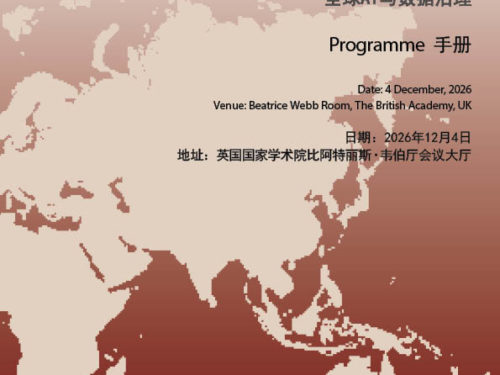
11th Global China Dialogue: Global AI and Data Governance
Call for Papers Following ten successful Global China Dialogue (GCD) Forums, the 11th GCD – Global AI and Data Governance – will be held at the British Academy on Friday, 4 December 2026. GCD11 will focus...