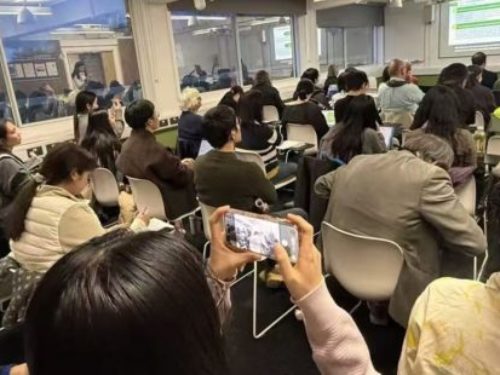
Since its founding, the Global China Academy (GCA) has upheld a dual commitment to academic excellence and social mission. While the academic mission is primarily realised through research, publications, and dialogue platforms, the social mission requires something more experiential: the integration of people, space, lived experience, and collective reflection.
In April and July 2024, the GCA team organised two carefully designed team-building activities in London. These were not conventional retreats, but learning journeys through space, using architecture, movement, and shared experience as methods to reflect on how an academic institution can fulfil its social responsibilities in contemporary society.
Together, the two events formed a coherent pathway—from neoclassical urban order to postmodern vertical living, from visible public space to hidden infrastructures of care—through which the GCA team collectively articulated a renewed understanding of its social mission.
I. 15 July 2024: Reflecting on Social Mission Between Neoclassical and Postmodern Spaces
1. Park Crescent: Public Life and Neoclassical Order
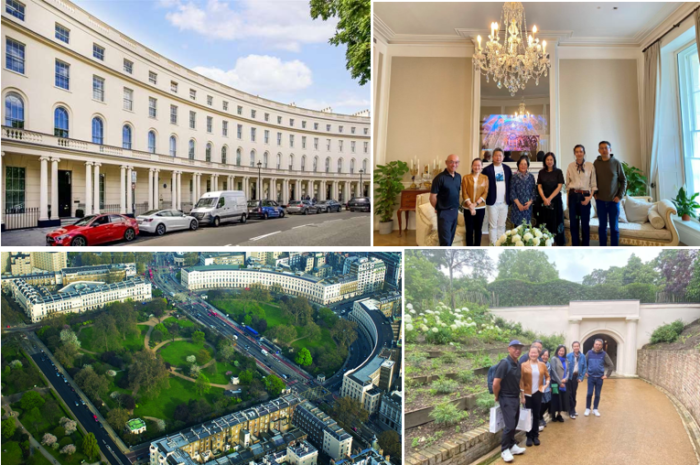
The July team activity began at Park Crescent, one of London’s most iconic neoclassical urban designs, created by John Nash in the early 19th century. The elegant curved terraces surrounding a central garden express an ideal of public life based on order, proportion, restraint, and responsibility.
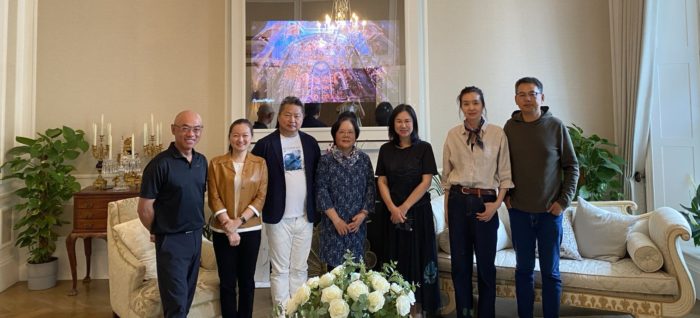
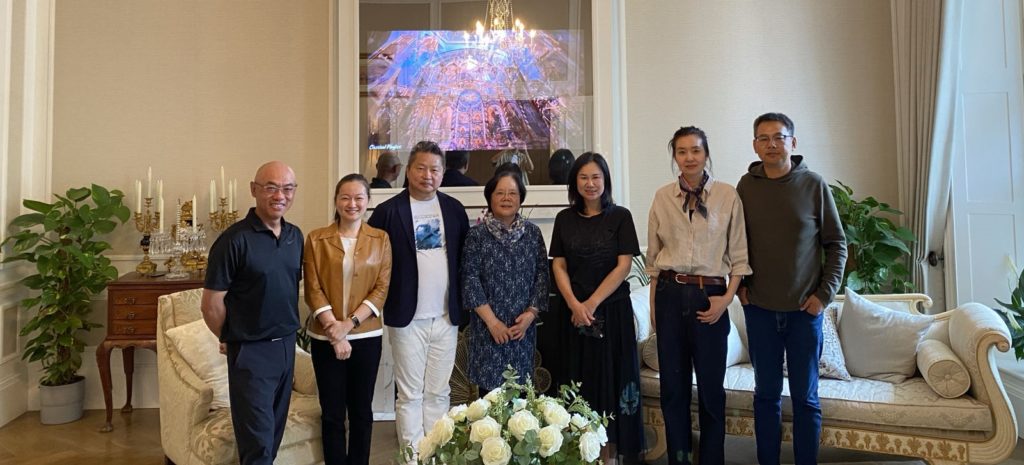
Gathering at a colleague’s home, the team shared tea and discussed ongoing work and institutional challenges. The space itself shaped the discussion: neoclassical architecture is not merely aesthetic—it encodes a vision of civic duty and collective life. Conversations naturally turned to the question of how GCA can continue to serve society beyond academic production.
2. Nursemaids’ Tunnel: The Hidden Infrastructure of Social Governance
From the garden, the team entered the historic Nursemaids’ Tunnel, located beneath Park Crescent. Built in the 19th century, the tunnel allowed caregivers and service workers to move discreetly between homes and gardens without disturbing the visible order of elite residential life.
The tunnel offered a powerful spatial metaphor.
Above ground lies elegance and visibility; below ground lies the hidden labour and governance that sustains society.
Walking through the narrowing, echoing passage, the team experienced a moment of collective realisation: social responsibility is often embedded in invisible systems, connections, and acts of care.
For an academic institution to fulfil its social mission, it must learn to recognise and engage with these unseen foundations of social life.
3. Landmark Pinnacle, Canary Wharf: Postmodern Vertical Living and Platform Governance
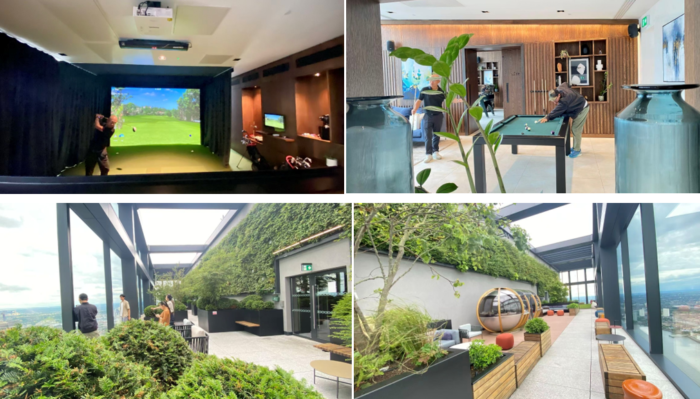
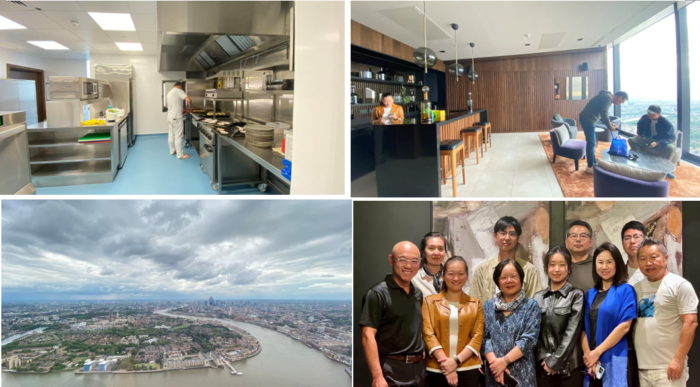
In the afternoon, the team travelled to Landmark Pinnacle in Canary Wharf, London’s tallest residential tower and a symbol of postmodern urban living. Here, shared amenities, bookable facilities, and digitally managed spaces define a highly systematised form of community life.
Exploring the communal areas, rooftop gardens, and shared facilities, the team reflected on a different model of social governance—platform-based, technology-mediated, and participation-dependent. From the upper floors, overlooking the Thames, the contrast with Park Crescent could not have been sharper.
This spatial juxtaposition clarified a central insight: the social mission of an academic institution today lies in building understanding and dialogue across different forms of social organisation.
II. 27 April 2024: Learning Through Movement, Nature, and Shared Experience
If the July activity focused on spatial contrasts, the April activity emphasised thinking through movement and collective practice.
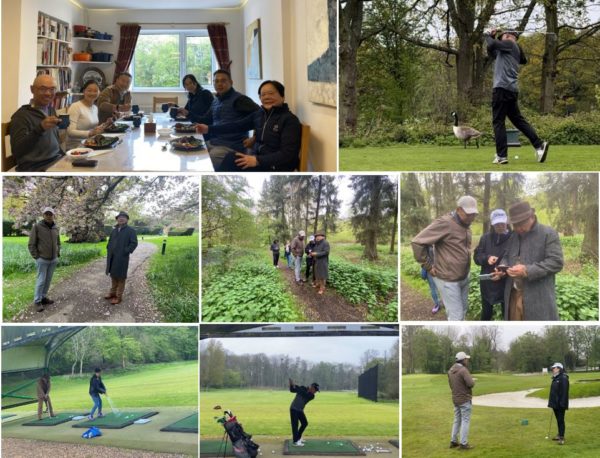
The day began at the GCA Fellows’ Home, where team members gathered for tea and discussion, followed by a visit to Mill Hill Golf Club. The rhythm of the game—balancing judgment, patience, and discipline—created a relaxed yet focused environment for exchange.
In the afternoon, the team visited Brocket Hall, a neoclassical estate deeply embedded in British political and cultural history. Walking together through the grounds, conversation flowed naturally. Dinner later that evening at the Real China Restaurant in Hatfield completed the day.
This occasion formally established GCA’s sixth “Walk and Talk” route—a method of embedding dialogue within landscape, history, and shared movement.
III. From Activities to Framework: How Social Mission Is Practised
Through these two events, GCA gradually articulated a clearer framework for its social mission:
- Social mission is not an add-on but an extension of academic purpose
- Space can serve as a pedagogical tool for understanding governance
- Transcultural dialogue emerges not only in meetings but in shared experience
- Future leaders must learn public responsibility in real social settings
Building on this understanding, GCA advances its social mission through:
- The Global China Dialogues (GCDs) as platforms for cross-sectoral exchange
- Leadership training and social engagement programmes for young political and business leaders
- Transcultural research and publishing that translate knowledge into public impact
- Experiential, space-based collective activities that bring academia into society
Conclusion: Learning Through Space, Acting Through Responsibility
From the neoclassical gardens of Park Crescent to the hidden passageways of Nursemaids’ Tunnel, from the vertical communities of Canary Wharf to the historic landscapes of Brocket Hall, the GCA team’s 2024 activities reaffirmed a shared conviction: Social mission is not a slogan, but a capacity that must be continually experienced, discussed, and practised.
The Global China Academy will continue to build bridges between scholarship, society, space, and people—advancing a form of global engagement grounded in responsibility, understanding, and collective action.
Participants in the activities in the top photo from left to right: Kai Liang (Event Officer), Katie Zheng (Administrative Manager), Alan Fang (Legal Adviser), Yu Li (Project Manager), David Liu (Logistics Manager), and Xiangqun Chang (President).
Related Posts
11th Global China Dialogue: Global AI and Data Governance
Call for Papers Following ten successful Global China Dialogue (GCD) Forums, the 11th GCD – Global AI and Data Governance – will be held at the British Academy on Friday, 4 December 2026. GCD11 will focus...