
GCA People
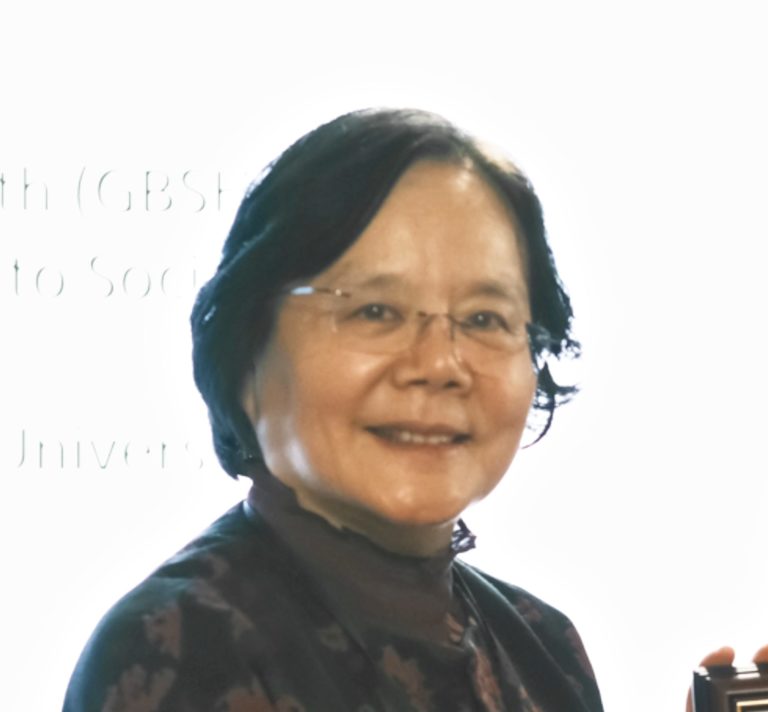
Professor Xiangqun Chang FRSA FGCA
Founding Fellow of Global China Academy
President of Global China Academy; Honorary Professor of University College London (2015–20).
Professor Xiangqun Chang, PhD, FRSA, FGCA, is the President of the Global China Academy (GCA), a UK-based independent global fellowship promoting comprehensive studies of China in the social sciences and humanities.
Over the years, she has held honorary, part-time, visiting and senior research positions at a number of leading universities in both the UK and China. In the UK, these have included City, University of London, where she began her academic career in Britain as a Visiting Fellow in 1991 and subsequently worked as a Research Assistant, Research Officer and Research Associate while completing her PhD; the London School of Economics and Political Science (LSE), where she served as Visiting Fellow and Senior Research Associate and co-founded the China in Comparative Perspective Network (CCPN at LSE), serving as its Coordinator; SOAS University of London, where she was Research Associate at the China Centre and later Professorial Research Associate at the Centre for Translation Studies; the University of Westminster, where she was Visiting Professor at the China Media Centre; and University College London (UCL), where she served as an Honorary Professor (2015–2020), appointed by the President and Provost of UCL. In China, she has held positions at Nankai University, Jilin University, Peking University, Renmin University of China, Fudan University, Sun Yat-sen University and Northeastern University, among others.
Her academic publications amount to over three million words in both English and Chinese, including Guanxi or Li Shang Wanglai?: Reciprocity, Social Support Networks and Social Creativity in a Chinese Village (Chinese, 2009; English, 2010). She also edited Society Building: A China Model of Social Development (English edition, 2014; expanded bilingual edition, 2015–2018), co-edited the three-volume Fei Xiaotong Studies (2015–2018), and edited and structurally organised China and the Shared Human Future: Exploring Common Values and Goals, authored by Martin Albrow (2021). She has also served as the Editor-in-Chief of Global Century Press. She is the editor of the Journal of China in Global and Comparative Perspectives, Global China Dialogue Proceedings and several book series, including ‘Concepts of China,’ ‘Chinese Social Science in the Global Age’, ‘China and Chinese Comparative Studies,’ ‘Transcultural Experiences with “Three Eyes”’ and ‘Cutting Edge and Frontiers’. Additionally, she is responsible for the bilingual (Chinese-English) publication of four academic journals and eight book series.
To the best of her knowledge, she remains one of very few Chinese sociologists who have received formal sociological training in both China and the United Kingdom, and who, having arrived in Britain as a Visiting Fellow in 1991, have continuously pursued an academic career within the UK ever since. Drawing on her extensive ethnographic research in a Chinese village, conducted with longitudinal comparisons, she developed the analytical concept of ‘recipropriety’ (lishang-wanglai 互适)—an adaptation of the classical and popular Chinese concept of li shang wanglai (礼尚往来). This concept explains the mechanisms by which Chinese society and social relations operate, contributing to existing theories on reciprocity, relatedness, social exchange, social creativity, social interaction, social networks, social capital, and transculturality, incorporating the notion of ‘ritual capital’ (礼仪资本) for a deeper understanding of and governance in global society. In recognition of her contributions, she was selected by the Academic Presidents of the International Sociological Association (ISA) as one of 15 sociologists worldwide who were ‘called upon to adapt the discipline to the upheavals of the twenty-first century’ (Practicing Social Science: Sociologists and Their Craft, by Devorah Kalekin-Fishman, Routledge, 2017). Over the past decade or so, she has continued to develop this line of research through sustained fieldwork and comparative study, and is now working on two related books: Renqing 人情: The Practice of Recipropriety (Lishang-Wanglai) in Ten Chinese Villages (1990–2026) and Recipropriety: A Social Theory of Relationship Dynamics and Mechanisms of Change.
Over the past decade and more, she has created and developed a set of institutionally distinctive global platforms to promote the international circulation, trans-cultural exchange and integration of knowledge in the Chinese social sciences. Building on this institutional foundation, she has continued to develop new approaches to research and knowledge production. In recent years, she has brought corpus methods into closer integration with artificial intelligence, exploring how research on Chinese society can move beyond empirical description towards conceptual refinement, theoretical construction and methodological innovation. Methodologically, she has advanced a research paradigm combining corpus analysis, artificial intelligence and theoretical judgement, and developed a five-dimensional model of knowledge production comprising experience, concepts (language), theory, method and institutions. Through this framework, she examines how scholarship on Chinese society, produced both within and outside China, can be structurally transformed so as to enter the global knowledge system. These long-term efforts in research, methodological innovation and institution building are now converging in a group of interrelated yet independent books, including The Contribution of Fei Xiaotong to Human Knowledge: From Chinese Experience to World Social Science; Chinese Social Science in the Global Age: A Personal Witness, 1985–2027; The Intelligent Age: Social Theory from Modernity and Globality to Intelligence; Corpus–AI–Human Judgement: Paradigms and Methods of Knowledge Production in the Humanities and Social Sciences in the Intelligent Age; Integrated Dual-Language Publishing in the Intelligent Age: Concepts, Theory and Practice; and China in Global and Comparitive Perspectives: A Corpus–AI–Human Judgement Study Based on The Complete Works of Fei Xiaotong.